When washing clothes, dont just put in detergent! Do this little trick, dirty clothes will be like new
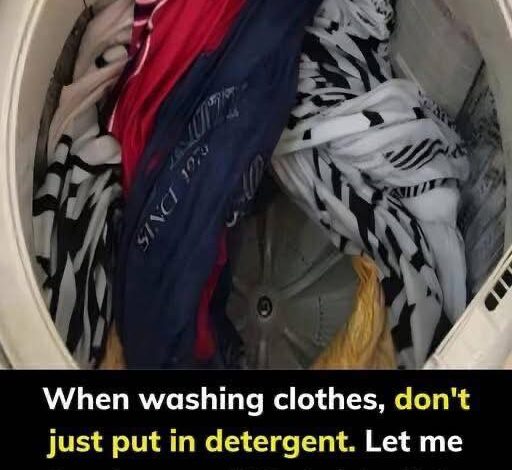
Modern laundry care has become a paradoxical struggle for many households. While technological advancements have provided us with powerful machines designed to handle massive loads with surgical precision, many people find that their favorite garments are wearing out, fading, or even tearing much faster than they did in previous decades. The convenience of the automatic wash comes with a hidden cost: the intense mechanical force generated within the drum is significantly more aggressive than traditional hand washing, making fabric degradation an almost inevitable outcome of the modern cleaning process. However, by understanding the mechanics of how a washing machine interacts with textiles, homeowners can implement a few ingenious strategies to ensure their dirty clothes emerge looking as fresh and resilient as the day they were purchased.
The Mechanical Toll on Modern Fabrics
The primary culprit behind premature clothing wear is the sheer physical stress exerted during the agitation and spin cycles. Whether you utilize a front-loading or top-loading machine, the fundamental principle remains the same: the machine uses friction and motion to dislodge dirt. Unfortunately, this same friction slowly breaks down the fibers of the fabric. Over time, these weakened fibers lead to thinning, pilling, and eventually, structural failure in the form of holes or tears.
This damage is significantly compounded by the common habit of overloading the washing machine. In an effort to save time or conserve water, many users pack the drum to its absolute limit, leaving no room for the garments to move freely. When clothes are compressed in this manner, they are forced into a tight mass. As the drum begins its high-speed rotations, the garments don’t just tumble; they stretch and pull against one another with immense tension. This internal tug-of-war within the machine creates high-stress points on the fabric, which is the leading cause of sudden tears during a cycle.
The Danger of Haphazard Loading
Beyond the volume of the load, the arrangement of the clothing plays a critical role in its longevity. A frequent mistake is loading the machine carelessly, throwing items in as tangled heaps rather than individual pieces. When laundry is loaded haphazardly, items like long-sleeved shirts, leggings, and delicate straps easily become entwined with heavier garments like denim or towels.
As the machine struggles to distribute this unevenly weighted mass, these twisted bundles create excessive friction. The machine’s attempt to balance the load often results in the fabric being pulled in multiple directions simultaneously, leading to distorted shapes and frayed seams. Proper arrangement is not just about aesthetics; it is a fundamental step in ensuring the mechanical forces of the machine work for the clothing rather than against it.
The Plastic Bottle Buffer: A Surprising Solution
For those looking to mitigate the wear and tear of machine washing without reverting to the labor-intensive process of hand washing, a simple household hack has emerged as a game-changer. By placing two empty, sealed plastic water bottles inside the washing machine drum along with your laundry, you can create a physical buffer that fundamentally alters the movement of the load.
As the cycle begins, the plastic bottles act as non-abrasive agitators that rotate alongside the garments. This provides several mechanical benefits:
- Friction Reduction: The smooth surface of the bottles provides a “slip” factor, preventing clothes from rubbing directly against each other with as much force.
- Tangle Prevention: The presence of the bottles helps to break up clusters of clothing, ensuring that individual items remain separate rather than twisting into tight knots.
- Improved Water Distribution: The movement of the bottles helps to circulate water and detergent more evenly throughout the load, potentially allowing for a cleaner finish with less mechanical stress.
- Buffer Zone: The bottles act as a physical barrier between the clothes and the hard surfaces of the drum, particularly during the high-speed spin cycles where pressure is at its peak.
Implementing Better Laundry Habits
While the “plastic bottle trick” is an effective way to minimize damage, it works best when integrated into a broader philosophy of garment care. To truly make dirty clothes look and feel like new, users should consider a holistic approach to their laundry routine.
First, the “two-thirds” rule should be strictly observed. Never fill a washing machine more than two-thirds of the way to the top. This ensures there is enough “fall” distance for the clothes to tumble properly, which is essential for both cleaning efficacy and fabric protection. Second, take the extra minute to untangle every item before it enters the drum. Fasten zippers, button shirts halfway, and turn delicate prints inside out. These small steps, combined with the buffering effect of the plastic bottles, create an environment where clothes can be cleaned thoroughly without being subjected to unnecessary violence.
Furthermore, consider the water temperature and cycle intensity. Many modern detergents are formulated to work exceptionally well in cold water, which is naturally gentler on fibers than heat. High-spin speeds are excellent for shortening drying times, but they are also the most stressful part of the cycle for your clothing. If you aren’t in a rush, opting for a medium spin speed can add years to the life of your favorite wardrobe pieces.
The Long-Term Benefit of Gentle Care
The goal of washing should be restoration, not just sanitation. When we treat our clothing as an investment rather than a disposable commodity, we contribute to a more sustainable and cost-effective lifestyle. By moving away from the “set it and forget it” mentality of haphazard washing and adopting thoughtful techniques like arrangement and the bottle buffer, we can significantly extend the wearability of our textiles.
Your washing machine is a powerful tool, but like any tool, it requires proper handling to achieve the best results. Don’t let your machine’s mechanical strength become its own worst enemy. By providing a little extra space, a bit more organization, and a simple plastic buffer, you can transform your laundry results. The end result is a wardrobe that stays vibrant, intact, and looking like new for much longer, proving that sometimes the best solutions to modern problems are the simplest ones found right in our own recycling bins.