What Changes in Your Hand Veins Could Mean for Your Overall Health!
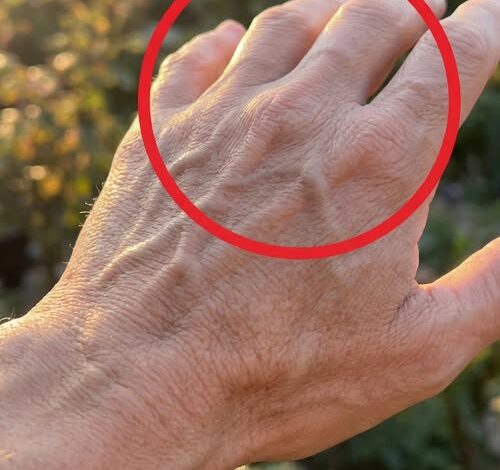
Noticing a sudden map of prominent, bluish rivers tracing across the back of your hands can be a jarring experience. In a world where we are increasingly attuned to the “silent signals” of our bodies, it is natural to wonder if these changes are an allure of health or a warning of something darker. Within the digital echo chambers of 2026, a persistent rumor has taken root: the idea that visible hand veins are a “bruised darkness” signaling hidden kidney distress. However, as we peel back the layers of medical reality, a much more grounded truth emerges. For the vast majority of people, prominent hand veins are simply a testament to the passage of time and the unique architecture of the human body, rather than a harbinger of systemic failure.
To understand why our veins become more visible, we must first look at the “Quiet Giant” of our anatomy: the skin. As we cross into the later chapters of life, specifically into our 50s and 60s, our skin undergoes a profound transformation. It loses collagen and elastin—the structural scaffolding that provides thickness and “bounce.” As the skin thins, the underlying vascular network, which has been there all along, begins to press against the surface. This is a “shared, trembling pilgrimage” we all take; it is a normal anatomical variation, not a medical ultimatum.
The Mechanics of Visibility
Beyond the natural aging process, several physiological factors contribute to the “spectacle” of prominent veins. For individuals with lower body fat percentages, the lack of subcutaneous padding means veins have nowhere to hide. Genetics also play a significant role; if your parents had “corded” hands, you likely will too. Even the environment acts as a catalyst; in warm temperatures, veins dilate to help dissipate heat, making them appear more pronounced.
Physical activity also leaves its mark. Regular exercise, particularly weight-bearing movements, increases blood flow and can lead to a semi-permanent enlargement of the veins as they adapt to the increased “output” required by the muscles. None of these factors, however, are recognized in clinical guidelines as markers of organ dysfunction. In fact, prominent hand veins are often a sign of a robust circulatory system rather than a failing one.
Correcting the Kidney Myth
The “digital con” suggesting a link between hand veins and kidney disease is particularly misleading because the actual symptoms of renal failure are often the exact opposite of what the myth suggests. The kidneys are the body’s master filters, responsible for balancing fluids and regulating electrolytes. When kidney function declines, the body often struggles to expel excess water, leading to a condition known as edema.
Shutterstock
Explore
When edema occurs, the hands and feet swell as fluid collects in the tissues. This swelling acts like a heavy fog, obscuring the veins rather than highlighting them. If you were suffering from significant kidney issues, your hand veins would likely become less visible, buried under a layer of fluid retention. Other genuine “ultimatums” of kidney health include:
- Changes in Urination: Foamy urine (indicating protein loss) or a significant change in frequency.
- Systemic Swelling: Puffiness around the eyes or pitting edema in the ankles.
- Hypertension: A persistent rise in blood pressure as the kidneys struggle to manage fluid volume.
- Chronic Fatigue: A “bruised” sense of exhaustion that sleep cannot fix, often linked to the kidneys’ role in red blood cell production.
Where Veins and Kidneys Truly Intersect
While natural vein visibility is not a symptom of kidney disease, there is one specific medical context where the two intersect: the arteriovenous (AV) fistula. For patients with advanced kidney failure who require hemodialysis, surgeons may create a permanent connection between an artery and a vein, usually in the arm.
This procedure intentionally causes the vein to thicken and enlarge to handle the high-pressure blood flow required for dialysis treatments. In this scenario, the “luminous” prominence of the vein is a result of a life-saving medical intervention, not a natural indicator of the disease itself. It is a “measured leadership” of the vascular system to facilitate treatment.
The Path to Grounded Truth
If you find yourself staring at your hands with a sense of “fear and fatigue,” wondering about your internal health, the solution is not to be found in an internet search. The most reliable evaluation of kidney health involves a simple blood test (checking creatinine and GFR levels) and a urine analysis. These are the “grounded” metrics that medical professionals use to move beyond speculation and into the light of facts.
We live in an age of “spectacle,” where every physical change is scrutinized and often weaponized by health influencers. It is important to remember that our bodies are not static machines; they are evolving landscapes. A visible vein may be a reminder of a workout, a warm day, or simply a life well-lived. It is a “silent signal” of your history, not a “violent darkness” of your future.
Ultimately, the allure of the human form lies in its diversity. Some hands are smooth and opaque; others are a complex map of blue and violet. Both can be perfectly healthy. By stripping away the misinformation and focusing on the true “output” of our organs, we can find a sense of “confidence” in our own skin. Your hand veins are likely just a part of the unique, “luminous” story of you—a story that is best read with a calm mind and a reliance on verified medical science.