Virginia Giuffres cause of death accidentally revealed in Epstein files!
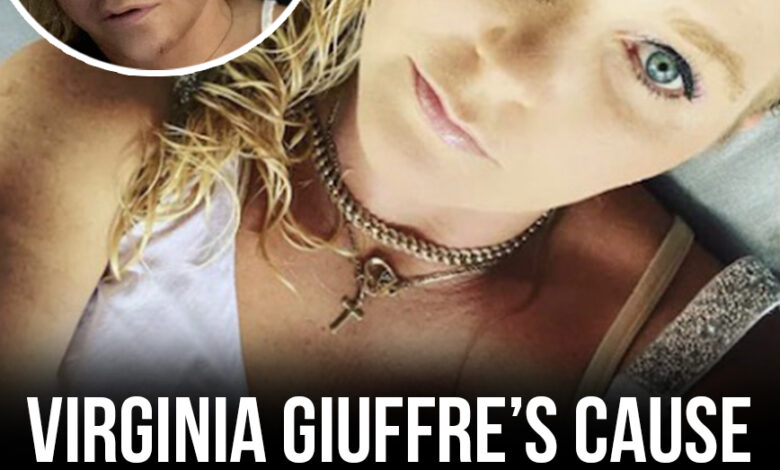
The passing of Virginia Giuffre in April 2025 sent a profound shockwave through the international community, leaving a void in the global advocacy movement for survivors of sexual exploitation. Giuffre, who became a prominent figure for her courageous public accusations against Jeffrey Epstein and Ghislaine Maxwell, died at the age of 41 at her rural home in Neergabby, Western Australia. While initial police reports characterized the death as non-suspicious, the lack of a publicly confirmed cause of death for nearly a year fueled persistent speculation and distress among her supporters and family. Her father, in a poignant interview with Piers Morgan, vehemently rejected the notion that his daughter had taken her own life, suggesting instead that “somebody got to her,” a sentiment that highlighted the deep mistrust and pain surrounding the circumstances of her final days.
The mystery surrounding her death has taken a startling turn with the recent release of approximately 3.5 million records by the U.S. Department of Justice. These documents, part of the final disclosure regarding the Jeffrey Epstein investigation, reportedly contained private communications that were briefly made public before being redacted. Among these sensitive files were emails attributed to Maria Farmer, a fellow Epstein accuser and close confidante of Giuffre. In a message dated May 8, 2025, Farmer reportedly informed Giuffre’s legal team, including high-profile attorneys David Boies and Sigrid McCawley, that Giuffre had died from a self-inflicted gunshot wound. This accidental disclosure has provided a harrowing new context to a tragedy that was already laden with complexity and grief.
Farmer’s correspondence paints a picture of a leader who was viewed as the “pure light” and “purpose” for fellow survivors. Her emails articulated an agonizing sense of loss, particularly noting the impact on Giuffre’s children. Beyond the grief, Farmer expressed fierce indignation toward law enforcement agencies, specifically the FBI, for what she perceived as a decade-long failure to act on her initial reports of abuse. This anger reflects a broader frustration shared by many survivors regarding the systemic failures that allowed Epstein’s network to operate for years. The accidental publication of these private thoughts has intensified the discussion regarding the immense emotional and psychological toll borne by victims who choose to seek justice in the public eye.
The final months of Giuffre’s life appear to have been marked by significant personal turmoil. Records indicate that in January 2025, police were called to a domestic dispute involving Giuffre and her husband, Robert, while the family was on holiday in Dunsborough. Although no criminal charges resulted from the incident, the subsequent issuance of a restraining order that restricted Giuffre’s contact with her children seemed to be a source of profound despair. On social media, she shared that this experience was hurting her “worse than anything else” she had endured in her 41 years. These revelations suggest that while she was a symbol of strength to the world, she was navigating a private “hell” that many of her closest associates did not fully realize was reaching a breaking point.
Giuffre’s Australian attorney, Karrie Louden, expressed complete shock at the possibility of suicide, noting that there were no apparent warning signs that such a path was being considered. Louden had previously urged the public to wait for the official coroner’s findings, which are established based on rigorous evidence. However, the newly surfaced emails suggest that those within Giuffre’s inner circle were already grappling with the reality of a self-inflicted death shortly after it occurred. The discrepancy between the public’s need for answers and the private reality of the family’s grief highlights the delicate balance between transparency in high-profile cases and the right to a private mourning process.
The broader context of Giuffre’s legacy remains a subject of intense debate. While her advocacy was instrumental in bringing renewed attention to the Epstein scandal and the failures of those in power, her claims were not without critics. Internal FBI memoranda revealed that some officials viewed aspects of her accounts as “sensationalized” or “inaccurate,” a stance that Giuffre and her supporters consistently challenged. Despite these contested elements, the civil lawsuits she spearheaded were widely credited with forcing a reckoning for powerful figures and highlighting the pervasive nature of sexual trafficking. Her death serves as a tragic coda to a life spent fighting for a voice in a system that often sought to silence her.
As Giuffre was laid to rest on her property in Neergabby, the community and fellow survivors continue to wrestle with the implications of her loss. The accidental revelation in the Epstein files has not only provided a likely cause of death but has also forced a renewed look at the support structures available to victims of high-profile abuse. The “agonizing” reality described by Maria Farmer underscores the fact that for many survivors, the battle does not end with a court ruling or a public confession; it is a lifelong process of managing trauma that is often re-triggered by the very systems meant to provide justice.
In the absence of a fully public coroner’s report, the surfaced emails remain the most definitive account of Giuffre’s final moments to date. They serve as a somber reminder of the fragility of those who stand as “beacons” for others. For her supporters, Virginia Giuffre will always be remembered as a “hero” who was kidnapped and abused as a child but rose to become a formidable force against some of the most powerful people in the world. For the legal and medical professionals involved, her case remains a complex study in the intersections of domestic strife, public trauma, and the ultimate cost of advocacy.
The story of Virginia Giuffre is a testament to the power of one individual to change the global conversation, but it is also a cautionary tale about the weight of that burden. As the Epstein files continue to be analyzed, the details of her life and death will likely continue to spark discussion and debate. However, the central tragedy remains: a mother and a survivor who fought for so many others was unable to find the peace she needed for herself. The newly revealed documents do not close the book on her life, but they add a layer of human suffering to a story that the world has mostly viewed through the lens of legal battles and headlines.
In the end, the legacy of Virginia Giuffre is one of undeniable impact. Whether through her direct testimony or the systemic changes her courage prompted, she shifted the world’s understanding of survivor rights. As her children grow and her fellow survivors continue the work she helped lead, the memory of her “pure light” remains a guiding force, even as the darkness of her final days is slowly brought to light. The accidental disclosure in the Epstein files ensures that the truth of her end, however painful, is a part of the permanent record of a life defined by the pursuit of truth.