Using rice as a teeth-whitening trick has gained attention as a quick!
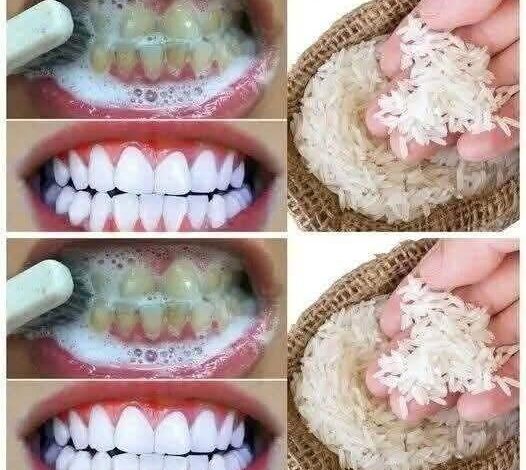
The quest for a radiant, Hollywood-caliber smile has led many down the path of “kitchen-counter dentistry,” a trend that has exploded across social media platforms in early 2026. Among the most pervasive and visually convincing hacks is the use of rice flour as an instantaneous teeth-whitening agent. Promoted through high-energy viral videos, the method promises a transformation in as little as sixty seconds. The recipe is deceptively simple: raw rice is ground into a fine powder and blended with lemon juice, olive oil, and a dab of toothpaste to create a DIY scouring paste. To the casual viewer, the appeal is undeniable—it is cost-effective, readily available, and marketed under the seductive banner of being “all-natural.” However, beneath this veneer of simplicity lies a complex and potentially hazardous biological interaction that risks permanent damage to the most precious resource in your mouth: your tooth enamel.
To understand why this method is so controversial among dental professionals, one must first look at what happens during those sixty seconds of application. The immediate brightness that users report is not the result of true chemical whitening; rather, it is a combination of aggressive mechanical abrasion and chemical dehydration. Rice flour, when ground into a powder, acts as a potent abrasive. On a microscopic level, these jagged granules function like sandpaper, physically scrubbing away the superficial “pellicle” layer of the tooth. This layer often holds surface stains from coffee, tea, or tobacco, so its removal does indeed reveal a cleaner-looking surface.
However, the inclusion of lemon juice introduces a dangerous chemical catalyst to this mechanical scrubbing. Citric acid is a powerful desiccant and erosive agent. When applied to the teeth, it temporarily leaches moisture from the enamel. Dehydrated enamel changes its refractive index, causing light to bounce off the tooth surface differently, which creates a temporary, chalky-white appearance. While this looks like a successful whitening treatment on a smartphone screen, it is actually a symptom of the enamel being stressed and stripped of its mineral content. The olive oil in the mixture serves merely as a lubricant, and while the fluoride in the toothpaste is intended to protect, it cannot effectively remineralize enamel that is being simultaneously attacked by acid and physical grit.
The “unsettling truth” of this DIY hack is that enamel is a non-renewable resource. It is the hardest substance in the human body, but it is entirely incapable of regeneration. Once the protective crystalline structure of the enamel is thinned or worn away, it is gone forever. Regular use of rice flour and lemon juice creates a catastrophic cycle of erosion. As the translucent enamel layer becomes thinner, the underlying dentin—which is naturally yellowish and far more porous—begins to show through. This leads to a cruel irony: the more someone uses this “whitening” trick to fix yellowing teeth, the more they expose the yellow dentin underneath, making their teeth appear darker and more stained in the long run.
Furthermore, the thinning of enamel is not merely a cosmetic concern; it is a significant clinical liability. Enamel serves as the thermal and bacterial shield for the sensitive nerves housed within the tooth’s pulp. As this shield dissipates, patients often experience “dentin hypersensitivity,” a sharp, jarring pain triggered by hot coffee, cold ice cream, or even sweet desserts. More alarmingly, weakened enamel is prone to micro-cracks. These microscopic fissures act as breeding grounds for bacteria, significantly increasing the risk of cavities and localized infections that no amount of “natural” rinsing can resolve.
Dermatologists and dentists frequently observe that the “instant” brightness of acidic treatments is a fleeting illusion. Once the teeth rehydrate through contact with saliva, the chalky whiteness disappears, often leaving the teeth looking duller than before. This “fade-back” effect often drives users to repeat the process more frequently, accelerating the destruction of their oral health. In the clinical landscape of 2026, dental offices are seeing an uptick in “trend-related erosion,” where patients present with the dental equivalent of a chemical burn caused by the misuse of common household ingredients like lemon juice and apple cider vinegar.
For those seeking a brighter smile without the structural cost, there are several “enamel-first” alternatives that prioritize long-term health. Oil pulling with high-quality coconut oil, while not a bleaching agent, can effectively reduce the oral bacterial load and plaque buildup that dulls the teeth, providing a cleaner appearance through hygiene rather than abrasion. Similarly, using baking soda (sodium bicarbonate) is a far safer alternative to rice flour. Baking soda is a very mild abrasive with a basic pH, meaning it can neutralize mouth acids while gently lifting surface stains, provided it is used no more than once or twice a week.
For true deep-stain removal, ADA-approved whitening products remain the gold standard. These treatments utilize controlled concentrations of carbamide or hydrogen peroxide. Unlike rice flour, which scrapes the tooth, peroxide compounds penetrate the enamel to break down the large, dark carbon-chain molecules that cause deep discoloration. This process changes the actual color of the tooth without thinning the enamel itself. Additionally, professional treatments often involve the application of high-concentration fluoride gels to “recharge” the enamel’s mineral content immediately following the whitening process.
The broader lesson of the viral rice flour trend is a reminder of the “fragile trust” we place in unregulated digital advice. In a world where the search for “natural” solutions often bypasses scientific scrutiny, it is easy to forget that “natural” is not synonymous with “safe.” Citric acid is natural, but it is also a powerful solvent. Rice is natural, but in a powdered form, it is an industrial-grade abrasive. A truly confident smile is one that is built on a foundation of health, not a sixty-second performance.
Maintaining a bright smile in 2026 is less about the occasional “magic fix” and more about the consistent, mundane habits of protection. This includes rinsing the mouth with water after consuming staining agents like coffee or red wine, eating crunchy, high-fiber vegetables that act as natural toothbrushes, and adhering to a regimen of fluoride protection. The “silent warning” for anyone tempted by the rice flour hack is clear: your enamel is the gatekeeper of your dental future. Treat it with the respect its permanence deserves.
Ultimately, the allure of a quick, cheap brightener will always exist, but the long-term cost of a “one-minute” miracle can manifest as years of dental repair and chronic sensitivity. Choosing methods that respect the biological reality of our teeth ensures that we aren’t just achieving a whiter smile for a social media post today, but preserving a functional, healthy smile for the decades of life that follow. A smile is a lifelong companion; don’t let a sixty-second trend turn it into a memory.