These Symptoms May Signal a Stroke Weeks in Advance!
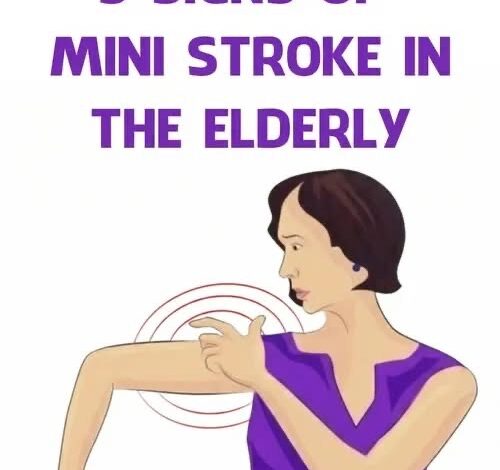
The prevailing medical narrative suggests that a stroke is a lightning strike—a sudden, cataclysmic event that occurs without preamble. However, as clinical research advances in 2026, a more nuanced reality is emerging. For many individuals, a major ischemic or hemorrhagic stroke is not the beginning of the story, but the final chapter of a biological warning phase that can span days or even weeks. Understanding these early seismic shifts in the body is not merely an academic exercise; it is the most effective tool we have for preventing permanent neurological damage. In the world of neurology, the mantra remains absolute: “Time lost is brain lost.” By learning to decode the body’s subtle, early distress signals, we move from a state of reactive crisis to one of proactive preservation.
The Mechanics of the “Warning” Phase
To understand why a stroke can signal its arrival weeks in advance, one must understand the nature of blood flow to the brain. A stroke occurs when that flow is interrupted, either by a clot (ischemic) or a rupture (hemorrhagic). Often, before a total blockage occurs, the vascular system experiences “stutters”—brief, intermittent periods where oxygen delivery is compromised but not entirely severed. These episodes are frequently manifested as Transient Ischemic Attacks (TIAs), commonly known as “mini-strokes.” While a TIA produces stroke-like symptoms that may vanish within minutes, it is a medical emergency of the highest order. It is the body’s way of screaming that a massive, life-altering event is imminent.
Unilateral Weakness: The Tell-Tale Drift
One of the most frequent early indicators is a localized weakness or numbness that affects only one side of the body. In its early stages, this rarely feels like paralysis. Instead, it may begin as a slight, persistent tingling in a hand, a subtle heaviness in a leg, or a minor “droop” in the corner of the mouth that is only visible in a mirror. Because these sensations can be intermittent, many people dismiss them as a pinched nerve, poor sleeping posture, or general fatigue.
However, the brain is a highly lateralized organ. When the blood supply to the right hemisphere is pinched, the left side of the body pays the price. A person might notice they are suddenly clumsier with their non-dominant hand or that their gait feels slightly “off,” as if one leg is not quite keeping pace with the other. If these sensations appear and disappear over the course of several days, it is a clear sign that the vascular system is struggling to maintain equilibrium.
The Visual Prelude
The eyes are often described as windows to the soul, but in neurology, they are windows to the carotid arteries. Sudden, unexplained changes in vision are a hallmark of impending vascular trouble. This can manifest as blurred or double vision, but perhaps the most specific warning is amaurosis fugax—a temporary loss of vision in one eye that feels like a dark curtain being pulled down over the field of sight.
These episodes may last only seconds or minutes before the “curtain” lifts and vision returns to normal. Because the recovery is so complete, many patients convince themselves it was just a temporary strain or a dry eye issue. In reality, it is often caused by tiny emboli (clots) briefly lodging in the ophthalmic artery. These micro-clots are harbingers of larger blockages that could soon move deeper into the brain’s territory.
The Thunderclap and the Spin: Headaches and Vertigo
While we all experience headaches, a “stroke-warning” headache has a distinct profile. It is often described as the “worst headache of one’s life” or a sudden, intense “thunderclap” of pain that seems to come out of nowhere. If this pain is accompanied by neck stiffness, unusual sensitivity to light, or unexplained nausea, it may indicate a slow leak or a mounting pressure within the cranium.
Similarly, sudden bouts of dizziness or a loss of coordination can signal that the cerebellum—the part of the brain responsible for balance—is being starved of oxygen. This isn’t just a feeling of being lightheaded; it is true vertigo, where the room seems to spin or the floor feels like it is tilting. If you find yourself reaching for walls to steady yourself or if your “sea legs” persist while standing on solid ground, your brain may be struggling with a compromised posterior circulation.
Communication Breakdowns: The Subtle Slur
Long before a person loses the ability to speak entirely, they may experience “expressive aphasia.” This might manifest as a momentary struggle to find a common word, a slight slurring of speech that sounds like mild intoxication, or a brief difficulty understanding what someone else is saying. These “glitches” in the linguistic centers of the brain are high-level warnings. When the brain’s processing speed stutters, it is a direct reflection of a lack of glucose and oxygen—the two fuels the brain requires to maintain the complex task of human communication.
The 2026 Approach to Prevention
As we move through 2026, the medical community is emphasizing the “FAST” acronym (Face, Arms, Speech, Time), but with an added focus on “PRE-FAST” symptoms. We are learning that the “weeks in advance” window is the golden opportunity for intervention. If a patient seeks help during this period, doctors can use advanced imaging, such as CT angiographies or MRIs, to locate the source of the trouble. Treatments such as blood thinners, carotid endarterectomy (cleaning out the neck arteries), or the placement of stents can often prevent the “big” stroke from ever happening.
The tragedy of stroke is often found in the “if onlys.” If only the patient had mentioned the tingling; if only they hadn’t ignored the blurred vision; if only they had realized that the sudden headache was more than just stress. We must cultivate a culture where seeking medical attention for “temporary” symptoms is seen as an act of wisdom rather than an overreaction.
In a stroke, the brain loses nearly 1.9 million neurons every minute. By the time a full-scale stroke is in progress, the damage is often irreversible. However, the body is a remarkably communicative system. It almost always sends a scout before it sends the army. Whether it is a “mini-stroke,” a week of unusual dizziness, or a hand that won’t quite grip a coffee mug, these are the body’s attempts to save its own life.
Listening to these silent warnings is the difference between a future of rehabilitation and a future of continued independence. The next time you or a loved one experiences an “odd” neurological symptom that seems to disappear as quickly as it came, remember the unsettled truth of the modern era: safety isn’t a place, and health isn’t a guarantee—it is a hope we protect by acting with decisive clarity the moment the warnings begin.