The Terrifying Truth Behind Those Global War Rumors, What the Government Isnt Telling You About Americas Secret Diplomatic Shadow Games
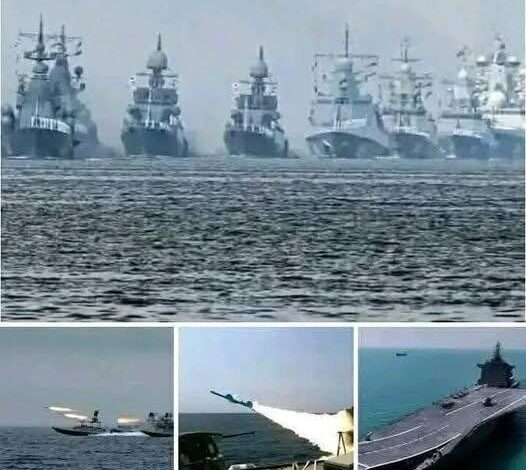
In an era defined by the lightning-fast spread of digital information, the line between global reality and online hysteria has become increasingly blurred. Every day, millions of people wake up to headlines and social media alerts that suggest the world is on the precipice of total collapse, with many claiming that the United States has secretly entered a new, devastating war. These rumors, fueled by high-octane algorithms and a general sense of global anxiety, often make international developments seem far more terrifying than the measured reality of the situation. While the headlines scream of sudden escalations and inevitable conflict, a much quieter and far more complex picture is unfolding behind the scenes—one defined not by the drumbeat of war, but by the intricate, invisible threads of high-stakes diplomacy and controlled military posturing.
To understand the current global security landscape, one must first look past the noise of viral panic. Despite the alarming narratives that frequently dominate public discourse, the United States has not engaged in a newly declared war. Instead, the nation is navigating a world riddled with long-running regional tensions and deep-seated historical conflicts that require a surgical, deliberate approach rather than the blunt force of sudden military intervention. The reality of modern American involvement is one of calculated support and strategic positioning, where the primary goal is often to manage risk and prevent the very escalations that social media users fear most.
Take, for example, the ongoing crisis in Ukraine. If one were to follow the more extreme corners of the internet, they might believe that American troops are on the verge of a direct confrontation with a nuclear superpower. However, the reality is a testament to the power of indirect influence. The U.S. role remains firmly centered on logistical support, intelligence sharing, and the implementation of sophisticated economic sanctions. It is a strategy of coordination rather than combat. Behind the scenes, American officials are engaged in a constant, grueling cycle of diplomatic conversations aimed at encouraging stability and ensuring that the conflict does not spill over into a broader, uncontrollable conflagration. This is the “shadow game” of modern geopolitics—a theater where the most important victories are often the ones that never make the news because they involve preventing a crisis rather than reacting to one.
Even in relationships marked by deep-seated rivalry and historical animosity, the channels of communication remain surprisingly active. While the public sees a wall of silence or hostile rhetoric, the reality is that major global players are still choosing the bargaining table over the battlefield. We see this in the trilateral discussions involving Russia and Ukraine held in the neutral territory of the United Arab Emirates. We see it in the indirect, back-channel negotiations between the United States and Iran taking place in Oman. These are the quiet rooms where the real work of global security is done. The existence of these talks proves that even when the world seems to be moving toward the brink, the preference for diplomacy persists. These negotiations serve as a vital pressure valve, allowing rivals to communicate their boundaries and avoid the kind of accidental escalations that lead to “hot” wars.
The confusion that plagues the public today stems largely from the fact that the nature of conflict has fundamentally changed. We no longer live in an age of dramatic declarations of war or clear, decisive turning points. Modern conflict is a slow-motion grind that progresses through a series of limited strikes, sophisticated cyber activity, the use of proxy groups, and calculated political messaging. This “gray zone” of warfare is designed to be ambiguous. It is meant to create doubt and uncertainty, making it incredibly easy for misinformation to take root and flourish. When a cyberattack occurs or a proxy group launches a strike, it doesn’t always signal the start of a war, but in the hothouse environment of social media, it is immediately framed as the “end of the world.”
Because these modern conflicts unfold in such murky ways, distinguishing between a temporary rise in tension and the start of an outright war has become harder than ever for the average citizen. This uncertainty is the primary currency of viral misinformation. A single out-of-context video or an exaggerated post can travel around the globe in seconds, distorting reality and creating a feedback loop of fear. Once a narrative of “imminent war” takes hold, it becomes self-sustaining, as people begin to interpret every minor military movement or diplomatic statement through the lens of that fear.
This is why understanding the nuances of global security is no longer just a task for experts; it is a necessity for anyone who uses the internet. Clear, accurate information is the only effective antidote to unnecessary panic. In a digital environment where misinformation travels with a speed and ferocity that would have been unimaginable a decade ago, the ability to interpret events with a calm, analytical mind is a form of self-protection. It allows the public to remain aware of real dangers without becoming paralyzed by imagined ones.
Ultimately, the greatest threat to our collective security may not be found on distant, physical battlefields. Instead, it may lie in the way online narratives shape and manipulate public perception. When we allow ourselves to be governed by fear rather than facts, we lose the ability to view global challenges with the context they require. We become susceptible to the very chaos that diplomacy seeks to prevent. Staying informed—truly informed, rather than merely “notified”—ensures that we can navigate this complex world with clarity.
As we move deeper into 2026, the complexity of international relations will only continue to grow. There will be more rumors, more alarming headlines, and more viral posts claiming that the end is near. However, the enduring strength of international diplomacy, the persistence of back-channel negotiations, and the deliberate nature of American strategic support tell a different story. It is a story of a world that is struggling with significant challenges, yes, but also one where the major players are working tirelessly to avoid the abyss. By choosing context over confusion and calm over fear, we can see the world for what it truly is: a place where the quiet work of peace is still far more powerful than the loud noise of war.