THE SILENT FALL, Why Millions of Seniors are Losing Their Balance, And the 5 Fatal Everyday Habits That Make a Routine Trip, Your Last
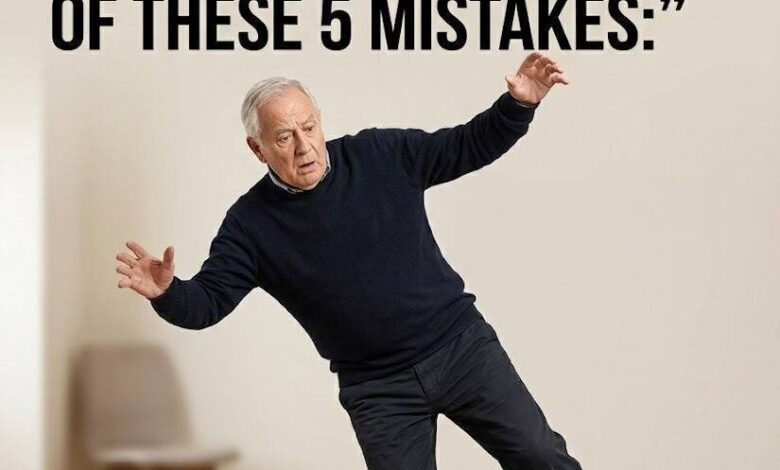
Independence is the invisible currency of the elderly, a wealth built on the simple, unthinking ability to stand, walk, and navigate the world without fear. Yet, for millions of seniors across the globe, this currency is being quietly embezzled by a thief that moves in shadows. Balance doesn’t typically vanish in a single, dramatic moment of collapse; it ebbs away slowly, eroded by a series of common, preventable mistakes that most people dismiss as the “natural” tax of aging. The chilling reality, however, is that losing your stability is rarely an inevitable byproduct of the calendar. It is more often the result of a “perfect storm” of lifestyle choices, sensory neglect, and a stubborn refusal to adapt to the body’s changing architecture.
To understand why the ground beneath our feet suddenly feels like shifting sand, we must first look at the intricate machinery required to keep a human being upright. Balance is not a single “sense” like sight or smell; it is a high-stakes collaboration between the muscles, the inner ear’s vestibular system, the eyes, and the nervous system’s rapid-fire communication. As the decades pass, these systems begin to de-sync. According to the National Institute on Aging, balance problems are almost always a combination of factors rather than a single point of failure. When one system weakens, the others must compensate, but when we make specific “everyday mistakes,” we strip the body of its ability to adjust, leading to the “shocking” falls that change lives in an instant.
The first and perhaps most lethal mistake is the “Comfort Trap”—the slow slide into physical inactivity. It is a cruel irony of aging that as movement becomes more difficult, we tend to do less of it, which in turn makes movement even harder. This cycle of sedentary behavior leads directly to sarcopenia, the age-related loss of muscle mass. Inactivity doesn’t just make you tired; it erodes the “stabilizer muscles” in the core and legs that act as your internal gyroscope. Studies consistently show that less movement equals less neurological control. When you stop walking daily or engaging in light strength training, your brain actually “unlearns” how to coordinate with your limbs. The result is a body that lacks the reactive power to catch itself after a minor stumble.
Compounding this physical decline is a psychological hurdle that many seniors find impossible to clear: the “Pride Barrier.” This is the refusal to use support tools like canes, walkers, or even simple hallway handrails because of the perceived stigma of dependency. Many older adults view a cane not as a tool for freedom, but as a white flag of surrender. However, the data is uncompromising. Failing to use support when the body signals a need for it is a leading contributor to catastrophic falls. In this context, support isn’t a sign of weakness; it is a strategic maneuver for safety. Choosing pride over a walker often leads to the very thing the individual fears most—a total loss of independence following a hip fracture or head injury.
Even more insidious is the “Medication Maze.” As we age, the number of prescriptions typically increases, creating a chemical cocktail that can wreak havoc on the inner ear and blood pressure. Many seniors overlook the fact that their daily pills—ranging from blood pressure medication to sleep aids—carry side effects like dizziness, fatigue, and sudden drops in equilibrium. When multiple medications interact, the risk of “orthostatic hypotension”—that dizzy spell you feel when standing up too quickly—skyrockets. Failing to regularly review these prescriptions with a doctor is a common oversight that leaves many seniors living in a constant state of chemical vertigo, unaware that the solution to their instability might be as simple as a dosage adjustment.
We must also confront the “Sensory Blind Spot.” Balance is a visual and auditory feat as much as a muscular one. If you cannot see the edge of a rug or the depth of a curb, your brain cannot send the correct signals to your feet. Similarly, the inner ear is the body’s primary balance center, and hearing loss is often linked to vestibular dysfunction. Ignoring the need for updated glasses or hearing aids isn’t just about missing out on conversation or clear television; it is a direct threat to your center of gravity. Experts confirm that if your sensory input is distorted, your body’s physical response will be equally skewed, leading to misjudged distances and fatally slow reaction times.
Perhaps the most underestimated mistake is the “Foundation Failure”—wearing the wrong footwear. The feet are the primary interface between the body and the earth, yet many seniors navigate their homes in loose slippers, worn-out sneakers, or even high-heeled shoes that provide zero lateral support. Your feet provide the sensory feedback your brain needs to know exactly where you are in space. If that foundation is unstable or the shoes offer no grip, everything above them becomes precarious. Loose-fitting footwear is a “silent killer” in the home, turning a routine walk to the kitchen into a high-wire act without a net.
The consequences of these mistakes are not merely inconvenient; they are often the beginning of the end for a senior’s quality of life. Falls are a leading cause of injury and death in older adults, yet the “Hidden Truth” is that balance loss can often be managed, improved, or even reversed. By staying hydrated, strengthening leg muscles through targeted balance exercises like Tai Chi or simple leg lifts, and being proactive about sensory health, the “inevitable” decline becomes a manageable condition.
The “Bigger Insight” here is that balance is the guardian of confidence. When you trust your body to stay upright, the world remains open to you. When that trust vanishes, your world shrinks to the size of a chair. Protecting your balance means protecting your ability to see your grandchildren, to travel, and to live on your own terms. The smallest changes—getting a new pair of sturdy shoes, asking a doctor about a dizzy spell, or finally accepting that stylish cane—are the very things that prevent the biggest tragedies.
If there is a final lesson to be learned from the statistics, it is that the ground only feels far away when you stop respecting the systems that keep you above it. The “nightmare” scenarios we hear about—the routine landings at airports that turn into disasters or the sudden losses of memory following a fall—remind us that life is fragile. But by addressing these five common mistakes, we can ensure that the “golden years” aren’t defined by a fear of the floor, but by the steady, confident stride of someone who knows exactly where they stand. Don’t let your pride or your habits steal your footing; the earth is firm, provided you have the strength and the wisdom to walk upon it correctly.