The New Baba Vanga Warning, Why a Chilling July 5th Prophecy Has Japan on High Alert and Millions Fearing a Triple Tsunami Disaster
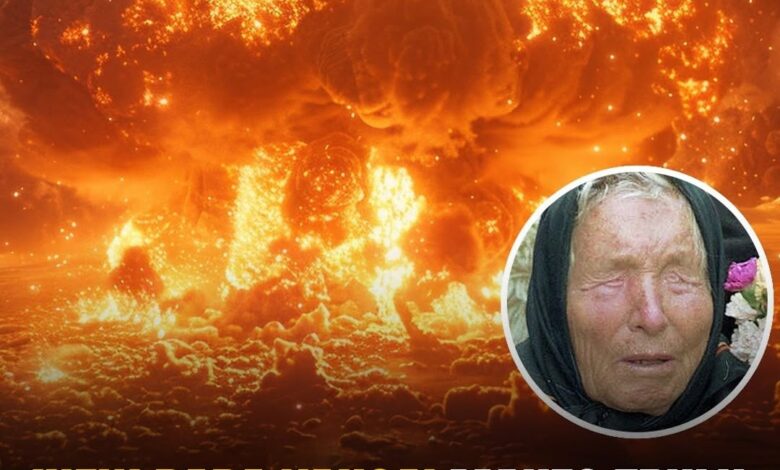
The human fascination with the future has always been a blend of morbid curiosity and a desperate need for preparation. Throughout history, figures like Nostradamus and the legendary Bulgarian mystic Baba Vanga have captivated the global imagination, with followers claiming their cryptic quatrains and visions successfully foretold the Great Fire of London, the rise of Adolf Hitler, and the seismic shifts of the September 11 attacks. Even decades after their deaths—Nostradamus in 1566 and Vanga in 1996—their legacies continue to haunt the digital age. But as 2026 unfolds, a new voice has emerged from the East, carrying a warning so specific and so terrifying that it has sent shockwaves through the Pacific Rim. Ryo Tatsuki, a former manga artist now whispered about as the “Japanese Baba Vanga,” has identified a date that many are now viewing with a sense of impending dread: July 5th.
Tatsuki’s rise from a niche illustrator to a global prophetic figure is a story of uncanny coincidences—or, as her supporters argue, genuine clairvoyance. In the 1980s, she began documenting a series of vivid, disturbing dreams that she eventually published in her 1999 manga, The Future I Saw. For years, the book remained a cult curiosity until reality began to mirror its pages with frightening precision. Most notably, the cover of her original publication featured the words “March 2011 Great Disaster Comes.” When the 9.1 magnitude earthquake and subsequent tsunami devastated the Tōhoku region on March 11, 2011, claiming nearly 20,000 lives, Tatsuki’s status was instantly elevated from artist to oracle. Now, she is pointing toward a new window of catastrophe, claiming that a disaster “three times larger” than the 2011 tragedy is looming on the horizon.
The specifics of Tatsuki’s vision are as vivid as they are horrifying. She describes a dream in which the ocean appears to “boil,” a phenomenon often associated in folklore and geological history with massive undersea volcanic eruptions or sudden tectonic shifts. Her prophecy identifies a diamond-shaped impact zone—a geographic footprint that encompasses Japan, Taiwan, Indonesia, and the Northern Mariana Islands. In this vision, she witnessed dragon-like shapes rising from the depths and approaching the coastline, a visual metaphor that some geological enthusiasts interpret as the massive, rolling swells of a megatsunami or the subterranean ruptures of the Pacific Ring of Fire. Unlike the vague “end of the world” prophecies of the past, Tatsuki’s warning focuses on a precise area known for its extreme geological instability, specifically the Nankai Trough.
The Nankai Trough has long been the subject of intense study by seismologists, who admit that the region is overdue for a massive rupture. While modern scientists maintain that there is no empirical basis for psychic prophecies, the geographic alignment of Tatsuki’s “dream” with known tectonic fault lines has made it difficult for the public to dismiss her claims entirely. The area she describes is a subduction zone where the Philippine Sea Plate is sliding beneath the Eurasian Plate; historical data suggests that this region produces massive “megathrust” earthquakes every 100 to 150 years. If Tatsuki’s vision of a disaster “three times bigger” than 2011 were to manifest, the resulting tsunami would likely dwarf anything seen in modern history, potentially inundating coastal cities across multiple nations within minutes.
The reaction to these claims across social media has been a volatile mix of skepticism, dark humor, and genuine preparation. On platforms like X (formerly Twitter), users have compared the situation to a real-life “Death Note”—referencing the famous manga where names written in a cursed notebook result in inevitable fate. “Predictions aren’t certainties,” one viral post remarked, “but if there’s even a 1% chance of truth, it’s better to have a go-bag ready than to spend July 5th in a state of panic.” Others have noted the psychological weight of such “catastrophic” warnings, arguing that they create a self-fulfilling prophecy of anxiety. Yet, for many in Japan, a country that lives in a constant state of earthquake readiness, the “better safe than sorry” mantra is not just a slogan; it is a way of life.
Interestingly, Tatsuki’s warning comes at a time when interest in the original Baba Vanga’s 2025 and 2026 forecasts is also peaking. Vanga’s purported predictions for the current era include everything from a major conflict on the European continent to extraterrestrial contact and even specific sporting outcomes, such as Lewis Hamilton’s legendary seventh World Championship quest with Ferrari. While these forecasts cover a broad spectrum of human experience, Tatsuki’s focus remains singular and environmental. She is not concerned with political maneuvering or sports legacies; her focus is entirely on the raw, unchecked power of the Earth itself. By documenting her visions as a manga artist, she has provided a visual record that makes her claims feel more tangible—and thus more threatening—than a simple verbal proverb.
The “boiling” ocean and the diamond-shaped impact zone have led some analysts to look toward Hawaii and other coastal volcanic chains as potential triggers. Seismic activity in the vicinity of the Pacific islands could, in theory, create the “dragon-like” shapes described in Tatsuki’s dreams—transoceanic waves that move with the speed of a jet engine across the deep water. The fear is that a massive undersea landslide, perhaps triggered by the “seismic dragons” she envisions, could displace enough water to create a wave that would redefine the coastlines of the Western Pacific. While the scientific community remains steadfast in its reliance on sensors, buoys, and satellite data, the public’s reliance on the “Japanese Baba Vanga” suggests a deep-seated distrust in our ability to predict the unpredictable through technology alone.
As July 5th approaches, the conversation has shifted from “if” to “what if.” The legacy of Ryo Tatsuki is no longer just about a manga published in the late nineties; it is about the intersection of ancient mysticism and modern anxiety. Whether one views her as a legitimate seer or a lucky artist who tapped into a collective cultural fear of the ocean, the impact of her words is undeniable. She has forced a global audience to look at the map of the Pacific and realize just how fragile our coastal civilizations truly are. The 2011 tsunami changed the world’s understanding of disaster recovery; Tatsuki’s July 5th prophecy is a reminder that nature may have even larger lessons in store.
Ultimately, the power of a prophecy lies not in its fulfillment, but in the action it inspires. If Tatsuki’s warning leads to better emergency drills, reinforced seawalls, or simply a renewed respect for the power of the Ring of Fire, it has served a purpose regardless of what happens on July 5th. As millions keep a watchful eye on the horizon, waiting for any sign of a “boiling” sea, the world is reminded that we are all temporary guests on a very active planet. Prophecies like those from the “New Baba Vanga” serve as the ultimate alarm clock—a chilling reminder to cherish the stability we have and to be ready for the moment the “dragons” of the deep finally decide to wake up. Whether the ocean stays calm or lives up to the terrifying vision of The Future I Saw, the date of July 5th is now firmly etched into the global calendar of “what-might-be,” a testament to the enduring power of the dreams we fear most.