The Minab School Blast, What Really Happened When a Missile Strike Shook Southern Iran and Why the World Is Now Demanding Answers
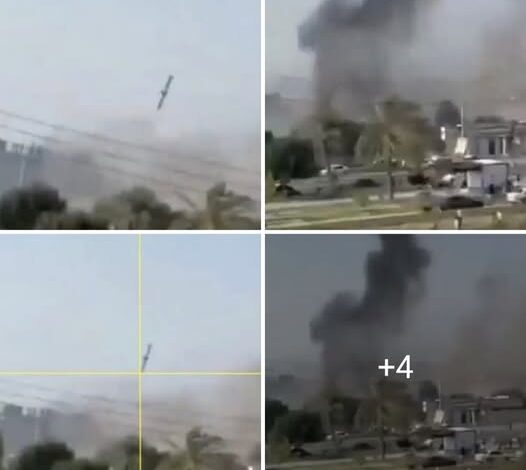
In the early weeks of March 2026, the quiet, routine atmosphere of a girls’ school in Minab, Hormozgan Province, was shattered by an explosion that has since sent shockwaves far beyond the borders of Southern Iran. What was supposed to be a standard day of education transformed into a scene of absolute chaos, leaving students terrified, families devastated, and international observers questioning the safety of civilian spaces in an increasingly volatile region.
The blast occurred during peak school hours, ensuring maximum psychological and physical impact. Witnesses on the ground described a harrowing sequence of events: the sudden, deafening roar of an explosion, followed by the sight of rising black smoke and the sound of shattering glass raining down on the pavement. Panicked students were seen fleeing the building, their school uniforms clouded by dust and debris. Emergency responders fought through congested streets and frantic crowds to reach the site, where it was quickly confirmed that multiple students had sustained injuries requiring urgent medical intervention.
While the physical wounds are being treated, the emotional scars on the community of Minab run far deeper. For the parents in this region, the school was a sanctuary—a place defined by the predictable rhythms of learning and growth. That sense of security has evaporated, replaced by a haunting uncertainty that lingers over every classroom.
In the immediate aftermath of the tragedy, the vacuum of official information was rapidly filled by intense speculation. Unverified reports began to circulate across social media and underground news outlets, suggesting that the explosion was the result of a sophisticated long-range missile system. Some analysts have pointed to the strategic location of Hormozgan Province as a potential factor, hinting at military testing gone wrong or a targeted strike. However, forensic experts caution against premature conclusions. Determining the true origin of such a blast requires meticulous technical work, including the analysis of shrapnel patterns, chemical residues, and radar data. Until a transparent investigation is completed, the world remains in a state of “weighted uncertainty.”
The international community has not remained silent. Global human rights organizations and educational advocates have issued stern reminders that schools are protected environments under international norms. The presence of children at the time of the strike has amplified calls for accountability. Regardless of the political or military tensions in the region, the consensus is clear: educational institutions must never become collateral damage.
At the local level, the crisis is far more personal. Families are grappling with the logistical nightmare of where their children will go next. With the school building structurally compromised and the psychological trauma and fear at an all-time high, the future of education in Minab is under threat. The spread of misinformation has only made the recovery harder, creating a climate of fear where facts are difficult to distinguish from propaganda.
As we move deeper into 2026, the incident in Minab stands as a grim reminder of how quickly stability can vanish. Whether the cause of the explosion is eventually revealed to be a catastrophic technical failure or a deliberate act of aggression, the burden of proof lies with the authorities. For the people of Southern Iran, “moving on” is not an option until they receive the clarity they deserve. Restoring a sense of safety is a slow, grueling process, but it begins with the truth. Until then, the empty chairs and broken windows of the Minab girls’ school remain a silent, powerful indictment of a world where even a classroom is no longer a guaranteed refuge.