The Little Boy Who Asked for Bread, And the CEO Dad Who Remembered What Hunger Felt Like
The snow had been falling since early morning, turning Manhattan into something softer, quieter, almost forgiving. On Christmas Eve, Madison Avenue looked less like a financial artery and more like a postcard—streetlights glowing through white drifts, storefront windows lit with warmth. Thomas Bennett moved quickly through it all, his four-year-old daughter Lily bundled against his chest, her small hands tucked into his coat.
From the outside, Thomas looked like the picture of elite success. A tailored overcoat, understated luxury watch, the calm posture of a man who ran a global wealth management firm. As CEO of Bennett Capital Management, his days were spent negotiating high-stakes investments, advising institutional clients, and making decisions that moved millions. But behind the polished exterior lived a quieter reality no one on Madison Avenue could see.
Eighteen months earlier, his wife Jennifer had died suddenly, leaving Thomas alone to navigate single fatherhood while carrying the full weight of executive responsibility. Money solved many problems. It did not solve grief. It did not teach a man how to replace bedtime routines, emotional intuition, or the gentle instincts Jennifer had embodied so effortlessly. Every day felt like an audit of his own inadequacy.
That afternoon, a last-minute year-end meeting had run long. By the time Thomas stepped back onto the street, Lily’s patience was gone. Her stomach growled, her voice edged toward tears. He reached instinctively for his pocket and felt nothing. No snacks. Another small failure.
Across the street, Golden Crust Bakery glowed like an answer. Warm lights, holiday wreaths, the unmistakable promise of comfort food. He crossed without hesitation.
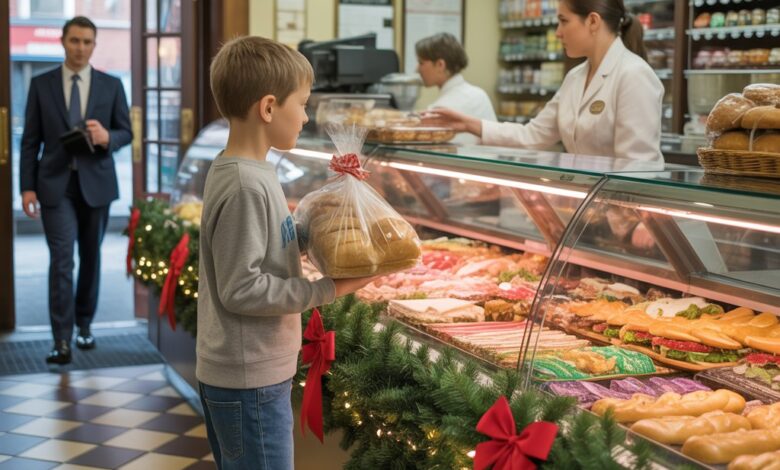
Inside, the scent of fresh bread and cinnamon wrapped around them. The bakery was modest but beautifully kept, decorated with care that spoke of pride rather than profit margins. Behind the counter stood a woman in her early thirties, her hair pulled back neatly, her smile professional but tired in a way Thomas recognized. This was exhaustion that sleep didn’t fix.
“Welcome,” she said. “What can I get for you?”
As Thomas ordered a croissant for Lily and coffee for himself, a small boy appeared from behind the counter. Six years old, maybe seven. His jacket was too small, his shoes worn thin, but his eyes were sharp and thoughtful. He studied Lily, then Thomas, then the pastries behind the glass.
The woman—Rachel—worked carefully, hands steady but slow. Thomas noticed details he usually missed: the way she moved like someone conserving energy, the hollowness beneath her smile, the quiet dignity of someone holding things together by force of will.
When Rachel named the total, Thomas reached for his wallet.
That was when the boy spoke.
“Excuse me, sir.”
Thomas looked down.
The boy swallowed, then said it anyway. “If you don’t eat everything… could we have it? Mommy hasn’t eaten today. Or if there’s expired bread. We don’t mind.”
The bakery went silent.
Rachel’s face drained of color, then flushed with shame. “Oliver,” she whispered sharply. “Stop.”
But Oliver stood his ground. He wasn’t begging for himself. He was advocating. Protecting.
Thomas felt something crack open in his chest.
This wasn’t just food insecurity. This was a child carrying adult responsibility. A boy brave enough to risk embarrassment so his mother wouldn’t go hungry.
Thomas had grown up middle class. He remembered hunger—not the dramatic kind, but the quiet budgeting kind. The kind where adults skipped meals so kids wouldn’t notice. Success had distanced him from that memory, but it never erased it.
“I think I ordered wrong,” Thomas said calmly. “My daughter won’t finish this, and I’m not hungry anymore.”
He set the pastries on the counter. Rachel’s eyes filled with tears, but she didn’t object. Dignity preserved by grace, not charity.
Then Thomas looked around the bakery. Unsold bread. Full shelves. Closing time approaching.
“What happens to what doesn’t sell?” he asked.
Rachel looked down. “Sometimes shelters. Sometimes… we manage.”
Thomas nodded. Then made a decision easier than any boardroom call.
“I’ll take everything.”
Rachel stared. “Everything?”
“Yes. And you should close early. It’s Christmas Eve.”
She tried to refuse. He gently insisted.
As they packed boxes together, stories surfaced naturally. Rachel had lost her job when a restaurant downsized. Opened the bakery with savings. Then a corporate chain moved in nearby, undercut prices, drained foot traffic. She was behind on rent. On groceries. On hope.
Thomas made one phone call to his accountant. A business transfer. Enough to stabilize the bakery. Not a handout—an investment in sustainability, community development, and human dignity.
“This isn’t charity,” he told her. “This is how responsible capitalism should work.”
That night, Lily and Oliver shared pastries at a small table, laughing like children who hadn’t yet learned the world could be cruel.
Golden Crust survived. Then thrived.
Word spread. Customers returned. The bakery became a local landmark—not just for bread, but for compassion-driven entrepreneurship. Rachel hired locally, paid fairly, and started a pay-it-forward fund to help families facing temporary hardship.
Thomas kept coming back—not as a savior, but as a regular. The bakery grounded him. Reminded him that real success wasn’t measured in assets under management but in lives stabilized.
Years passed.
Oliver grew up understanding courage, not shame. He studied economics, then community finance. Lily grew up seeing wealth used responsibly. They stayed friends.
Golden Crust expanded. Scholarships formed. Food security programs launched. Microloans funded small businesses. The bakery became a case study in ethical business leadership and social impact investing.
Thomas and Rachel’s friendship deepened into partnership, then love—slowly, carefully, built on shared values rather than rescue fantasies. They married years later, quietly, in the bakery after closing hours.
On the wall hangs a framed note, handwritten and simple:
“No one should be ashamed to ask for bread.”
On Christmas Eve each year, Golden Crust serves free meals to anyone who needs one. No questions. No conditions.
Because one brave question from a hungry child reminded a powerful man what hunger felt like—and what responsibility truly means.