The Kharg Island Target, How a Resurfaced 1988 Trump Quote Predicted the Next Phase of Middle East Conflict
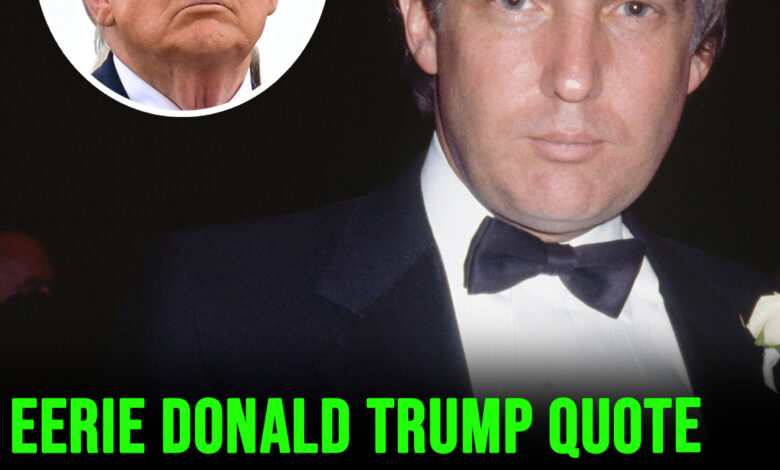
In the volatile arena of international relations, history often provides the most chilling blueprints for the future. As the United States navigates a complex and increasingly dangerous standoff with Iran in 2026, a specific, decades-old statement from Donald Trump has resurfaced, sending shockwaves through diplomatic circles. While the current administration grapples with tactical shifts and the definition of a “win” in the Persian Gulf, these forgotten words from 1988 are being treated by many as a prophetic roadmap. The quote doesn’t just suggest a general strategy; it names a specific, high-stakes target that could dismantle the Iranian economy in a single afternoon: Kharg Island.
The original interview took place nearly forty years ago with The Guardian, while Trump was promoting his bestseller, The Art of the Deal. Even then, his perspective on foreign policy was defined by a rejection of perceived American weakness. His rhetoric was surgical and uncompromising. “I’d be harsh on Iran,” he stated with the bluntness that would later become his political trademark. “One bullet shot at one of our men or ships, and I’d do a number on Kharg Island. I’d go in and take it… It’d be good for the world to take them on.”
To the casual observer in 1988, this might have sounded like the bravado of a New York real estate mogul. But to today’s geopolitical analysts, the mention of Kharg Island is anything but random. Strategically situated in the northeastern Persian Gulf, Kharg Island is the juggernaut of Iran’s oil infrastructure. It handles roughly 90% of the country’s crude oil exports, serving as the primary terminal that connects Iranian energy to the global market. In the chess match of modern warfare, Kharg Island is the king; to “do a number” on it would be to effectively paralyze the Iranian state’s financial lifeblood.
The renewed circulation of this quote comes at a moment when public discourse is hungry for clarity. For supporters, the 1988 interview is evidence of a remarkable, long-term consistency in Trump’s worldview—a “strength-first” approach that refuses to blink in the face of provocation. They argue that identifying such a critical vulnerability decades ago shows a keen understanding of leverage. Conversely, critics and international observers express deep concern over the escalation such a move would represent. Targeting Kharg Island wouldn’t just be a military strike; it would be a global energy catastrophe, potentially sending oil prices into a tailspin and forcing every major economy into a state of emergency.
What makes this “eerie” is the precision of the scenario. The 1988 quote specifically ties the destruction of the island to a single act of aggression against American personnel or vessels—the exact type of “red line” incident that current military commanders are monitoring around the clock. As operations continue with no clear endpoint in sight, the public is left wondering if the “big stick” policy envisioned in the late 80s is finally being pulled from the shelf.
In a world of fluid alliances and shifting shadows, this historical context provides a startling lens through which to view 2026. It reminds us that while technology and leadership change, the underlying geography of power remains static. Kharg Island was a pressure point in the 20th century, and it remains the ultimate “kill switch” today. Whether this resurfaced quote remains a historical curiosity or becomes a verified tactical reality is the question currently keeping the world on edge. The blueprint has been public for nearly forty years; the only question left is if anyone is finally ready to build it.