The Hidden Hero of Your Seat Belt – What Is That Little Round Button! And Why Its Essential
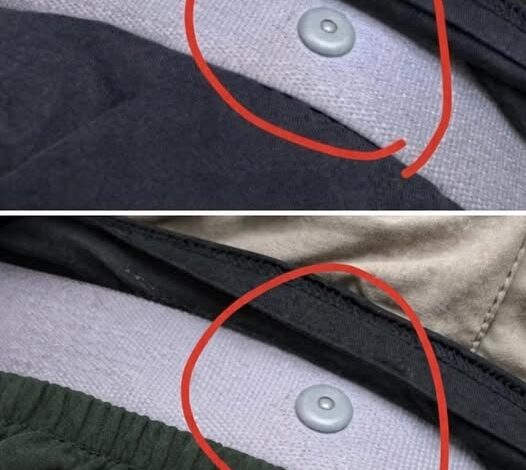
In the modern world, safety is often measured in the grand and the complex—airbags that deploy in milliseconds, high-strength steel cages, and sophisticated sensors that predict a collision before the driver even touches the brakes. Yet, within the cabin of every vehicle, there exists a masterpiece of subtle engineering that we interact with every single day, often without a conscious thought. The seat belt is the most fundamental and effective safety device ever devised for automotive travel, and while its primary components—the webbing, the retractor, and the buckle—are well-understood, there is a tiny, unassuming feature that frequently sparks curiosity. It is a small, round plastic button, often referred to as the “stopper,” and while it may appear to be a minor manufacturing detail or even a piece of decoration, it is, in fact, an essential functional element in the architecture of passenger protection.
To understand the value of this small button, one must first appreciate the delicate physics involved in a vehicle collision. When a car stops abruptly, the occupants continue to move forward at the vehicle’s previous speed due to inertia. The seat belt’s primary job is to bridge that gap, anchoring the body to the vehicle’s frame and distributing the immense force of the stop across the strongest parts of the human skeletal structure: the pelvis and the ribcage. For this distribution to be effective, the belt must be perfectly positioned. If a belt sits too high, crossing the soft tissue of the neck, or too low, sliding off the shoulder, the result in a high-impact event could be catastrophic. This is where the small button enters the narrative as a silent, fixed guide. Its primary purpose is to ensure that the latch plate—the metal piece you slide into the buckle—remains at a specific, accessible height on the webbing when the belt is not in use.
The button serves as a physical limit for the latch plate, preventing it from sliding down the strap and disappearing into the abyss between the seat and the door pillar. By keeping the latch plate at a consistent, ergonomic height, the button facilitates a seamless, one-handed motion every time you enter the vehicle. This ease of use is not merely a matter of convenience; it is a critical factor in behavioral psychology. When safety equipment is easy to use and comfortable to wear, compliance rates skyrocket. Conversely, a seat belt that requires a struggle to find or feels awkward across the chest is one that people are more likely to wear incorrectly or, in the worst-case scenarios, skip entirely. The button ensures that the belt is always ready to be deployed in its optimal configuration, crossing the collarbone and the center of the chest, far away from the vulnerable structures of the neck.
Furthermore, the stopper button plays a nuanced role in the performance of modern integrated safety systems, specifically the pretensioners and load limiters. In 2026, seat belt technology is more proactive than ever. Pretensioners are pyrotechnic or mechanical devices that instantly retract the webbing during a collision to remove any slack, pulling the occupant firmly into the seat. For a pretensioner to work with maximum efficiency, the belt must already be in a state of relative alignment. If the webbing is twisted or the geometry of the belt is compromised because it has shifted away from its intended path, the pretensioning force may not be applied evenly. The small button helps maintain the belt’s “pre-crash” geometry, ensuring that when the sensors detect an impact, the safety system can perform exactly as the engineers intended.
Beyond its mechanical function, the button also acts as a point of contact for the “comfort” of the belt. High-quality webbing is designed to be strong enough to hold thousands of pounds of force while remaining soft enough not to chafe the skin. However, the angle at which the belt exits the retractor and crosses the shoulder is dictated by the vehicle’s interior dimensions. The button provides a subtle, fixed point that helps the belt maintain its vertical orientation, preventing it from bunching or twisting as it is pulled across the body. When a belt is kept flat and properly aligned, it reduces the pressure points on the shoulder, making it easier for drivers to maintain focus during long journeys. A comfortable driver is a safer driver, and the stopper button contributes to this environment by ensuring that the most vital piece of safety equipment remains as unobtrusive as possible.
The integrity of this tiny component is vital, yet it is often overlooked during routine vehicle inspections. Because it is made of durable plastic, it is designed to last the life of the vehicle, but it can occasionally become loose, damaged, or entirely detached. If the button is missing, the latch plate will inevitably slide to the floor, forcing the driver to fish for it and often leading to the belt being pulled at an incorrect angle. This seemingly small change in the belt’s “ready state” can lead to improper positioning during a drive, where the webbing might ride up toward the throat. Safety experts emphasize that if this button is lost, it should never be replaced with a temporary fix like a safety pin or a makeshift clip, as these can snag the webbing or cause injury during an accident. Instead, the belt assembly should be inspected by a professional to ensure the webbing has not been compromised and that a proper, manufacturer-approved stopper is reinstalled.
As we move toward an era of increasingly autonomous vehicles, the fundamentals of occupant protection remain anchored in these physical components. Even as cars become more like mobile living rooms, the necessity of the three-point harness remains absolute. The small button on your seat belt is a testament to the philosophy that in engineering, no detail is too small to matter. It is a humble piece of plastic that carries a significant responsibility, serving as the final point of adjustment that ensures a massive, high-speed machine can interact safely with the fragile human form. It is the silent partner of the airbag and the pretensioner, a tiny guide that ensures the seat belt is always exactly where it needs to be to save a life.
Next time you hear that reassuring “click” as you buckle up, take a split second to notice that small round button. It is a reminder that your vehicle was designed with an obsessive attention to detail, where every millimeter of the safety system has been scrutinized to provide the highest level of protection. By ensuring the belt crosses your collarbone and rests securely across your ribs, you are allowing these tiny components to do their jobs. Safety is a collective effort between the driver’s habits and the car’s engineering, and it is the smallest parts of the machine that often provide the most essential support in the moments that matter most.