The Earth Ripped Open at 3,42 AM, Why This 7,7-Magnitude Disaster Is the Wake-Up Call the World Wasn’t Ready For
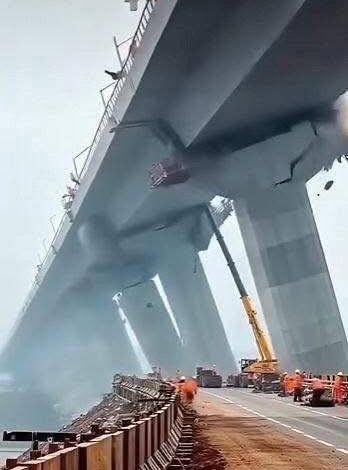
In the silent, pre-dawn hours of Monday, April 6, 2026, the world beneath the feet of millions in Southeast Asia did more than just shift—it fractured with a violent, catastrophic force that has fundamentally altered the landscape of three nations. At precisely 3:42 a.m. local time, while most families were deep in the vulnerability of sleep, a monstrous 7.7-magnitude earthquake tore through the crust along the mountainous borders of southern China, northern Thailand, and Myanmar. The raw power of this seismic event, registered as “major” on the Richter scale, has left behind a trail of ruin that rescue workers are still struggling to quantify. It was not just a tremor; it was a tectonic upheaval that turned thriving communities into fields of jagged concrete and twisted rebar in a matter of seconds.
The technical data provided by the U.S. Geological Survey paints a terrifying picture of why the destruction was so absolute. The epicenter was pinpointed in a rugged, high-altitude region along the China–Myanmar border, but the true danger lay in the quake’s depth—or lack thereof. Striking at a shallow depth of roughly 10 kilometers, the energy released was not absorbed by the earth’s mantle but was instead thrust directly upward and outward with a ferocity that intensified the surface shaking tenfold. In seismic terms, a shallow quake of this magnitude is the “worst-case scenario” for human settlements. The lateral movement was so extreme that it bypassed the structural integrity of even the most modern reinforcements, while the older, historic brick-and-mortar villages of the region stood no chance against the earth’s sudden, violent rhythm.
The timing of the disaster was perhaps its most cruel element. At 3:42 a.m., people were trapped in their beds, buried under the weight of collapsing roofs before they could even realize they were in danger. In the hours following the initial shock, the darkness of the mountain passes became an enemy to survival. Power grids across the Yunnan province in China and the Shan State in Myanmar flickered and died, plunging the disaster zone into a pitch-black nightmare. Communication lines were severed as cell towers toppled, leaving survivors to dig through the rubble with their bare hands, guided only by the screams of neighbors and the faint light of smartphones.
As the sun rose on the first day of the aftermath, the full scale of the tragedy began to emerge from the dust. In the rural outskirts of northern Thailand, entire hillsides had succumbed to massive landslides triggered by the shaking, swallowing roads and isolated hamlets whole. These geographic barriers have created a secondary crisis: isolation. Emergency response teams, though mobilized within minutes by national governments, found themselves staring at impassable canyons where main highways used to be. The mountainous terrain that defines this border region, once a source of beauty and tourism, has now become a labyrinth of obstacles preventing heavy machinery and medical supplies from reaching the wounded.
The structural toll is staggering. In the cities closest to the epicenter, buildings that had stood for generations were reduced to “pancakes”—a term used by engineers to describe floors collapsing directly onto one another, leaving zero air pockets for those inside. Schools, hospitals, and government offices were not spared. Authorities are currently scrambling to establish temporary field hospitals, but the sheer volume of injuries has overwhelmed local resources. The medical crisis is being exacerbated by the rupture of water mains, leading to immediate concerns about the purity of the water supply and the potential for secondary health crises in the crowded displacement camps that are forming spontaneously in open fields.
In the face of such overwhelming devastation, the international community has begun a massive, multi-national coordination effort. China’s central government has deployed thousands of military personnel and specialized search-and-rescue dogs to the border, while the governments of Thailand and Myanmar have declared states of emergency in their respective northern territories. However, the political complexity of the border region adds another layer of difficulty to the relief efforts. Coordinating aid across three sovereign borders during a time of total infrastructure collapse is a logistical puzzle of the highest order. Humanitarian organizations are calling for an “open corridor” policy to ensure that blankets, food, and clean water can move across these borders without the usual bureaucratic delays, emphasizing that the clock is ticking for those still trapped beneath the debris.
Beyond the immediate physical destruction, the 7.7-magnitude quake has left a psychological scar on the survivors. The frequent, powerful aftershocks—some measuring as high as 5.5—continue to rock the region every few hours, sending people screaming back into the streets. There is a profound sense of “seismic anxiety” as people refuse to enter any structure that is still standing, preferring to sleep in cars or under plastic tarps in the pouring rain. This collective trauma is being met by local volunteer groups and religious organizations, who have become the backbone of the initial response, providing hot meals and comfort to those who have lost literally everything.
Experts are already looking toward the future, and the outlook is sobering. This quake serves as a brutal reminder that the fault lines crisscrossing Asia are far more active and dangerous than many modern urban planning models have accounted for. The “Great Asian Fracture,” as some are calling it, has exposed the deadly reality of the “infrastructure gap”—the difference between the rapid economic growth of the region and the lagging safety standards of its buildings. Rebuilding will take years, if not decades, and the cost will likely run into the tens of billions of dollars. But more importantly, the cost in human potential and lost lives is a weight that the region will carry forever.
As the world watches the harrowing footage of families being pulled from the ruins and helicopters hovering over dust-choked valleys, the narrative of the 7.7-magnitude earthquake remains one of both unimaginable loss and incredible resilience. In the midst of the carnage, stories of survival are emerging—of a grandmother pulled from the wreckage after twelve hours, or of a village teacher who led his students to an open field just as their dormitory crumbled. These moments of hope are the only light in a very dark week for Asia. The earth may have ripped open, and the mountains may have moved, but the spirit of the people on the China-Myanmar-Thailand border remains unbroken as they begin the long, agonizing walk toward recovery. The world must not look away; the tragedy of 3:42 a.m. is a global tragedy, and the reconstruction of these lives is a responsibility that belongs to us all.