The Brink of World War III? Why Trumps Successful Strike on Iranian Nuclear Sites Has the Global Powers Bracing for Total Escalation
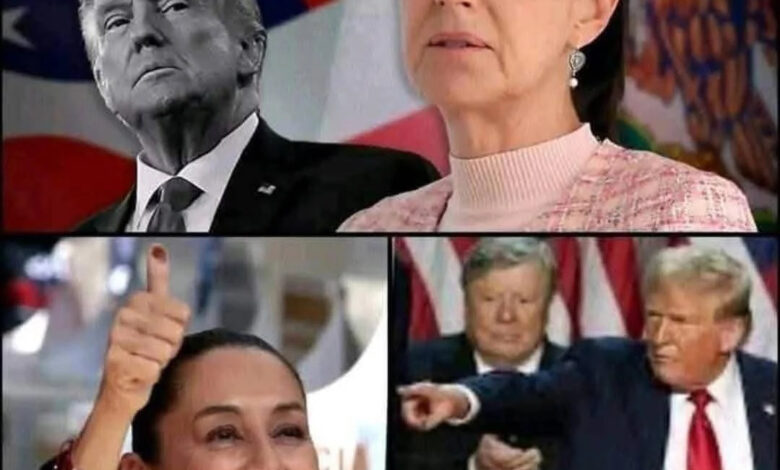
The delicate, decades-long illusion of geopolitical stability in the Middle East didn’t just crack this week—it was vaporized. Following a series of escalating provocations, Donald Trump’s sudden declaration of a “very successful attack” on Iranian nuclear facilities has sent a shockwave through the international community that rivals the most tense moments of the Cold War. What was once discussed in hushed tones in situation rooms is now a terrifying reality, as the world’s most volatile flashpoint moves from “cold” proxy conflicts to direct, high-stakes kinetic warfare.
In Tehran, the response was instantaneous and chillingly precise. Foreign Minister Abbas Araghchi did not just condemn the strike; he framed it as an “outrageous” and “criminal” violation of sovereign territory. In a televised address that felt like a prelude to a formal declaration of hostilities, Araghchi warned that Iran would exercise its “inherent right to self-defense” under the UN Charter. The language was cold, legalistic, and saturated with menace. The phrase “reserves all options” has become the haunting refrain in every world capital, serving as a thinly veiled threat that the retaliation may not be limited to conventional military targets or even the immediate region.
As the smoke clears over the targeted facilities, the global reaction has split the world into two starkly different realities. In Jerusalem and sections of Washington, the operation is being hailed as a historic victory—a decisive, surgical blow against a nuclear program that many viewed as an existential threat to the West. Proponents argue that the strike has set back Iran’s enrichment capabilities by a decade, potentially preventing a nuclear arms race in the Persian Gulf.
However, across European capitals, the mood is far from celebratory; it is grim. From Paris to Berlin, top-tier diplomats are speaking of a world slipping uncontrollably back toward the brink of a global conflagration. Treaties that took years of painstaking negotiation have turned to ash overnight, replaced by a vacuum of uncertainty. The European Union has called for an immediate de-escalation, but many fear the “red line” has already been crossed in a way that makes a return to the status quo impossible.
At the United Nations in New York, the tension is palpable. Ambassadors are weighing every syllable of their public statements, acutely aware that a single misstep or a poorly translated threat could turn this dangerous moment into an irreversible global catastrophe. Emergency sessions of the Security Council have become a theater of high-stakes brinkmanship, as the shadow of “Total War” looms over the proceedings.
The primary concern for military analysts in 2026 is the “horizontal escalation” of the conflict. With Iran’s vast network of regional allies and its proximity to the Strait of Hormuz—the world’s most critical chokepoint for oil—the economic fallout alone could trigger a global depression. Furthermore, the potential for cyber-warfare targeting Western infrastructure adds a layer of invisible danger to the physical strikes.
As the sun sets over a transformed Middle East, the world finds itself in a state of collective breath-holding. The strategic silence currently emanating from Tehran is, for many, more frightening than a loud response. It suggests a calculated, multi-phase plan rather than a frantic reaction. In Washington, the administration stands by the success of the mission, but the question that remains on everyone’s mind is no longer “Will they respond?” but “How much of the world will be left standing when they do?” The pieces are on the board, the first move has been made, and now the world waits in agonizing silence to see who will move next.