THE 10-MINUTE WEDDING, WHY A TECH BILLIONAIRE MARRIED THE HOTEL MAID INSTEAD OF HIS RUNAWAY FIANCE
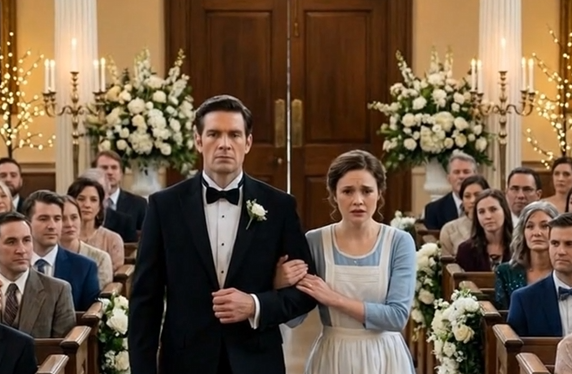
The air conditioning in the presidential suite of the Grand Crescent Hotel hummed with a clinical indifference, but for Alexander Hayes, the sound was a deafening countdown. Below the balcony, two hundred of the most powerful people in New York—investors, governors, and his formidable mother, Margaret Hayes—waited for the wedding of the year. Alexander, a prodigy who had built a billion-dollar tech empire by twenty-five, felt the silk of his Italian tie tightening like a noose. His phone glowed with a final, thirty-word text from Victoria Grant: “I can’t do this, Alex. I don’t love you enough to fake a lifetime. I’m already at the airport.”
Two years of a calculated social match and millions of dollars in preparations had evaporated in an instant. Alexander wasn’t suffocating from a broken heart; he was suffocating from the looming humiliation. He could already see the headlines and hear the whispers that would dismantle his reputation as a man who always had a plan. In ten minutes, he would be the biggest joke in high society.
Then, the mundane sound of a vacuum cleaner cut through his panic. Olivia Bennett, a cleaning girl working the afternoon shift to pay for her grandmother’s arthritis medication, pushed her cart past the slightly open door. When she peeked in to check the room, she didn’t see a billionaire; she saw a shipwreck survivor in a tuxedo. Alexander looked at her—really looked at her—and saw a calm, kind clarity that was absent in his social circles.
Driven by a flash of desperate insanity, he made an offer that would change both of their lives: “Marry me. Right now.”
Olivia’s initial laughter turned into a stunned silence when Alexander named the price: $100,000 cash. To Alexander, it was a rounding error; to Olivia, it was her grandmother’s surgery, her debts, and a future beyond cleaning hotel rooms. She agreed on two conditions: her grandmother must know the truth, and the money had to be transferred immediately. In a frantic five-minute transformation, Olivia stepped into the runaway bride’s backup dress. When she emerged, the transformation was so complete that Alexander forgot how to breathe.
The ceremony proceeded as a blur of lies and lace. Margaret Hayes watched with hawk-like suspicion, but the “business contract” was signed. For the next few months, Olivia moved into Alexander’s cold, glass-walled penthouse. Slowly, the sterile environment began to change. Olivia filled the space with plants, laughter, and the scent of home-cooked meals. One rainy night, over a simple bowl of soup, Alexander realized he was no longer acting. The line between the contract and reality had dissolved.
The facade shattered six months later when Victoria returned and a tabloid exposed the truth with the headline: “THE BILLIONAIRE AND THE MAID: THE WEDDING FRAUD.” Alexander’s legal team prepared a standard defense: destroy Olivia’s reputation to save the company. But standing before a room full of hungry reporters, Alexander did something no one expected. He chose the truth. He confessed that while the marriage began as a desperate lie, Olivia had taught him more about dignity and love than his billions ever could. “I choose her,” he declared, choosing his wife over his empire.
A year later, a second wedding took place. There were no governors or shark-like investors, just twenty loved ones in a small, sun-drenched garden. Olivia, glowing and three months pregnant, whispered that fairy tales sometimes start with chaos. Alexander, finally putting his watch away, realized he had gained everything by being brave enough to lose his reputation. He no longer needed to get married in ten minutes; he had a lifetime, and finally, the right person to share it with.