The $1 Bill To Keep An Eye Out For!
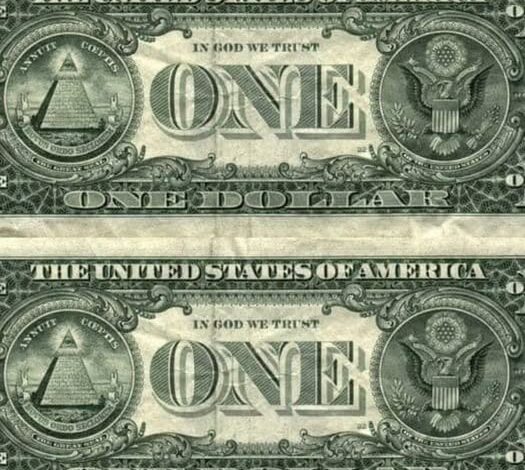
In the fast-paced financial landscape of 2026, where digital transactions and cryptocurrency often dominate the conversation, there remains a tangible, paper-based treasure hunt hidden within the pockets of ordinary citizens. Most people view a crumpled $1 bill as a minor convenience—a small token of value used for a vending machine or a quick tip. However, within the world of numismatics, the study and collection of currency, that single dollar can transform into a high-value asset worth hundreds or even thousands of times its face value. The secret lies not in the ink or the paper itself, but in the unique sequence of numbers printed on its surface: the serial number.
Every Federal Reserve note features a unique eight-digit serial number. While most of these sequences are a random jumble of digits, a small fraction of them possess mathematical patterns that make them “fancy” in the eyes of collectors. Identifying these bills requires a keen eye and a bit of patience, but the potential payout makes every trip to the ATM or every bit of pocket change a moment of opportunity. Understanding the specific categories of rare serial numbers is the first step toward turning a routine transaction into a significant windfall.
The Power of Repetition: Solid and Near-Solid Digits
The most instantly recognizable rare bills are those featuring repeating digits. Collectors are particularly fascinated by sequences where the same number appears almost exclusively. One of the most sought-after varieties is the “7 repeating digits in a row” note. On these bills, a single number appears seven times consecutively, such as 09999999 or 18888888. These notes are striking to the eye and represent a statistical anomaly that occurs only once in every few million prints.
Even more valuable, though slightly more complex to spot, are “7 of a kind” notes. Unlike the consecutive variety, these bills contain seven of the same digit scattered throughout the eight-digit sequence. For example, a serial number like 00010000 or 90999999 is considered a “7 of a kind” note. Because these patterns disrupt the expected randomness of currency production, they are highly prized by members of organizations like the NumismaClub, who track and trade these unique finds. When a bill reaches “8 of a kind”—a solid serial number where every digit is identical—the value can skyrocket into the thousands of dollars.
Mathematical Symmetry: Super Radars and Repeaters
For those who appreciate the beauty of symmetry, “Super Radars” represent the pinnacle of currency collecting. A standard “radar” note is a serial number that reads the same forward and backward, similar to a palindrome (e.g., 12344321). However, a “Super Radar” takes this concept to an extreme. These notes feature a repeating internal digit flanked by a different digit at the beginning and the end. Examples include 01111110, 10000001, or 80000008. These bills are exceptionally rare because they require a perfect alignment of the first and last digits combined with total uniformity in the middle six. They are often the centerpieces of high-end currency collections due to their aesthetic balance.
Another high-value category is the “Super Repeater.” While a standard “repeater” note might feature a four-digit block that repeats once (e.g., 12341234), a Super Repeater consists of a two-digit block that repeats four times across the entire note. A serial number such as 67676767 is a prime example. These notes have a rhythmic, almost hypnotic quality and are significantly rarer than their four-digit counterparts. Collectors are often willing to pay a premium for Super Repeaters because they are easily identifiable and hold their value well over time.
Structured Sequences: Double Quads and Ladders
If you find a bill where the serial number looks perfectly divided, you may be holding a “Double Quad.” This specific variety occurs when the first four digits are identical and the last four digits are also identical, but different from the first set. Examples like 11110000, 44440000, or 88880000 are highly coveted. The visual “split” of the note makes it stand out during a quick count of cash, and they are particularly popular among collectors who specialize in “binary” notes—those that use only two distinct digits.
Beyond the categories mentioned, seasoned treasure hunters also keep an eye out for “Ladders.” A perfect ladder is a serial number that runs in a complete sequence, such as 12345678 or 87654321. These are among the rarest finds in the entire hobby. Because Federal Reserve notes are printed in massive blocks, the chances of a perfect ladder ending up in a local cash register are astronomical. However, “broken ladders” or “near ladders,” where the sequence is slightly interrupted, still command respectable prices on the secondary market.
The Market for Scarcity in 2026
As we move further into 2026, the market for physical currency collectibles has remained remarkably resilient despite the rise of digital banking. This is due in part to the “Want Lists” maintained by numismatic communities. Professional collectors and hobbyist sites frequently publish lists of specific serial numbers they are actively hunting for—often to complete a “run” or a specific set of numbers. Checking your wallet against these lists can sometimes reveal that a bill you considered ordinary is the final piece of a high-value puzzle for someone else.
The allure of this hobby is the accessibility. Unlike collecting fine art or vintage cars, which require significant upfront capital, currency hunting requires only the money you already have. It turns the mundane act of receiving change at a grocery store into a low-stakes lottery. A single dollar bill, which technically only has the purchasing power of one dollar, can effectively become a winning ticket if it bears the right mathematical signature.
How to Start Your Hunt
The first rule of currency collecting is to never spend a bill without looking at it. It takes only a second to glance at the top right or bottom left corners of a Federal Reserve note. When inspecting your cash, look for “blockiness”—any time the numbers seem too uniform or too symmetrical, it is worth setting the bill aside for further research. Even if a note is crumpled, stained, or worn from years of circulation, a rare serial number can still retain significant value, though “uncirculated” or crisp bills will always command the highest prices.
Furthermore, it is helpful to stay connected with digital numismatic platforms. These communities provide real-time valuation and can help you identify if a specific “Super Radar” or “Double Quad” is currently trending in price. As inflation continues to impact the global economy, the tangible value of rare collectibles often serves as a unique hedge, as the scarcity of these specific serial numbers is fixed by the moment of their printing.
In conclusion, it is truly incredible how an item as seemingly inconsequential as a $1 bill can hold the potential for a massive financial return. We often overlook the art and mathematics printed on our money, viewing it merely as a tool for trade. By taking a moment to examine the serial numbers in your wallet, you are participating in a historical and mathematical scavenger hunt that spans the entire nation. Check your pockets, your drawers, and your car’s center console. Today might just be the day you find a “7 of a kind” or a “Super Repeater” that changes your financial outlook. The treasure is out there, circulating from hand to hand; you simply have to be the one to stop and see it.