Scientists Study 117-Year-Olds DNA to Find Longevity Food Secret!
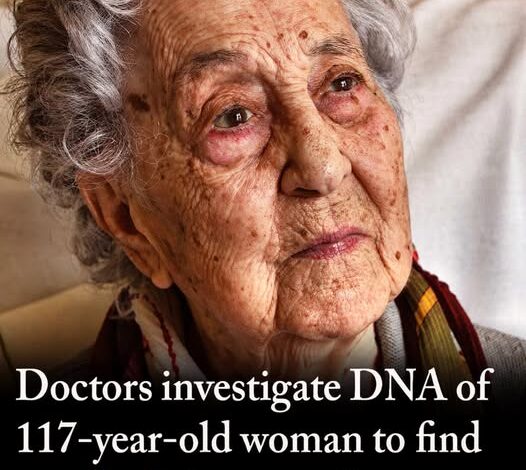
The quest for immortality has transitioned from the realm of mythology into the rigorous laboratory of modern genetics. Today, science is making monumental strides toward deciphering the biological blueprint of extreme longevity, and much of this progress can be traced back to the extraordinary life and DNA of Maria Branyas Morera. A Spanish-American supercentenarian who lived to the age of 117, Maria did not merely survive through a century of upheaval; she thrived, offering researchers a rare “exception to the rule” of aging.
Maria’s story began in San Francisco on March 4, 1907, seven years before the first shots of World War I were fired. Her life was a living bridge across history, spanning the terms of 21 U.S. presidents and witnessing the transition from horse-drawn carriages to the digital age. In 1915, her family decided to return to their ancestral roots in Catalonia, Spain. The journey was marked by tragedy when her father succumbed to pulmonary tuberculosis just as they neared the end of the voyage. Despite this early loss, Maria would spend the next eleven decades in her adopted homeland, eventually becoming the world’s oldest verified living person following the death of French nun Sister André in 2023.
What sets Maria apart from many other supercentenarians was her cognitive and physical clarity. Before her passing in August 2024, she made a profound request: she asked that her DNA be studied by the medical community. She wanted to know what made her cells so resilient, hoping that her biological secrets could provide a roadmap for others to live longer, healthier lives. This selfless act spurred a team of leading Spanish scientists, including experts from the University of Barcelona and the Josep Carreras Leukaemia Research Institute, to conduct an exhaustive analysis of her genetics, tissues, and cellular health.
Dr. Manel Esteller, the lead investigator of the study, noted that the standard biological trajectory is one of decline; as humans age, they typically become more susceptible to chronic disease. Maria, however, was a biological outlier. The researchers found that her “biological age” was actually 10 to 15 years younger than her chronological age. At 117, her body functioned with the efficiency of a woman in her early 100s or late 90s. The team’s goal was to separate the process of becoming old from the process of becoming sick—a distinction that is critical for the development of future anti-aging therapies.
The internal metrics of Maria’s health were nothing short of astonishing. Her blood panels revealed exceptionally low levels of “bad” cholesterol (LDL) and triglycerides, paired with very high levels of “good” cholesterol (HDL). Even more fascinating was the state of her telomeres—the protective caps at the ends of our chromosomes that typically shorten as we age. While short telomeres are generally linked to a higher risk of mortality, Maria’s case suggested a more complex reality. Some researchers believe that in the very old, certain telomeric structures might actually play a protective role, potentially limiting the rapid division of cancer cells.
Beyond the genetic lottery, Maria’s longevity was a product of her environment and daily rituals. She was a lifelong advocate for simple, consistent habits: she never smoked, avoided alcohol, and maintained an active social calendar. However, the scientific team noted one particular dietary staple that Maria consumed with religious frequency: yogurt. This fermented food is a known powerhouse for gut health, and modern research increasingly links a diverse microbiome to improved immune function and longevity.
Dr. Esteller concluded that the secret to extreme old age is likely a “half and half” split—50% inherited from one’s parents and 50% determined by lifestyle choices. While we cannot choose our genetic starting point, Maria’s life demonstrates how positive choices can maximize that inherited potential. She proved that the body can maintain its integrity long past the expected expiration date if provided with the right “order and tranquility.”
In 2020, Maria gained international attention when she became the oldest person at the time to successfully recover from COVID-19. Emerging from the pandemic, she used her platform to advocate for the dignity of the elderly. In an interview with The Observer, she lamented how society often treats its oldest members as “forgotten” citizens, despite the fact that they spent their entire lives building the quality of life enjoyed by younger generations. Her sharp wit remained intact until the end; her social media biography famously reminded her followers that she was “very old but not an idiot.”
With the help of her daughter, Maria shared a list of principles that she believed contributed to her 117-year journey. She emphasized “emotional stability” and “staying away from toxic people” as much as she did her physical habits. Her philosophy was built on a foundation of positivity, a lack of regrets, and a deep, meaningful connection to nature and family. She left behind a sprawling legacy consisting of three children, 11 grandchildren, and 13 great-grandchildren, all of whom witnessed her live with a sense of “order and tranquility.”
The scientific implications of Maria Branyas Morera’s DNA analysis are still being processed. Researchers hope to use the data to develop drugs that can mimic the protective effects of her “good genes,” effectively offering a chemical shield against the ailments of old age. For the first time, scientists are looking at longevity not as a matter of luck, but as a manageable biological process.
Maria’s life serves as a powerful testament to the fact that aging does not have to be synonymous with decline. Through a combination of robust genetics, a diet rich in probiotics, and a mental state defined by positivity and emotional resilience, she unlocked a level of vitality that few humans have ever reached. Her legacy is no longer just in the history books of Catalonia; it is in the laboratories where the next generation of life-extending breakthroughs is being discovered. Her final gift to the world—her DNA—may very well be the key that finally opens the door to a future where 100 is the new 80.