Please Dont Come Inside, The Night a Single Mom Tried To Shut Out the Cowboy Who Refused To Leave Her Broken
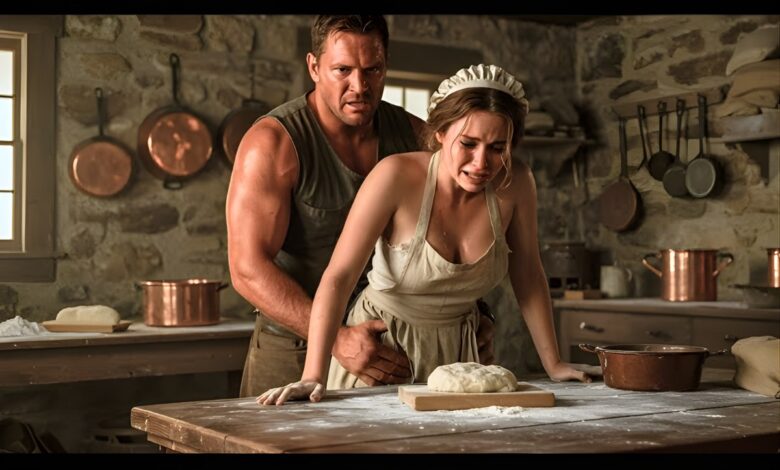
The first time Emily Hart whispered, “Please don’t come inside,” it wasn’t rejection. It was self-defense. She wasn’t shutting out the cowboy on her porch—she was shutting out the part of herself that still wanted to believe in men who never stayed.
Morning crept across the Montana plains in a dull wash of gold, trying and failing to soften the sharp edges of Emily’s world. Her farmhouse windows rattled in the wind; the wood was old, the glass thin, the cold uninvited. She stood with a chipped mug warming her hands, staring over fields she could barely keep alive, counting new problems instead of blessings.
Down the hall, her little boy slept twisted in a too-thin blanket that had once belonged to his father—Tommy clutching it like a promise he didn’t know had already been broken six years ago.
Six years since Michael died beneath a panicked horse and an overturned wagon. Six years since the town brought casseroles and sympathy for a few weeks before drifting back to their own lives, leaving Emily with a ranch bleeding money, a roof that sagged like a tired spine, and a baby who still needed milk.
People called her strong. As if strength wasn’t just another word for “alone.” As if praise could patch broken shingles or chase away the winter wind that crawled into her bones.
She learned to swing hammers, patch fences, drag sacks of feed heavier than her shrinking hopes. She smiled for Tommy, smiled for neighbors, smiled until her face ached—then cried silently in the dark until crying stopped working and survival turned into muscle memory.
That was the morning she saw him.
A stranger by her fence line, shoulders broad beneath a worn jacket, hat pulled low, hands steady as he drove a new post into the stubborn earth. He hadn’t been hired. He hadn’t been asked. He just… did it, like the land had spoken to him and he was answering.
Emily stepped onto the porch, suspicion tightening every breath. A woman alone in the countryside learns fast: unexpected men rarely bring blessings. And favors always have a cost.
“I didn’t hire anyone,” she called, steadying her voice.
“Didn’t ask to be hired,” the man replied without looking up. His hammer struck wood in an almost lazy rhythm.
“Then what are you doing here?”
He finally raised his head. His eyes were the color of storm clouds that had seen too many droughts. “Fixing what’s broken.”
She knew his name before he said it—Luke Carson. Stories about him traveled faster than wildfire. Some claimed he’d killed a ranch hand in a fight. Others whispered about a family lost in a fire. A war that left his soul splintered. No one knew the truth, and no one had the guts to ask.
But they all agreed: Luke Carson was the kind of man you watched from afar.
“I can handle it,” Emily insisted, chin lifted. Pride was the only armor she had left. Pride and the stubborn belief that needing anyone was a liability she’d already paid dearly for.
“I know,” Luke murmured, hammering in another nail. “Just figured you could use a hand.”
His humility irritated her more than arrogance would have. Kind men were more dangerous than cruel ones—because kindness could get inside your defenses without asking permission.
The next time she checked the fence line, he was gone. No explanation. No footprints except the straight posts and tight wire he left behind—practical markers of someone who didn’t need thanks.
But he kept coming back.
She’d find hinges oiled before dawn. Firewood stacked neatly beside the door. Loose boards fixed. Gates that squealed for months suddenly silent.
“You’ve got a habit of fixing things that aren’t yours,” she told him one afternoon.
He shrugged. “Guess I like quiet.”
Tommy adored him instantly. Children have instincts adults forget how to trust. Within three minutes Tommy was tugging on his sleeve. Within three seconds Emily realized this was dangerous—because her son had been starved for a father figure for years.
“Mama, the cowboy taught me to whistle with grass!” Tommy announced one day, holding a broken blade like treasure.
Emily almost scolded him for talking to strangers. But the joy in her son’s face—pure, uncomplicated—choked the reprimand in her throat.
The town noticed the danger before she admitted it to herself. Mrs. Denton pulled her aside near the grain sacks.
“There’s darkness in that man, Emily. You don’t want it near your boy.”
That night, sewing up a tear in Tommy’s coat, Emily tried to imagine Luke as a threat—but the only thing she’d ever seen in his eyes was exhaustion and loneliness that mirrored her own.
Still, she warned herself: nothing good lasts forever. Good men walk away. Good men die. Good men leave holes deeper than graves.
Then winter hit early—sharp, merciless, unforgiving.
The night Tommy’s fever burned out of control, Emily’s world cracked open. His skin blistered with heat, breaths shallow and uneven. Remedies failed. Prayers turned into choked whispers.
“Please, Lord… don’t take him too.”
Thunder rolled across the plains when the knock came. Soft at first. Then firmer.
“Emily,” a voice called. “It’s Luke.”
Her breath snagged. She pressed her palm against the door.
“Please don’t come inside,” she whispered—not because she feared him, but because she feared how desperately she wanted someone to stand beside her in that terrible moment.
“Your boy is sick,” he said. “Let me help.”
“You can’t fix this,” she whispered. “You can’t fix me.”
“I ain’t here to fix you,” he replied. “I’m here to stay.”
She opened the door.
He entered like a storm—cold wind at his back, determination in his eyes. He went straight to Tommy, kneeling beside the bed, one hand on the boy’s burning forehead.
“How long?” he asked.
“Three days,” she admitted, shame trembling through her.
He didn’t blame her. Didn’t scold her. He worked. He boiled water, mixed willow bark, cooled cloths, monitored every breath. And Emily—too exhausted to pretend anymore—let him lead.
By dawn, Tommy’s fever broke.
Emily collapsed into a chair, laughter and sobs tangled in her throat. Luke leaned back too, drained, eyes soft.
“He’s a tough kid,” he said. “Gets that from his mama.”
Sunlight spilled into the room, painting everything gold. For the first time in years, the world felt survivable.
“You didn’t have to come,” she murmured.
“I know,” he said. “But I did.”
Weeks passed. Luke rebuilt her fences, helped Tommy learn to ride, ate dinner at her table, laughed low and quiet at her jokes, and never—not once—asked for anything in return.
He became part of the land. Part of their days. Part of the air they breathed.
One evening, Emily found him by the corral, watching the sunset turn the world into fire.
“You never told me why you came that first day,” she said.
He kept his gaze on the horizon. “Saw a broken fence. Figured someone behind it might need a bit of fixing too.”
She laughed despite herself.
“You sure have a thing for broken things.”
He finally looked at her, eyes steady, warm in a way she wasn’t prepared for.
“Only the ones worth saving.”
Her breath caught. Her heart stuttered. And for the first time in a long time, she didn’t feel broken. She felt seen.
Later, when Tommy was older, people would ask why his mother married the cowboy everyone once feared.
Tommy always smiled and said:
“Because Mama told him ‘Please don’t come inside’—and he loved us enough to wait in the storm until she finally let him.”