My Sister Got The $750k Mansion While I Got A Rotting Cabin, What I Found Underneath Made Her Regret Everything
On my thirtieth birthday, I stood in the suffocating silence of my Brooklyn studio apartment, staring at a single guttering candle on a grocery store cupcake. The celebration was interrupted by a phone call from the family lawyer, his voice a flat drone as he delivered the terms of my parents’ will. I hadn’t yet grasped the finality of their passing when the distribution of their estate hit me like a physical blow.
My younger sister, Savannah—a social media darling who curated her life through expensive filters—was inheriting the family’s $750,000 Westchester mansion and the bulk of their liquid assets. My inheritance was a punchline: a rotting cabin in the Alaskan wilderness, described in faded ink on a deed older than I was. My fiancé, Derek, a man who measured love by credit scores and social standing, didn’t even wait for the call to end. He sneered, called me a pathetic loser, and tossed his engagement ring onto the table. It skittered across the wood, settling between a salt shaker and a stack of overdue bills, before he walked out and slammed the door on our life together.
Left in the ruins of my expectations, I opened the legal envelope one more time. Inside was a rusted iron key and a scrap of paper with my mother’s elegant, slanted handwriting: “You will know why it had to be you.”
To understand the weight of that sentence, you have to understand the architecture of my childhood. My father was a civil engineer who believed success was only real if it could be quantified on a spreadsheet. My mother was a librarian, a woman of quiet whispers and the scent of old paper who never dared to contradict him. Savannah was their masterpiece—charismatic, beautiful, and effortlessly perfect. At her high school cheerleading games, my father would scream himself hoarse with pride. I would sit on the same bleachers with an essay that had won a state award, only to have my mother tuck it under a grease-stained pizza box, forgotten before the fourth quarter.
I grew up invisible. While Savannah was gifted a new car at sixteen, I was sent to the Alaskan interior to spend summers with my grandfather, Elias Mercer. He was the only person who truly saw me. We would walk along the Susitna River in the biting cold, and he would tell me, “Never underestimate what others dismiss as worthless, Maya. Sometimes, that is where the real treasure is hidden.” At the time, I thought it was just a grandfather’s comfort. I didn’t realize it was a prophecy.
The formal will reading in a Midtown glass tower was a study in humiliation. Savannah arrived in designer wool, already planning the “aesthetic” of her new mansion. Derek sat beside her, having already switched his allegiance to the sister with the assets. When the lawyer confirmed the “shack in Talkeetna” was mine, Savannah offered a patronizing smile. “It suits you, Maya. It’s very on-brand.”
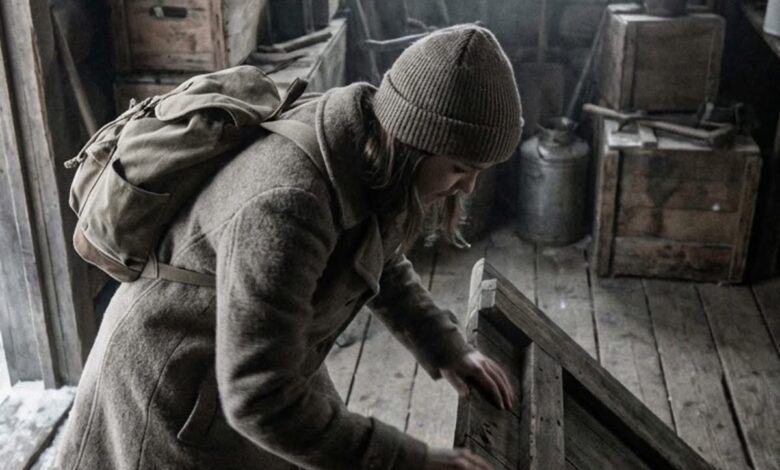
I left New York with nothing but a one-way ticket to Anchorage and a backpack of survival gear. When I landed, the Alaskan cold wasn’t the damp chill of the city; it was sharp, dry, and lethal. I rented a truck and traveled north until the roads ended, then hiked a mile through waist-deep snow until a sagging, crooked roof appeared through the spruce trees. The cabin was a disaster. The wood was black with mold, a window was shattered, and bear claws had scarred the door. Inside, mice had turned the furniture into nests, and the air tasted of rot. I sat in a wobbling chair and wept, feeling the full weight of being the family’s discarded remnant.
But on the third day of cleaning, my perspective shifted. I stopped looking at the cabin as a victim and started looking at it as an engineer’s daughter. I noticed a single floorboard in the center of the room that didn’t match the rest. It was darker, fixed with hand-forged nails, and sounded hollow when tapped. Beneath a dusty, handwoven Native Alaskan rug, I found a rusted iron ring.
I pulled. The board groaned and gave way, revealing a hidden stone cellar. I descended the wooden stairs with a flashlight, my breath blooming in white clouds. In the darkness, I found crates marked “Mercer Co.” and heavy metal chests. When I pried the lid off the first crate, the beam of my light hit gold. Sacks of coins, silver bars, and antique jewelry sparkled in the gloom. It was a fortune, but it wasn’t the greatest find.
In a separate, leather-bound chest, I found the true inheritance: the Mercer family ledgers. They contained decades of meticulously notarized timber rights, pipeline easements, and mineral leases for thousands of acres of Alaskan land. As I ran the numbers on a calculator, the truth settled into my bones. The gold was worth millions, but the recurring royalties from the lithium and rare-earth mineral leases were worth upwards of eighty million dollars.
Tucked into the back of the primary ledger was a final letter from my mother. “Savannah has the sparkle that convinces the world,” she wrote, “but you have endurance. We didn’t choose by noise; we chose by trust. The cabin isn’t a joke; it’s our faith in you. We trusted you to have the patience to protect this.”
I spent the next week in a fever of productivity. I didn’t call Savannah. I didn’t tell a soul. I digitized every contract, encrypted the files, and moved the most portable assets to a secure vault in Anchorage. I worked with a precision I never knew I possessed, fueled by the realization that my parents’ silence hadn’t been indifference—it had been a long-term undercover operation. They knew that if Savannah had inherited this, it would have been liquidated and squandered in a year. They needed a guardian.
When I finally turned on my phone, the messages were a predictable circus. Savannah sent a mocking photo of her mansion’s garden. Derek, likely hearing rumors of my trip, sent a groveling text about “reacting too quickly” and “missing me.”
I didn’t defend myself. I didn’t argue. For the first time, I didn’t need their validation to feel visible. I looked out at the Alaskan horizon, at the land that was now mine, and understood that my grandfather was right. Value isn’t determined by the price tag others put on you; it’s determined by what you are capable of guarding in the dark. I wasn’t the girl who got the leftovers; I was the one they trusted with the crown jewels. I locked my phone, tossed it onto the table, and walked out into the crisp, golden light of my new world.