My mom forgot to save dessert for my son at the christmas party and said!
Christmas Eve has a way of magnifying everything—warmth, cruelty, love, and absence. In my parents’ house that night, the lights were perfect, the decorations curated to signal success and harmony, the kind of holiday aesthetic that photographs beautifully and conceals everything else. The smell of cinnamon and pine filled the air, expensive perfume lingering in corners like a promise. It should have felt safe. Instead, it felt like a test I didn’t know my son was about to fail.
My name is Laura. I’m thirty-four, a single mother, and for most of my life I believed family meant endurance. It meant absorbing small humiliations, smoothing over sharp edges, and calling it loyalty. I learned that lesson early and practiced it well—until I watched it land on my ten-year-old son, Noah.
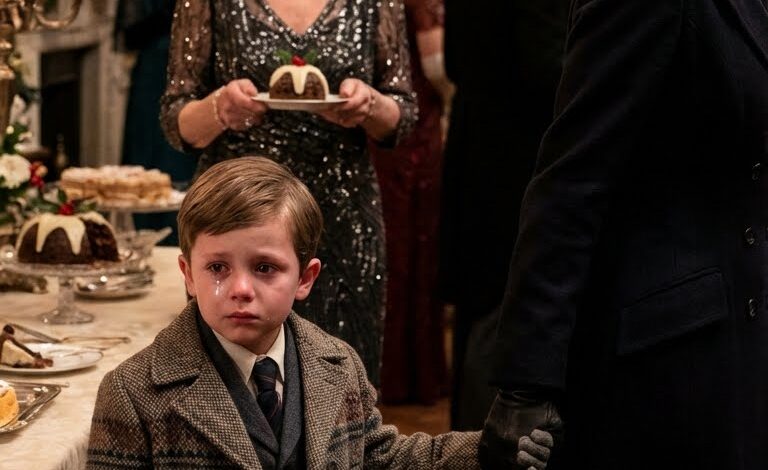
He stood near the dessert table in his favorite reindeer sweater, cheeks pink from running around with his cousins, eyes fixed on the Christmas pudding my mother made once a year and treated like a crown jewel. There was one slice left. I saw him step forward, hopeful and polite, the way children are when they’ve learned not to ask for much.
My mother picked up the plate, surveyed the room, and looked straight past him. “Who wants the last piece?” she sang, her voice bright and performative. She offered it to my sister’s children, whose plates were already stacked. When Noah spoke—softly, respectfully—the room quieted just enough to hear the cut.
“Oh, honey,” she said with a thin laugh, loud enough for everyone to hear. “Only family gets the special dessert.”
She handed the plate away. Conversations resumed. Wine glasses clinked. Adults pretended nothing had happened. I watched my son swallow his disappointment, force a smile, and tell me he wasn’t hungry anyway. The moment wasn’t dramatic. That’s what made it devastating. It was exclusion delivered calmly, wrapped in tradition, normalized by silence.
Something in me broke cleanly and completely.
I didn’t argue. I didn’t demand an apology. I took Noah’s hand and told him to get his coat. At the door, my mother asked where we were going, reminding me about presents, about schedules, about appearances. I told her we had everything we needed at home. The winter air cut through the doorway as we left, sharp and honest, and I closed it on the laughter behind us.
I thought that was the end of it. It wasn’t. It was the beginning.
The drive home was quiet, the kind of silence that weighs more than words. At our small townhouse, we made cocoa with marshmallows and watched a silly movie. Halfway through, Noah muted the TV and asked the question children ask when they’re trying to make sense of adult cruelty: Did I do something wrong? I told him the truth—that he hadn’t, that what happened reflected on the person who said it, not the child who heard it. I held him until his breathing steadied, then sat in the dark after he fell asleep and realized I was done protecting people who wouldn’t protect him.
Christmas morning arrived with missed calls and a voicemail that told me everything I needed to know. My mother didn’t ask if Noah was okay. She didn’t apologize. She talked about lawyers, about sealing accounts, about signatures she needed from me. Years earlier, after my divorce, my parents had asked me to put my name on a cabin deed and serve as a trustee “for tax efficiency.” I’d agreed, believing it was about family security. Standing barefoot on cold tile, listening to her panic about assets, I finally understood: my name was leverage.
I stopped paying. I stopped signing. I stopped answering. I sent one message—clear, brief, final—stating that if my son and I weren’t family at the table, we weren’t family at the bank. Then I blocked her number.
The backlash arrived through others. My brother, the peacemaker, called with confusion that turned to shock when I told him exactly what had been said. He hadn’t seen it; my mother had already rewritten the story. That’s how control survives—by shaping the narrative before the truth can breathe. This time, it didn’t hold. He listened. He believed me. Cracks appeared in a façade that had been polished for decades.
My parents tried public reconciliation next, hosting a dinner framed as forgiveness and unity, inviting neighbors and church friends to turn pressure into spectacle. I went anyway, not to eat, not to reconcile, but to speak plainly. When they placed documents beside the appetizers and asked me to sign in front of an audience, I refused. When they accused me of making a scene, I reminded them they’d invited the crowd. When my mother denied the pudding comment, an aunt stood and told the truth. The room shifted. Politeness faltered. The story changed hands.
I left again, this time with clarity instead of shock. The consequences followed quickly. Without my signature, they couldn’t refinance. Assumptions unraveled. Costs mounted. Image cracked. The house they loved became a burden they couldn’t maneuver. Control lost its currency when silence ended.
At home, Noah and I baked cookies and ate them warm, crumbs on the counter, no hierarchy of deserving. He asked if dessert was only for special people. I told him dessert was for people who showed up with kindness. He smiled and said he liked our family better. So did I.
Peace arrived quietly. No calls. No guilt spirals. Just space to build a life centered on safety, dignity, and choice. I learned that financial autonomy is not cruelty, that boundaries are not punishments, and that family values mean nothing if they don’t protect children. The slice of pudding was small. The truth it revealed was not.
Some inherit traditions. Others outgrow them. When exclusion is dressed as humor and control masquerades as care, walking away is not betrayal—it’s self-preservation. We didn’t lose a family that night. We found one.