If This Tree Grows Near You, You Are Sitting on Gold and Dont Even Know It, Most People Walk Past It Daily Without Realizing Its Food, Survival, Environmental, and Practical Value
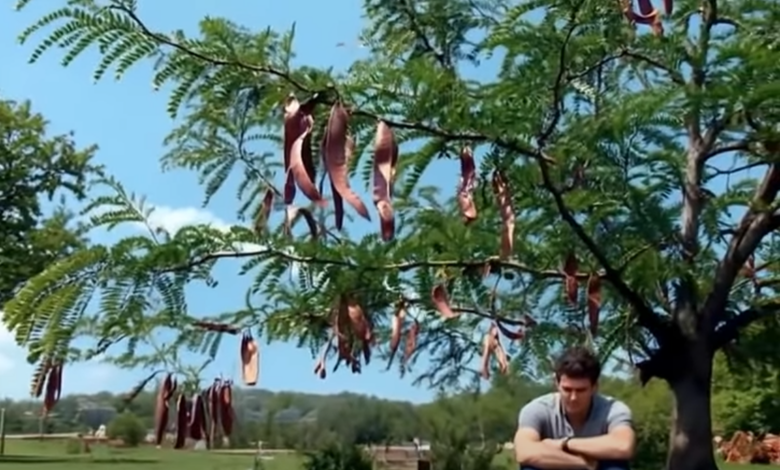
In the landscape of the modern world, where wealth is often measured by digital balances and the complexity of global logistics, it is easy to lose sight of the profound value that exists in the physical world right beneath our feet. Most of us walk past it every day: a tree that appears almost unremarkable, perhaps even a bit untidy with its scattering of dark, twisted pods and its occasionally thorny trunk. This is the honey locust (Gleditsia triacanthos), a species that many homeowners view as a nuisance to be cleared away, yet to the eye of the survivalist, the historian, or the ecologist, it is a living treasury. To live near a honey locust is to be in possession of “biological gold,” a resource that offers food, medicine, construction materials, and environmental stability, all without requiring a single cent in investment.
For generations, the honey locust was an uncelebrated backbone of rural American life. Long before the advent of commercial supermarkets and industrial soap production, this tree was a cornerstone of domestic self-sufficiency. Its most famous attribute is the thick, leathery seed pods it drops in the autumn. Inside these pods is a sweet, succulent pulp that earned the tree its name. For pioneers and indigenous populations alike, this pulp was a vital source of concentrated energy during lean winter months. It could be eaten raw, fermented into a beverage, or dried and stored for long-term use. In an era where sugar was a rare and expensive luxury, the honey locust provided a natural alternative that required nothing more than the effort of gathering.
The utility of the honey locust extends far beyond the kitchen. The tree is a master of practical survival. Its wood is famously dense, heavy, and incredibly durable, possessing a natural resistance to rot that rivals almost any other North American species. In the 19th century, this made it the premier choice for fence posts, tool handles, and the hubs of wagon wheels—items that were required to withstand immense pressure and constant exposure to the elements. Unlike many other woods that decay within a few years of being buried in moist soil, honey locust posts could last for decades, providing a sturdy foundation for the expanding frontiers of agriculture. Even today, woodworkers prize the honey locust for its beautiful, lustrous grain and its sheer toughness, though most people simply see it as firewood.
Perhaps even more surprising to the modern observer is the tree’s role in hygiene. The pods contain saponins, natural chemical compounds that produce a gentle, cleansing lather when agitated in water. Before the chemical industry standardized the bars of soap we use today, the honey locust was a “washstand in the wild.” People used the crushed pods to clean their skin and launder delicate cloths, utilizing a sustainable, biodegradable surfactant that grew right outside their back doors. This quiet history of utility serves as a reminder that the things we now consider essential and manufactured were once provided freely by the landscape, provided one had the knowledge to recognize them.
In our current era of ecological fatigue and strained supply chains, the honey locust’s environmental value has taken on a renewed significance. It is a tree designed for resilience. It possesses a deep taproot that allows it to thrive in poor, compacted soils where more delicate, ornamental trees would wither. It is highly tolerant of salt, urban pollution, and extreme drought, making it one of the few species capable of providing a cooling canopy in harsh environments. Furthermore, because it is a legume, the honey locust has a unique relationship with soil bacteria that allows it to fix nitrogen, essentially self-fertilizing the ground it grows in and improving the soil quality for every plant around it. For the gardener or the small-scale farmer, a honey locust is not just a tree; it is an active participant in the restoration of the land.
The tree also serves as a critical bridge for local wildlife. In the deep mid-winter, when most food sources are buried under snow or have long since rotted, the honey locust pods remain viable. High in protein and carbohydrates, these pods are a lifeline for deer, cattle, and various smaller mammals. Its late-blooming flowers are a primary source of nectar for honeybees and other pollinators at a time of year when the early spring blossoms have faded, ensuring that the local ecosystem remains fed and functional throughout the changing seasons.
Despite these myriad benefits, the honey locust does not fit neatly into modern aesthetic trends. It is not a “fashionable” superfood, nor is it a manicured ornamental. Its value lies in its ordinariness and its ruggedness. It is a remnant of an older way of knowing—a time when human survival was inextricably linked to an intimate understanding of the flora and fauna of one’s immediate surroundings. It teaches a lesson in humility, showing that some of our strongest allies are those that grow quietly at the margins of our lawns and the edges of our roads.
From a deeper perspective, the honey locust is a symbol of true wealth. Real security is not always found in what we can ship across borders or store on shelves; sometimes, it is found in the recovery of forgotten skills. It is the ability to walk into a backyard and see not a “scraggly tree,” but a source of nutrition, a supply of durable timber, and a tool for environmental healing. The honey locust asks for nothing—no fertilizers, no specialized care, and no protection. It simply stands patient, dropping its “gold” year after year, waiting for a generation to relearn how to see it.
As we look toward an uncertain future, the honey locust stands as a mentor in the art of the sufficient. It demonstrates that abundance is often ordinary and that resilience is rooted in place. To recognize the value of the honey locust is to begin a journey back toward a more grounded existence, where we live alongside the land rather than attempting to dominate it. The next time you pass by a tree with long, dark pods and a rugged bark, stop for a moment. You may find that you are standing in the presence of an ancient benefactor, a quiet sentinel that has been sustaining life for centuries and is more than ready to do so again, if only we take the time to understand what it has to offer.