I Buried My Husband Alone While Our Kids Celebrated Elsewhere, By Sunrise, I Took an Action That Shook All of Them!
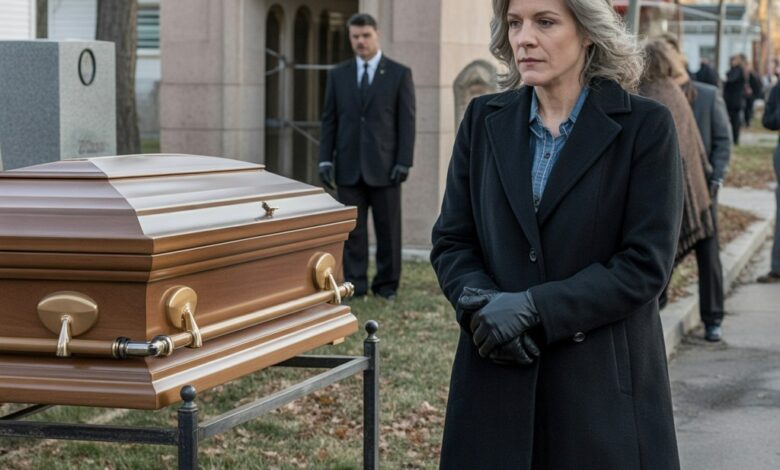
The chapel felt unnaturally cold, the kind of sterile chill that seeps into your bones and stays there long after you leave. November had settled in with its usual gray resolve, but the heaviness pressing on my chest had nothing to do with the weather. I stood near the doorway as the funeral director adjusted white lilies around George’s mahogany casket, their sweet scent clashing cruelly with the reality of death. Every movement was careful, rehearsed, professional. Too professional for a man who had lived with such quiet integrity.
“Mrs. Holloway,” the director said softly, “we can wait a little longer if you’d like. Sometimes families—”
“No,” I replied, my voice steady despite everything. “Start the service. George believed in being on time.”
I turned and looked at the rows of empty chairs. Twenty-four of them. Not our son. Not our daughter. Not a single grandchild. Just absence, lined up neatly in burgundy upholstery like a judgment no one wanted to claim responsibility for.
The pastor spoke. Generic words floated through the chapel, phrases borrowed from a script meant to comfort strangers. He talked about peace and legacy and memories, but he didn’t know George. He didn’t know the man who built our home board by board, who could fix anything with patience and care, who believed loyalty was not a feeling but a practice. I sat there alone, hands folded, listening to someone summarize a life they’d never witnessed for an audience that didn’t exist.
That morning, our son had sent a text. Seven words. “Sorry, Mom. Something came up. Can’t make it.” Our daughter hadn’t even done that much. Instead, she had posted photos of brunch—champagne glasses, bright smiles, captions about self-care and living her best life. Their father’s funeral was scheduled for ten o’clock. They chose convenience over goodbye.
I buried my husband alone.
At the graveside, the wind stirred fallen leaves across the fresh soil as George was lowered into the ground by men who had never met him. I stayed after they left, heels sinking into the earth, whispering an apology I didn’t owe him. I told him I was sorry our children didn’t come. Sorry I couldn’t make them better.
When I returned home, the silence was unbearable. His glasses still rested on the side table. His crossword puzzle sat half-finished, words like “loyalty” and “family” written in his careful hand. I poured a glass of wine we had been saving for our anniversary and opened my laptop. I looked at their social media again, not out of masochism, but out of a need to understand how two people I raised could be so far removed from consequence.
That night, I opened the estate planning folder George and I had finalized years earlier. Retirement accounts. Investment portfolios. The house. The lake cabin. Assets built slowly through disciplined saving, smart financial decisions, and decades of delayed gratification. Everything had been divided evenly between our children, because that’s what parents are supposed to do.
Then I opened another folder. My own records. Every check I had written to them over twenty years. Tuition assistance. Emergency loans. Wedding expenses. Bailouts disguised as gifts. Over two hundred thousand dollars, given without expectation of return, because love is not transactional—or so I believed.
I slept little. By morning, I had clarity.
I called our attorney and asked to revise the will immediately. That same day, I sat across from him and redirected everything into an irrevocable trust for my grandson, Ethan. Education. Healthcare. A future protected from manipulation and entitlement. My children were removed entirely.
It wasn’t revenge. It was accountability.
When my daughter called days later, her voice was brittle with disbelief, I told her the truth. This wasn’t about missing a funeral. It was about missing their father’s life. About years of emotional absence masked by excuses and self-centered priorities. She called me cruel. I called it consequence.
My son arrived next, armed with arguments and entitlement. I showed him the numbers. The financial support. The sacrifices. His wife, to my surprise, thanked me. She understood something he didn’t: that enabling is not love, and boundaries are not betrayal.
Ethan came later that evening. He cried. He apologized for things that weren’t his fault. He showed up. That was the difference.
In the weeks that followed, I felt lighter. Not because grief had lifted—it never does—but because obligation had. I stopped shrinking myself to maintain relationships built on extraction. I reclaimed my autonomy, my financial independence, my peace. For the first time in decades, my life felt aligned with my values.
This wasn’t just a family story. It was about generational wealth, estate planning, emotional labor, and the cost of entitlement. It was about understanding that inheritance is not a right, but a reflection of values lived and honored. It was about choosing dignity over guilt, clarity over chaos, and long-term legacy over short-term appeasement.
I buried my husband alone. But by sunrise, I had chosen myself. And that decision changed everything.