Hollywood Stars Real Life More Gripping Than His Movies!
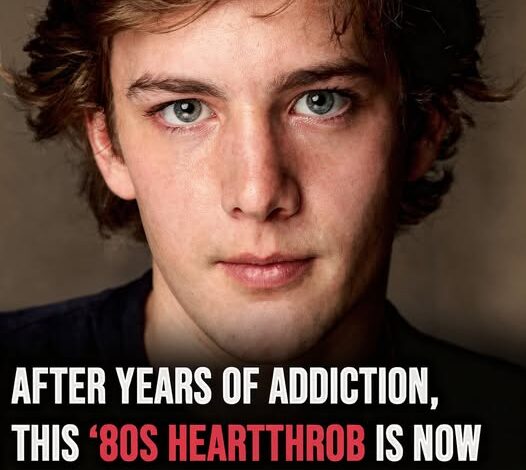
In the vivid, neon-soaked landscape of the 1980s, few faces were as ubiquitous or as idolized as that of Andrew McCarthy. With his trademark tousled dark hair, a disarming smile that seemed to harbor a secret melancholy, and a quiet charm that redefined the cinematic heartthrob, he was the boy every girl swooned over and every teenager sought to emulate. From the iconic posters for St. Elmo’s Fire to the sensitive, pining Richie Rich persona in Pretty in Pink, McCarthy was a pillar of the “Brat Pack” era. Yet, as the world watched him romance leading ladies and navigate the angst of young adulthood on screen, a far more gripping and harrowing drama was unfolding behind the camera. It is a story that, forty years later, proves to be more compelling than any script he ever performed.
Born in 1962 in the suburban quietude of Westfield, New Jersey, McCarthy was the third of four boys in a household that felt light-years away from the glitz of Tinseltown. His mother worked at a local newspaper and his father dealt in stocks—a typical, hardworking family that provided no roadmap for the stratospheric fame that awaited their son. McCarthy has often reflected on this disconnect, noting that he was fundamentally unprepared for success. “I temperamentally wasn’t particularly suited for it,” he once shared. “Attention made me recoil.” This inherent shyness created a “fragile trust” between the actor and the industry that would eventually become his life’s work.
His journey into the limelight began with a streak of luck that bordered on the surreal. After being expelled from NYU’s acting program for a lack of attendance—”I didn’t really go to class,” he admitted with candid wit—McCarthy responded to an open call in a newspaper. Within weeks of being kicked out of school, he found himself starring in the 1983 film Class alongside Jacqueline Bisset. The suddenness of his ascent was dizzying. NYU eventually offered to let him return and use the film as an “independent study,” to which McCarthy reportedly gave a blunt, four-letter refusal. He had found his path, and it didn’t involve a classroom.
By 1985, St. Elmo’s Fire cemented his status as a box-office draw. Despite critical panning, the film became a cultural touchstone, placing McCarthy in the center of a powerhouse ensemble that included Demi Moore, Rob Lowe, and Emilio Estevez. It was during this period that the media dubbed them the “Brat Pack,” a label that McCarthy felt lumped him in with a culture of arrogance and partying that didn’t truly fit his introverted nature. However, while he may not have felt like a “Brat,” he was secretly succumbing to a different kind of Hollywood cliché: a spiraling addiction to alcohol.
The “unsettling truth” of McCarthy’s most famous roles is that many were performed through a haze of addiction. In his memoir, Brat: An ’80s Story, he revealed that during the filming of Pretty in Pink, while audiences were falling in love with his “sensitive and lovely” performance, he was battling crippling hangovers and physical withdrawal. Alcohol had become a crutch—a source of “Dutch courage” that allowed him to feel powerful and in control, feelings that eluded him in his sober, daily life.
A turning point arrived in 1989 during the filming of the dark comedy Weekend at Bernie’s. McCarthy attempted to quit drinking “cold turkey,” retreating into a solitary life to maintain his grip on sobriety. However, the path to recovery is rarely linear. While filming Jours tranquilles à Clichy in France, a momentary lapse—reaching for a beer offered by a co-star—triggered a physical reaction so severe that his hands began to shake uncontrollably. It was a “silent warning” from his nervous system that he was standing on the edge of a precipice. The following years were what he described as “lost and painful,” culminating in a moment of total collapse on a bathroom floor, sobbing as his life seemed to disintegrate.
In 1991, at the age of 29, McCarthy made the decision that would save his life: he checked himself into a detox program and committed to a life of sobriety. This choice initiated a profound evolution. He stepped away from the relentless cycle of Hollywood parties and began to rebuild his career on his own terms. He didn’t just survive; he diversified. McCarthy transitioned into a respected director, overseeing nearly a hundred hours of television for acclaimed series like Orange Is the New Black, Gossip Girl, and The Blacklist.
Perhaps even more surprising was his emergence as an award-winning travel journalist. Named Travel Journalist of the Year in 2010, McCarthy found that the vulnerability required for travel mirrored the vulnerability required for acting. “I’m just a better version of myself when I’m traveling,” he told NJ Monthly. “Your ‘Spidey sense’ is up.” Through his writing for National Geographic Traveler and his books, he found a way to tell stories that were entirely his own, stripped of the heartthrob artifice of his youth.
His personal life also found its footing after the turbulence of his early years. In 1999, he married his college sweetheart, Carol Schneider, twenty years after they first dated. Though they divorced in 2005, the relationship brought him his son, Sam. In 2011, he married Irish director Dolores Rice, with whom he shares two children, Willow and Rowan. Today, McCarthy lives a relatively quiet life in New York’s West Village, a world away from the wild parties at Sammy Davis Jr.’s house that defined his twenties.
Now, in 2026, McCarthy views his “Brat Pack” past with a general detachment rather than a heavy nostalgia. While fans still flood his social media with messages of adoration, noting that he has “aged very well indeed,” McCarthy himself is focused on the present. He has built a legacy that transcends his boyish glow of the 1980s. He is a man who faced the darkness of addiction, the fickleness of fame, and the isolation of his own introversion, and emerged with his dignity and creativity intact.
The story of Andrew McCarthy is ultimately one of resilience. It is a reminder that the roles we play as young people do not have to define the adults we become. He moved from being the face on a lunchbox to a voice in a magazine and a vision behind a camera lens. By choosing sobriety and self-awareness over the easy comfort of a crutch, he ensured that his real-life story would be the one worth telling. He remains a lasting icon not just for the movies he made, but for the life he chose to rebuild from the ground up.