He thought I would break, He was about to learn who I really was!
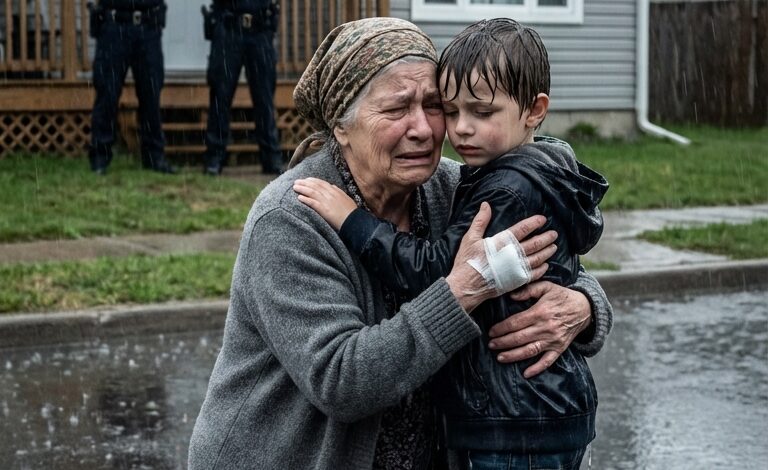
The storm did not arrive with a warning; it simply crashed against the isolated cottage like a physical blow. The wind howled through the Douglas firs, and rain lashed the windows in sheets of grey violence. At 2:00 A.M., the world belongs to the ghosts and the guilty. I sat in my armchair, knitting a scarf that was already too long, listening to the rhythm of the thunder. To the outside world, I was Martha Vance: seventy-two years old, a widow, a lover of hydrangeas, and a woman whose hands shook slightly when she poured tea. Then came the knocking. It wasn’t the polite rap of a neighbor. It was a frantic, desperate pounding that shook the front door in its frame. I didn’t freeze. I didn’t gasp. My hands stopped knitting. The slight tremor that I feigned for the benefit of my doctors vanished instantly. I set the needles down and stood up. My movements were fluid, silent, and precise.
I walked to the door and checked the peephole. What I saw made the blood run cold in my veins, though my heart rate remained a steady fifty-five beats per minute. It was Leo, my eight-year-old grandson. He was soaked to the bone, his Spiderman pajamas clinging to his shivering frame. He was barefoot, his small feet caked in mud and bleeding from the gravel driveway. But it was his face that ignited a cold fury deep in my gut. His left eye was swollen shut, a bloom of purple bruising spreading across his cheek. I threw the bolts and opened the door. The wind tried to tear it from my grasp, but I held it firm. I scooped him up—he felt lighter than he should—and kicked the door shut, locking it instantly.
In the kitchen, I set him on the counter. I didn’t ask what happened immediately. Panic makes witnesses unreliable. Instead, I grabbed a towel and began to dry him, checking for other injuries. Ribs intact. No defensive wounds on the arms. Just the face. I caught his chin gently and told him to breathe. He gasped, his single open eye wide with trauma. He told me his mother, my daughter Sarah, was gone. His father, Richard Sterling—the town’s District Attorney and a man with a smile like a shark—had told him she went on vacation while he was sleeping. But Leo had heard a noise in the basement. He had hidden behind the water heater and watched his father roll Sarah’s body into a Persian rug. When Richard spotted him, he struck the boy and locked him in his room, but Leo had climbed out the window.
The kitchen went silent, save for the hum of the refrigerator. My daughter was gone, and the monster responsible was coming. I looked at my reflection in the dark kitchen window. The frail grandmother was gone. In her place stood Colonel Martha Vance, former Director of Black Operations for the Defense Intelligence Agency. I walked to the bookshelf and pulled out a hollowed-out copy of War and Peace. Inside sat a secure satellite phone and a Glock 19. The metallic click-clack as I checked the chamber was the sound of my old life waking up.
The landline rang. I didn’t flinch. It was Richard. His voice was calm and smooth, the tone he used to charm juries. He claimed Leo was having night terrors and needed to come home. When I mentioned the bruises, the charm evaporated, replaced by a cold menace. He called me a senile relic and threatened to bury me, boasting that he was the law in this town. I hung up on him. I moved with efficiency; emotions were a luxury I could not afford. I led Leo to the pantry, pressing a hidden latch that swung open a steel-reinforced panic room. I told him it was a secret fort, gave him blankets and snacks, and instructed him not to open the door for anyone but me. I heard the lock click. He was safe for now.
I went to the living room window and peered through the blinds. A black SUV was idling at the bottom of my driveway, accompanied by two police cruisers. Richard had brought Chief Miller, a man whose career was built on Richard’s political favors. Through the intercom, Miller demanded I hand over the boy, claiming they had a warrant. They thought they were dealing with a frightened pensioner. They thought the power dynamic was heavily in their favor: three armed men and the weight of the law against one geriatric widow.
I stepped away from the intercom and opened my military-grade Toughbook. I didn’t call 911; that went to Miller’s dispatch. Instead, I initiated a brute-force attack on Richard’s personal cloud account and his Tesla’s dashcam footage. While the progress bar loaded, I prepared the house, turning off the lights to force them to move in the dark. I knew every creak of these floorboards; they did not. I sat in the armchair in the center of the living room, the Glock resting on the armrest, covered by a knitted blanket.
The three minutes were up. The front door groaned as they used a ram. It shattered on the third hit. Boots thudded onto the hardwood. Flashlight beams cut through the gloom, dancing wildly across my hydrangea-patterned wallpaper. “Martha! Don’t be a fool!” Miller shouted. I remained motionless. They entered the living room, their silhouettes framed by the stormy night outside. Richard stepped forward, his face twisted in a sneer. “Where is he, you old bat?”
I didn’t answer with words. I tapped a key on the laptop resting on the side table. Suddenly, every screen in the room, and likely every device connected to the local network, began to play a grainy, high-definition video. It was the Tesla’s dashcam from four hours ago. It showed Richard struggling to heave a long, heavy, rug-wrapped bundle into his trunk in the pouring rain. The audio was crisp; it captured his heavy breathing and a muffled sob from the house.
Miller froze. His flashlight beam landed on the screen, then on Richard. The atmosphere in the room shifted instantly. Richard’s face went pale. “It’s a deepfake,” he stammered, his voice losing its courtroom polish. “She’s a spook, Miller! She’s framing me!”
“Chief,” I said, my voice cutting through the tension like a blade. “I’ve already uploaded that footage to the State Police, the FBI, and every major news outlet in the tri-state area. I also took the liberty of pulling the basement security footage you thought you deleted, Richard. It shows the struggle. It shows Sarah fighting for her life.”
Miller lowered his weapon. He wasn’t a good man, but he wasn’t a suicidal one. He looked at the evidence playing on a loop and then at the cold, steady woman in the armchair. He realized the woman he had dismissed as a relic was the most dangerous person he had ever met. Richard, sensing the end, lunged toward me. I didn’t even have to stand. I squeezed the trigger once, the bullet shattering the floorboards inches from his feet. He recoiled, slipping on the wet wood.
“Stay down, Richard,” I commanded. “I spent thirty years in shadows you can’t even imagine. You aren’t the law. You’re just another target.”
Miller took a step back, reaching for his handcuffs, but he wasn’t looking at me—he was looking at Richard. The “golden boy” was weeping on the floor, the shark’s smile replaced by the pathetic whimper of a caught animal. As the sirens of the State Police began to wail in the distance, cutting through the thunder, I set the gun down. I walked to the pantry and tapped on the secret door.
“It’s okay, Leo,” I whispered as the wall swung open. “The storm is over.”
The boy climbed out and hugged me tight. Over his shoulder, I watched the real law enter my home to haul the trash away. Richard had thought I would break. He was a man who understood power, but he had never understood the strength of a woman who had nothing left to lose and thirty years of training on how to take it back. As the sun began to peek through the firs, I went back to my knitting. The scarf was still too long, but for the first time in three decades, the ghosts were finally quiet.