He Returned From Deployment to Find His Wife in ICU, What He Discovered About Her Family Changed Everything!
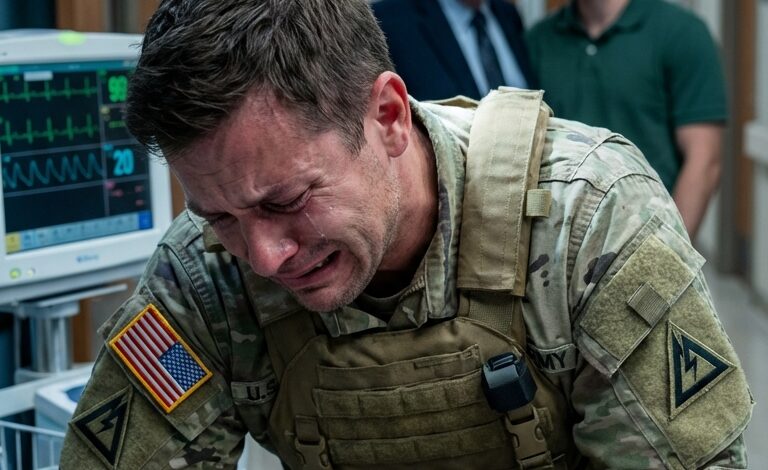
Most people think fear sounds like something—sirens, explosions, a phone ringing in the middle of the night. For soldiers, it’s different. The real fear isn’t the noise of war. It’s the silence that greets you when you finally come home.
I had seen things most people never will. I had worked in places where survival depended on instinct, where hesitation cost lives. I had learned to stay calm in chaos, to move forward when everything in you wants to freeze. But nothing—nothing—prepared me for what waited behind that hospital door.
My wife, Tessa, wasn’t just injured.
She had been destroyed.
Thirty-one fractures. That was the number the doctors gave me, like it was just data. Her face, the one I had memorized down to the smallest detail, was swollen and unrecognizable. One side of her head had been shaved for stitches that ran across her scalp. Her jaw was wired shut. One eye was completely sealed.
And outside that room, the people responsible stood like nothing had happened.
The flight home had already felt long enough. Six months gone on an assignment that didn’t officially exist. No calls. No updates. Just distance and silence, with only one thing keeping me grounded—the thought of coming back to her.
I had played that moment in my head over and over. I’d walk through the door, drop my gear, and she’d come running. That was the image that carried me through nights I couldn’t explain.
But when I got home, the house was dark.
That was the first thing that didn’t sit right. Tessa always left the porch light on when I was coming back. She called it her lighthouse.
That night, there was nothing.
No light. No sound.
The front door was slightly open.
Every instinct I had kicked in at once. My body moved before my thoughts caught up. I pushed the door open carefully, scanning, listening.
“Tessa?”
My voice sounded wrong in the silence.
Then I smelled it.
Bleach.
And underneath it—metal.
Blood.
I moved through the house automatically, clearing each room. Everything looked normal until I reached the dining area. The rug was gone. The floor had been scrubbed, but not well enough. Dark stains still showed through where something had soaked into the wood.
My phone buzzed in my pocket.
Unknown number.
“Is this Hunter?” a voice asked.
“Yes.”
“This is Detective Miller. You need to get to St. Jude’s Medical Center. Immediately.”
The drive to the hospital is barely a memory. Just fragments—lights, movement, the feeling that something was already too far gone.
At the nurse’s station, I gave her name.
“Tessa Hunter. Where is she?”
The nurse looked at me with a kind of sympathy I recognized immediately.
ICU.
Room 404.
“And her family is already here.”
That word sat wrong.
Her family.
Tessa didn’t come from the kind of background I did. I had built everything from nothing. She had grown up surrounded by power and money, in a family that controlled everything around them.
Her father, Victor Wolf, was a man people didn’t say no to. And her seven brothers were exactly what you’d expect—loud, entitled, and used to getting their way.
They never liked me.
To them, I was temporary.
Replaceable.
I turned the corner into the waiting area and saw them all standing there, blocking the door like they owned the space.
When they saw me, there was no relief. No grief.
Just irritation.
“Finally,” Victor said, adjusting his suit like this was an inconvenience.
“Where is she?” I asked.
One of the brothers stepped in front of me, putting a hand on my chest.
“Not now,” he said. “She’s not—”
“Move,” I said.
There was a pause. Just long enough for him to realize I wasn’t asking.
He stepped aside.
Inside the room, the sound of the ventilator filled the air. Steady. Mechanical.
I walked to her bed.
And for a second, I couldn’t move.
If I hadn’t known it was her, I wouldn’t have recognized her.
I reached out, careful, touching the only part of her that didn’t look broken.
“Tessa,” I said quietly. “I’m here.”
No response.
Just the machine breathing for her.
A detective stepped into the room.
“Mr. Hunter,” he said. “We believe it was a home invasion. Robbery. They panicked.”
I didn’t look at him. I looked at her.
Then I looked at her hands.
Clean.
No scratches. No signs of a struggle.
“She didn’t fight back,” I said.
The detective hesitated.
“She’s trained,” I continued. “She would’ve defended herself. There would be evidence.”
He shifted slightly. His eyes flicked toward the window—toward the waiting room.
Toward her family.
“We’re looking into all possibilities,” he said.
I stepped out into the hallway.
Victor was waiting.
“We’ll handle this,” he said. “You can leave.”
I stepped closer to him.
“You don’t look like a man whose daughter is in critical condition,” I said quietly. “You look like someone dealing with a problem.”
Something in his expression shifted.
Not guilt.
Annoyance.
That was enough.
Later, I went back to the house.
The police tape was already loose, like no one cared enough to secure it properly.
Inside, the cold had settled in.
I didn’t turn on the lights. I used a flashlight, moving through the space the way I had been trained.
The dining room told the story.
The blood pattern was wrong for a random attack. Too controlled. Too deliberate.
Vertical strikes.
Not panic.
Precision.
I saw the scuff marks on the floor. Multiple positions. Multiple people.
They hadn’t fought her.
They had held her.
I stepped back, forcing myself to think, not react.
Why here?
Then I remembered something she had said before I left.
“If anything happens,” she told me once, half serious, half not, “check the table.”
I dropped to the floor and ran my hand along the underside of the dining table.
There it was.
A small recorder, taped out of sight.
I pulled it free and sat down, my hands steady even as everything else inside me tightened.
I pressed play.
The door opened.
A voice I recognized immediately.
Her father.
“Hello, sweetheart.”
Then boots. Multiple footsteps.
Tessa’s voice followed.
“You shouldn’t be here.”
“You don’t tell me where to go,” Victor said.
“I’m not signing anything,” she said. “I’m not letting you use his name.”
Then the command.
“Grab her.”
The rest didn’t need explanation.
I stopped the recording.
I didn’t need to hear more.
The truth was already clear.
This wasn’t a robbery.
This was family.
I stood up slowly, the weight of it settling into something cold and focused.
In the garage, behind the tools, I opened the hidden safe.
Inside was everything I had left behind—but never really lost.
Gear.
Tools.
Control.
I took what I needed.
Not a gun.
Not yet.
Because what had been done wasn’t something that ended quickly.
They hadn’t killed her.
And they hadn’t broken me.
That was their mistake.
And I wasn’t going to make the same one twice.