Have You Met My Husband Yet? Have You Met My Husband Yet?
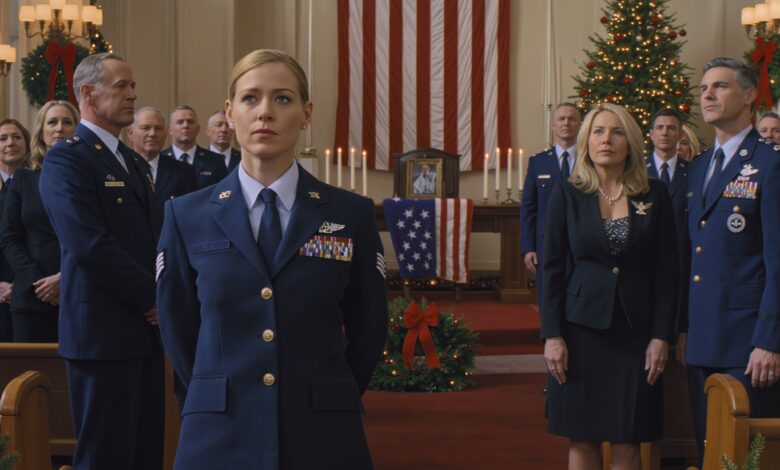
My sister stole my fiancé—the man who was also my commanding officer—and for a long time, I thought that betrayal would define me. I was wrong. Seven years later, at our father’s funeral, the truth surfaced quietly, without drama or revenge. Just clarity.
My name is Ava Serrano. I’ve spent my life in uniform. I earned every promotion the slow, correct way—showing up early, staying late, carrying responsibility without complaining. That discipline came from my father, Chief Master Sergeant Robert Serrano, who raised us to believe that respect is something you practice daily, not something you wear like a badge.
My older sister, Lena, never believed that. She believed in appearances. In shortcuts. In being adjacent to power rather than building it.
When I was twenty-six, newly promoted and engaged to Captain Reed Mercer, I thought my life was steady. Reed was ambitious, polished, respected. We worked on the same base. He understood the job, the pressure, the sacrifices. Or so I thought.
Lena started showing up everywhere—ceremonies, receptions, events she had no reason to attend. She framed it as “support.” I noticed how she dressed, how she positioned herself next to Reed, how she laughed a little too loudly at his jokes. I noticed how Reed let it happen.
I told myself I was imagining things. I told myself loyalty meant trusting the people closest to me.
Then Reed started changing. He talked more about rank than service. About image more than substance. He criticized my focus, my discipline, the very traits he once claimed to admire. When I raised concerns about Lena, he dismissed them, reframed them, made me feel small for noticing what was obvious.
The end didn’t come with shouting. It came with paperwork.
My commanding officer called me in and informed me—formally—that Reed had requested to dissolve our engagement due to “incompatibility.” He’d reported it through the chain of command before saying a word to me. Turned our relationship into an administrative issue to protect himself.
That night, Reed confirmed it. Calm. Detached. He told me he needed someone who “understood ambition.” He left my engagement ring on the table and walked out.
Three days later, Lena posted a photo online. My ring. Her hand. A caption about upward mobility.
I didn’t confront them. I didn’t beg. I didn’t fight. I did the only thing that ever made sense to me—I kept going.
I focused on my work. I earned my promotion to captain on schedule. I took on harder assignments. I stayed close to my father as his health declined. Lena married Reed within a year. She wore his rank like jewelry. She introduced herself by his title. She treated his career as proof of her worth.
My father saw through it. He always had.
“She wants the appearance of what you built,” he told me once. “Not the work. Not the responsibility. Just the story.”
When my father passed, I became the one handling everything—the arrangements, the paperwork, the honor guard. Lena insisted on “helping,” mostly so she could control how things looked. She talked endlessly about optics, about rank, about how important it was that the funeral reflect Dad’s status.
The day of the service, she arrived in black designer clothes, wearing her husband’s future rank insignia like an accessory. She worked the room, collecting sympathy, introducing herself as the wife of a lieutenant colonel.
I arrived quietly, in uniform.
I didn’t arrive alone.
Six months earlier, I’d married Daniel Hayes. A colonel. A man who understood service without needing to advertise it. We’d kept it private because my life had taught me that not everyone deserves access to what matters.
Lena noticed him before she understood who he was. She saw the bearing. The insignia. The presence. She walked over with a practiced smile and tried to diminish me one last time—commenting on my rank, my “lack of progress,” my being alone.
I didn’t raise my voice. I didn’t argue.
I simply said, “Have you met my husband?”
Daniel stepped forward. Colonel Daniel Hayes.
The room went silent.
Every military member there understood instantly. Understood the ranks. Understood the implications. Understood that everything Lena had been performing collapsed in that moment.
She froze. Reed stiffened, instinctively addressing Daniel with “sir.” The hierarchy she’d tried to game asserted itself without effort.
I didn’t gloat. Daniel didn’t posture. We offered condolences and walked away.
That was it.
No shouting. No confrontation. No revenge.
Just reality, arriving exactly on time.
After the funeral, Lena tried to talk. She wanted explanations, reconciliation, absolution. I told her the truth. That I’d built a life she couldn’t take. That boundaries weren’t punishment—they were necessity.
We don’t speak much now. She’s rebuilding herself outside of borrowed status. I hope she succeeds. From a distance.
My career continued. Promotions came. Responsibilities grew. I earned the respect of people who cared about results, not optics. Eventually, I stood where my father once stood—not in rank, but in principle.
What happened at that funeral wasn’t a victory. It was a reckoning.
I didn’t win because I out-ranked anyone. I won because I refused to become smaller to make others feel bigger. I refused to compete in a game built on insecurity. I chose character when others chose performance.
My father taught me that the only rank that matters is the one you earn when no one is watching.
Seven years earlier, my sister took my fiancé.
She never understood she’d also taken a problem out of my life.
And at my father’s funeral, of all places, the truth finally stood where everyone could see it—quiet, undeniable, and earned.