From beaten and bruised to one of the brightest stars in the world!
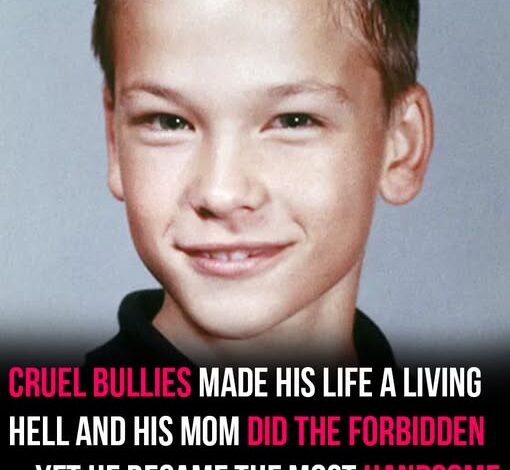
The trajectory of a legendary life often begins in the crucible of conflict, and for Patrick Swayze, the journey to becoming a global icon was paved with bruises, both physical and emotional. Born on August 18, 1952, in Houston, Texas, Swayze was a child of immense contrast. His father, Jesse, was a rugged draftsman at a chemical plant, while his mother, Patsy, was a visionary choreographer and the founder of the Houston Jazz Ballet Company. Growing up in this environment, Swayze became a unique fusion of his parents’ worlds: a natural athlete who could hold his own on a football field, and an artist who spent eight hours a day in a leotard, perfecting the grace and discipline of ballet.
In the hyper-masculine culture of mid-century Texas, Swayze’s devotion to dance made him an immediate target. He was a boy who carried a violin in one hand and ballet shoes in the other, a combination that drew relentless, violent bullying from his classmates. He frequently returned home from school marked by confrontations, but it was here that his parents’ unconventional philosophies shaped his resilience. His father, Jesse, took a hardline stance on self-defense, famously telling him that while he should never start a fight, he had better finish every one he found himself in. His mother, Patsy, was equally fierce, once suggesting he use his ballet shoes as a weapon to “beat the snuff” out of his tormentors. Eventually, Swayze took his bullies to the school gym, challenging them one by one with boxing gloves—a move that finally silenced the taunts and earned him a hard-won respect.
However, the intensity that fueled his success also created a complex dynamic at home. Patsy Swayze was a demanding perfectionist who could be “very violent,” a trait those close to the family attributed to the cycle of abuse she had endured in her own childhood. On Patrick’s 18th birthday, a particularly explosive moment occurred that nearly fractured the family. It was only after Jesse intervened, threatening a divorce if Patsy ever laid a hand on their son again, that the physical discipline finally ceased. Despite these volatile beginnings, Swayze remained deeply connected to his mother, later acknowledging that her drive was the engine behind his career.
As he entered young adulthood, Swayze’s path seemed destined for professional sports. He was a powerhouse football player with dreams of a college scholarship, but a devastating knee injury during his senior year abruptly ended that aspiration. Shortly after, in 1970, he faced the uncertainty of the Vietnam War draft with a lottery number of 141. While he was technically eligible, his physical condition likely spared him from service. This redirection proved to be a pivotal “blessing in disguise,” as it forced him to double down on his artistic training. He used gymnastics and dance to rehabilitate his knee, and by 1972, he moved to New York City to study at the prestigious Harkness and Joffrey Ballet schools.
Swayze’s transition to Hollywood was not an overnight success, but rather a steady climb through the ranks of ensemble casts. His breakout moment arrived in 1983 with Francis Ford Coppola’s The Outsiders, where he played the protective older brother, Darry Curtis. This role established him as a leading man who could balance toughness with deep emotional sensitivity. Following performances in Red Dawn and Youngblood, he catapulted into the stratosphere of superstardom with the 1987 release of Dirty Dancing. As Johnny Castle, Swayze didn’t just play a character; he became a cultural phenomenon, proving to the world that a man could be both a formidable athlete and a breathtaking dancer.
Yet, behind the “Sexiest Man Alive” title and the adoration of millions, Swayze lived a life marked by profound private sorrows. Perhaps the greatest of these was his unfulfilled desire for fatherhood. He had met his wife, Lisa Niemi, when he was 18 and she was 14; their bond was the anchor of his life. In 1990, the couple was overjoyed to learn they were expecting, but the pregnancy ended in a devastating miscarriage. They spent years trying to conceive again, but the joy of a child remained permanently out of reach—a loss that Swayze carried with him until his final days.
The pressures of fame, combined with the crushing grief of losing his father to a heart attack in 1982, pushed Swayze toward alcohol as a coping mechanism. He later admitted to People magazine that he “got stupid” and drank too much while trying to navigate the surreal reality of being a global celebrity. His internal struggle intensified as more tragedy struck: the suicide of his beloved sister, Vicky, in 1994. Vicky and Patrick were exceptionally close, and her death left him riddled with guilt and a sense that he was somehow “cursed.” He found himself paying her bills and trying to protect her, only to be left with the agonizing realization that he could not save her from her own darkness.
Throughout these battles, Swayze turned to horses and ranch life to find a sense of peace. He became a champion Arabian horse breeder, finding solace in the silent understanding of animals and the physical labor of his ranch. This connection to the earth helped him “come out the other end” of his addictions and personal crises, allowing him to enter the final chapter of his life with a sense of perspective and renewed purpose.
Even when he was diagnosed with stage IV pancreatic cancer in 2008, Swayze refused to be a victim. He continued to work, filming the series The Beast while undergoing grueling chemotherapy treatments without pain medication, so as not to dull his performance. He faced his mortality with the same grit his father had taught him in that Houston gym decades earlier. When he passed away on September 14, 2009, at the age of 57, the world didn’t just lose an actor; it lost a testament to the power of the human spirit.
Patrick Swayze’s legacy is more than a filmography of iconic roles. It is a story of a boy who was “beaten and bruised” for his passions but refused to let the world change him. His life serves as a definitive roadmap for anyone struggling with bullying or self-doubt: it is a reminder that the very things that make you a target in youth are often the things that make you a star in adulthood. He transformed his pain into poetry and his bruises into beauty, leaving behind a legacy that continues to inspire resilience in generations of dreamers.