Every Babysitter Quit After the First Day so I Installed a Hidden Camera and Saw What My Husband Was Doing Behind My Back
Sarah was living a modern parent’s nightmare. For three months, she had been trying to return to her career, but a bizarre pattern kept thwarting her efforts. Every single babysitter she hired quit after their very first shift. The resignations were always identical: a polite, clipped text message stating they would not be returning, followed by a complete refusal to answer follow-up calls or explain what had gone wrong.
Sarah was baffled. Her children were well-behaved, the pay was above market rate, and the house was always stocked with snacks. She began to spiral into self-doubt, wondering if her kids were secretly terrors or if there was something inherently wrong with her family. The frustration reached a breaking point when her fourth sitter in a row resigned before the sun had even set on her first day.
During a tense coffee date, Sarah’s friend Julie voiced the suspicion Sarah had been too afraid to acknowledge. “If the kids are fine and the house is fine, then maybe it’s not the job,” Julie suggested quietly. “Maybe it’s someone else in the house.”
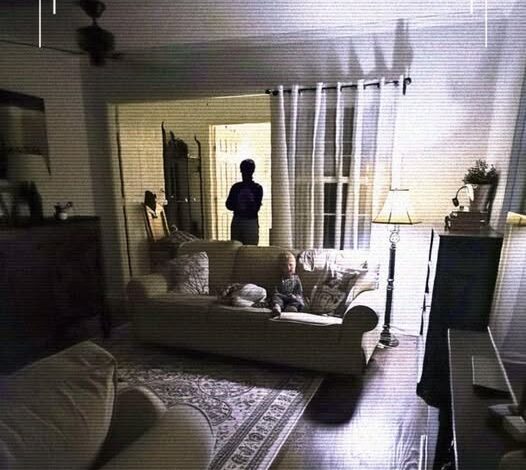
The implication hung heavy in the air. Sarah didn’t want to believe that her husband, Dave, could be involved, but she needed answers. That evening, she purchased a high-definition hidden camera disguised as a common household object. She placed it in the living room and hired one more sitter for the following Monday.
When Sarah sat down to review the footage later that night, she expected to see a crying child or a lazy employee. Instead, she watched a horror movie of her husband’s making. As soon as Sarah had left the driveway, Dave’s demeanor shifted from supportive spouse to a chillingly manipulative stranger. He approached the new sitter with a somber, theatrical expression and began to weave a web of lies.
On camera, Sarah watched in disbelief as Dave leaned in and whispered to the sitter that Sarah was “severely unstable” and struggling with “dangerous postpartum depression.” He painted a picture of a household on the brink of a violent collapse, warning the young woman that things were about to get “messy” and that for her own safety, she should leave immediately and never look back. He even added a layer of intimidation, implying that if she mentioned their conversation to Sarah, the “legal consequences” would be severe.
When Sarah confronted Dave that night, he didn’t even have the grace to look ashamed. He admitted everything with a shrug, claiming he simply wanted her to stay home and be a “traditional” mother. He insisted that driving the sitters away was a necessary step for the “good of the family,” believing that if he made her working life impossible, she would eventually surrender and stay in the kitchen.
In that moment, the man Sarah thought she knew disappeared. She realized his actions weren’t born of a desire to protect their family, but a desperate, pathological need for control. He hadn’t just sabotaged her job; he had systematically gaslit her and defamed her character to strangers to keep her isolated and dependent.
“I can’t stay here,” Sarah told him, her voice cold and resolute. “Not like this.” She didn’t wait for his apologies or his excuses. She packed her bags and her children’s things, choosing the uncertainty of independence over the suffocating cage of a controlled life. Sarah walked out the door, finally realizing that the only thing in the house that needed to be removed wasn’t a babysitter—it was a husband who didn’t want her to fly.