Declined Transactions and Family Fury! What I Learned From The Bank Statements
The gale-force winds whipping off Lake Michigan that Tuesday were more than a meteorological event; they were a physical assault. The freezing, howling beast rattled the storm windows of my brick bungalow on Maplewood Avenue and buried the Chicago streets under a relentless, blinding shroud of white. Yet, the arctic freeze gripping the city was tropical compared to the absolute zero of the betrayal waiting for me inside the home I had owned for forty-five years.
I stood in the small vestibule, my hands trembling as I brushed the heavy slush from my wool coat. My fingers were numb, not from the winter chill, but from the adrenaline that had been coursing through my veins like liquid fire for the last seventy-two hours. I had just returned three days early from a fabricated trip to my sister’s house in Wisconsin—a strategic lie planted to trap the rats nestling in the walls of my life.
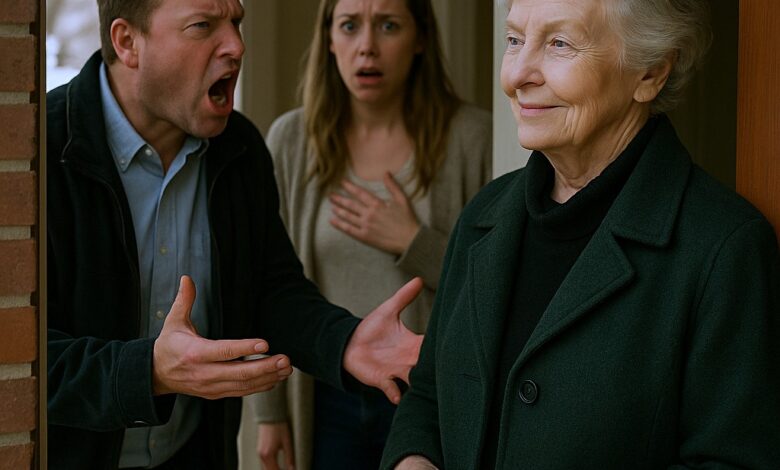
I hadn’t even pried my boots off when the sound of destruction reached me: the unmistakable, heart-wrenching crash of porcelain shattering against plaster, followed by a guttural roar of frustration. I walked into the kitchen, the heart of my home, and saw the wreckage of my history. Lying in jagged shards was my grandmother’s antique teapot, a hand-painted treasure that had survived two World Wars and the Great Depression, now destroyed in a fit of pique by my son-in-law, Rick. He was pacing like a caged predator, his face a violent crimson, gripping his smartphone with such force I thought the glass would snap. Beside him stood my daughter, Tanya—the child I had raised and loved more than my own existence—her face twisted into a mask of panicked disbelief.
They didn’t see me as a mother; they saw a malfunctioning ATM that had suddenly stopped dispensing the cash they needed to fuel their delusional lifestyle. Rick lunged toward me before I could set my purse down, shoving his glowing screen into my face. “Declined!” he screamed, spittle flying from his lips. “Do you have any idea how humiliating it is to stand at a luxury car dealership, ready to drive off in a $90,000 SUV, only to be told there are insufficient funds? You humiliated me!”
A week ago, the old Evelyn—the gaslighted, beaten-down version of myself—would have fumbled for her checkbook, desperate to buy their approval. But that woman had died in a motel room three towns over while weeping over a stack of bank statements. The woman standing in the kitchen now was forged from something cold and unbreakable.
“I didn’t make a mistake, Rick,” I said, my voice cutting through his shouting like a surgical scalpel. “I closed the account. I transferred every cent, every stock, and every bond to a new vault that neither of you can touch. I did it three days ago while you were busy picking out leather seats for a car you intended to buy with my retirement. The gravy train has derailed, and it is never coming back.”
The silence that followed was a vacuum. Tanya stared at me, her mouth opening and closing like a fish on a dock. “Mom, you can’t do that,” she whispered. “That’s our money. We have investments, debts! You’re going to ruin us!”
“Ruin you?” I repeated, the words tasting like iron. “I am saving myself from the ruin you’ve already caused. Do you think I don’t know about the second mortgage you tried to take out in my name? Or the $60,000 you spent in Las Vegas while I sat here eating canned soup because you told me we had to save on electricity? Do you think I don’t know you pawned your father’s gold watch?”
Rick slammed his fist on the table, rattling the remaining dishes. “You live under our roof, Evelyn! We sacrifice our lives to take care of you, and you repay us by stealing our resources?”
“Our roof?” I laughed, a dry, humorless sound. “This house has my name on the deed. My husband and I laid the bricks of this patio with our own hands. You moved in here four years ago because you were evicted from your apartment. You are not owners; you are guests who have overstayed your welcome by a thousand days.”
Tanya burst into weaponized tears, the same tactic she had used since she was a teenager. “How can you be so cruel? We’re family! We did this for you, to manage your estate so you wouldn’t worry!”
Watching her cry used to tear me apart. Now, I saw it for what it was: a calculated performance. “If this is love, Tanya,” I said, walking toward the stairs, “then I would prefer to be hated.”
I retreated to my bedroom and pushed my heavy oak dresser against the door, my heart pounding like a war drum. To understand how I reached this moment, one must understand the slow, insidious erosion of my life. It began after my husband, Arthur, passed away. The grief had been a heavy gray cloak, and when Tanya called me about their financial struggles, I thought it was a blessing to have them move in. I thought the house would feel full again.
The first few months were a honeymoon of deception. They were helpful and kind, but soon the “grooming” began. Small requests for bill coverage turned into demands. Eventually, Rick convinced me to put his name on my accounts, claiming I looked too tired to handle the stress. Once I signed, the mask slipped. I became an inconvenience in my own home. They would turn up the TV to drown me out and eat expensive steaks in front of me while telling me my stomach could only handle toast.
Then came the gaslighting. They would hide my glasses in the refrigerator or the trash, then tell me my memory was failing. They isolated me from my friends and even my granddaughter, Mia, claiming she was ashamed of my “dementia.” I became a prisoner, medicated and confused, while they spent my life savings on Caribbean boat rentals and bespoke suits.
The fog only lifted ten days ago when I snuck out to the library. I stopped at an ATM to withdraw $50 for a birthday card for Mia, and the screen flashed: Insufficient Funds. I went inside, trembling, and spoke to a banker who had known my husband for years. When she turned the monitor toward me, my world collapsed. My savings hadn’t just dipped; they had been slaughtered. The $200,000 Arthur and I had spent our lives building was gone. The balance was forty-two dollars.
In that moment of total devastation, the “demented” old woman vanished, and the head nurse I used to be took over. I spent the next forty-eight hours in a silent, cold fury. I consulted a lawyer, moved my remaining assets, and set the trap.
Now, as the storm howls outside my window and my daughter screams threats through the bedroom door, I feel a strange sense of peace. I am seventy-two years old, and I have lost nearly everything I worked for. But as I look at the suitcase I’ve packed, containing my documents and the few heirlooms they didn’t break, I realize I haven’t lost my soul. Tomorrow, I will call the police to escort them from my property. Tomorrow, I will call Mia and tell her the truth. The freeze is finally over, and for the first time in four years, I am the one holding the keys.