Common Signs and Symptoms of Vitamin B12 Deficiency!
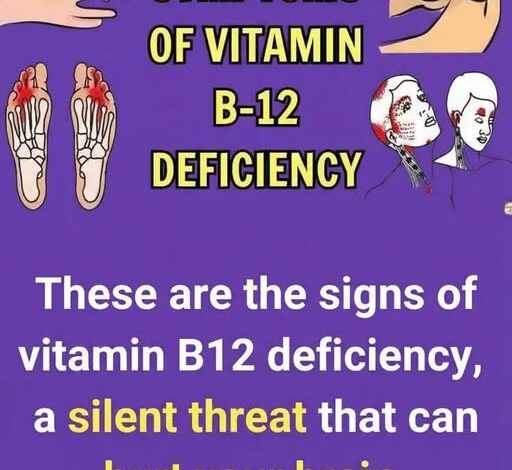
In the biological theater of the human body, few actors play a more diverse or critical role than Vitamin B12, yet its performance is often so subtle that its absence goes unnoticed until the final act. As we navigate the health landscape of March 2026, medical professionals are noting a “Quiet Giant” of a nutritional crisis: the rising prevalence of Vitamin B12 deficiency. Cobalamin, as it is scientifically known, is an essential nutrient—a chemical cornerstone required for the production of healthy red blood cells, the maintenance of the central nervous system, and the synthesis of DNA, the very blueprint of our existence. Because the human body is incapable of producing this vitamin on its own, we are locked in a “shared, trembling pilgrimage” with our diet and our digestive systems to ensure our levels remain within a functional range.
The paradox of B12 is that while it is vital, the body’s ability to sequester it decreases as we age. For many adults, the “allure” of a long life is accompanied by a biological ultimatum: the stomach’s production of hydrochloric acid and intrinsic factor—two components necessary for B12 absorption—begins to wane. Studies in early 2026 suggest that a significant portion of the global population may be living in a state of borderline deficiency, a “bruised darkness” of health where symptoms are present but often misattributed to the general fatigue of modern life.
The Fatigue Factor: When Sleep Is Not Enough
The most pervasive and deceptive signal of a B12 deficit is chronic, overwhelming exhaustion. In a culture that values “relentless motion and defiance” against rest, many people dismiss their lethargy as a byproduct of a busy schedule. However, B12-related fatigue is fundamentally different. Because the vitamin is a key ingredient in the “output” of red blood cells, a deficiency leads to a condition known as megaloblastic anemia. In this state, the body produces red blood cells that are abnormally large and structurally fragile, making them inefficient at their primary job: transporting oxygen.
When the body’s tissues are starved of oxygen, the resulting weakness and lightheadedness can feel like an anchor dragging behind a ship. This isn’t just “feeling tired”; it is a systemic failure of energy production. Individuals might find themselves struggling with “brain fog”—that frustrating difficulty in concentrating or recalling simple words—as the brain, the body’s most oxygen-hungry organ, begins to feel the pinch of the deficit.
The Mirror of the Body: Physical Manifestations
Beyond the internal struggle for energy, a B12 deficiency eventually leaves its mark on the “mirror” of our physical appearance. One of the more specific clinical signs is a subtle, yellow-tinged or “jaundiced” appearance to the skin and the whites of the eyes. This occurs when the fragile, oversized red blood cells break down prematurely, releasing a byproduct called bilirubin.
In more advanced stages, the deficiency moves from the blood to the nerves. The tongue may become inflamed, a condition called glossitis, where it appears strangely smooth and red, losing its tiny bumps (papillae). This is often accompanied by discomfort or a distorted sense of taste. Perhaps most concerning is the impact on the nervous system. Without adequate B12 to maintain the myelin sheath—the protective insulation around our nerves—individuals may experience “pins and needles” sensations in the hands and feet. Left unaddressed, this “violent darkness” of nerve damage can even affect vision or balance, as the optic and spinal nerves struggle to transmit clear signals.
The Search for the Source: Why the Gaps Occur
The reasons for a B12 “breach” are as varied as the people they affect. While restrictive diets—such as long-term veganism or vegetarianism without proper supplementation—are a well-known risk factor, the issue is often one of absorption rather than intake. Digestive disorders like Celiac disease or Crohn’s, as well as the use of common medications like metformin for diabetes or proton pump inhibitors for acid reflux, can inadvertently create “gaps in our rules” of nutrition.
Getty Images
For those following plant-based lifestyles, the 2026 market offers a “luminous” array of fortified products, from cereals to nut milks. However, the most bioavailable sources remain animal-based: fish, poultry, lean meats, and eggs. The “Quiet Giant” of B12 management is the understanding that a balanced diet is only half the battle; gut health is the other. Maintaining a diverse microbiome through fiber and whole foods supports the digestive environment necessary for B12 to be successfully extracted and utilized.
The Turning Point: Diagnosis and Restoration
The “confidence” to reclaim one’s health starts with a simple, grounded step: a blood test. Because the symptoms of B12 deficiency overlap with so many other conditions—from thyroid issues to clinical depression—it is vital not to self-diagnose. A healthcare professional can provide a “measured leadership” in a patient’s recovery, determining whether oral supplements are sufficient or if the situation requires more direct intervention, such as B12 injections.
Trust in the recovery process is not built overnight, but it is built deliberately. Once B12 levels are restored, many patients report a “spectacle” of improvement—the fog lifts, the colors of the world seem sharper, and the crushing fatigue begins to dissipate. It is a reminder that our bodies are complex machines that require specific, high-quality inputs to function.
Conclusion: The Vigilance of Vitality
The story of Vitamin B12 is a reminder that “honesty, even when uncomfortable, is far stronger than pride.” Admitting that one feels “small and exposed” by persistent fatigue is the first step toward finding a solution. In an era where we are obsessed with “embracing confidence” and “allure,” we must not forget the fundamental chemistry that allows us to stand tall in the first place.
As we move through 2026, the focus on nutritional integrity should be viewed as a “shared, trembling pilgrimage” toward a healthier collective future. We must look closer at the “hidden details” of our biology, recognizing that the signs of deficiency are not a sign of weakness, but a bid for connection from our own bodies. By listening to these “silent signals,” we ensure that our “output” remains high and our spirits remain undimmed. The road to health is one we all travel, and ensuring we have the right “fuel” is the only way to make it home.
Understanding Vitamin B12 Deficiency: Signs, Symptoms, and Solutions
This video is a valuable resource for visualizing the neurological and hematological impacts of B12 deficiency, providing a clear explanation of how this “Quiet Giant” of a nutrient affects your daily energy and cognitive function.