Canned Food Labels Explained! What the Dates Tell You
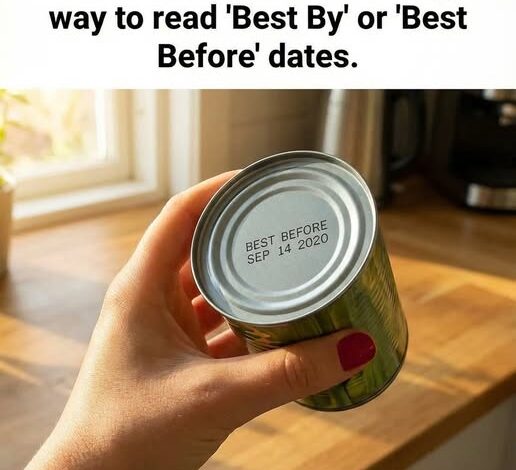
The modern pantry is often a place of mystery, filled with rows of uniform silver cylinders that promise a quick meal or a reliable backup in an emergency. Yet, for many consumers, a single row of printed numbers on the lid of a can serves as a source of quiet anxiety. You reach for a can of chickpeas or a tin of diced tomatoes, only to notice that the date stamped in faded ink passed three months ago. The immediate instinct for many is to toss the item directly into the trash, fearing a microscopic invisible threat. This reaction, while born of a healthy desire for food safety, is often a byproduct of a fundamental misunderstanding of how food labeling works in the modern age. In reality, those dates are rarely a countdown to a safety hazard; instead, they are a manufacturer’s whisper about peak performance.
To truly master the art of pantry management and reduce the staggering amount of food waste generated globally each year, one must first deconstruct the language of the label. The most common phrases encountered are “Best By,” “Best Before,” or “Enjoy By.” It is crucial to recognize that these are quality indicators, not safety expirations. When a manufacturer stamps a “Best By” date on a can of corn, they are not predicting the day the corn becomes toxic. Rather, they are providing a professional estimate of how long that corn will maintain its optimal crunch, its vibrant yellow hue, and its specific nutrient profile. Once that date passes, the food doesn’t suddenly “turn”; it simply begins a very slow, graceful decline in its sensory attributes. The flavor might become slightly more muted, or the texture might soften, but the caloric value and safety usually remain intact for a significant duration beyond the printed window.
The science behind the longevity of canned goods is a marvel of 19th-century innovation refined by 21st-century technology. The canning process involves heating food to a temperature high enough to destroy all harmful microorganisms and deactivate enzymes that cause spoilage. Once the can is vacuum-sealed, it becomes a sterile environment. As long as that seal remains airtight and the integrity of the metal is not compromised, the contents are technically protected from the bacteria that cause foodborne illness. This is why canned goods are considered shelf-stable. While a box of fresh strawberries has a “life” measured in days, a well-sealed can of beans has a life measured in years, and sometimes even decades, depending on the storage conditions.
Environmental factors play a starring role in how well these preserved foods age. A can is a tiny vault, but even a vault can be affected by its surroundings. The ideal sanctuary for your canned goods is a cool, dry, and dark environment. High temperatures are the enemy of long-term storage; excessive heat can accelerate the natural chemical breakdown of the food inside, leading to a faster loss of vitamins and a more rapid change in texture. Similarly, moisture is a threat not to the food itself, but to the container. A damp basement can lead to external rust, which, if left unchecked, can eventually eat through the metal and break the vacuum seal, inviting oxygen and bacteria into the party. By simply keeping your pantry organized and climate-controlled, you are effectively extending the “Best By” date by several years.
Not all canned foods are created equal, however, and their chemical makeup dictates their stamina. The acidity of the food is the primary factor here. High-acid foods, such as tomatoes, pineapples, citrus fruits, and items packed in heavy vinegar, have a shorter optimal shelf life. The natural acids in these foods slowly react with the lining of the can over long periods, which can eventually affect the flavor or lead to a metallic aftertaste. For these items, the “quality window” is generally around 12 to 18 months. On the other hand, low-acid foods—think canned meats, stews, carrots, peas, and most beans—are much more resilient. Under proper storage, these items can maintain excellent quality for two to five years, and often much longer without any risk to the consumer.
Of course, understanding the labels is only half the battle; the other half is a tactile and visual inspection. While the date on the lid might be a suggestion, the physical state of the can is a command. Before you even reach for a can opener, you should perform a quick “safety audit.” A can that is bulging or swollen is a definitive red flag; this is often a sign of gas production by bacteria inside, indicating a failure in the canning process. Deep dents, especially those located along the top or side seams of the can, are also cause for concern. A dent on a seam can create microscopic pinholes that allow air to enter, ruining the sterile environment. Small, superficial dents on the flat sides of a can are usually harmless, but any deformity that looks like it has “pinched” the metal should be treated with caution. Rust that can be easily wiped away is fine, but if the rust is pitted or has scaled into the metal, the integrity is compromised.
Once the can is open, your natural senses become the ultimate arbiters of safety. The “nose test” is one of the most powerful tools in a cook’s arsenal. If a product has a sour, putrid, or “off” odor that deviates significantly from its natural smell, it should be discarded immediately. Similarly, look for unusual colors or the presence of mold. While some slight darkening of the food at the very top of the can (where a tiny amount of headspace exists) is common and usually harmless due to oxidation, any fuzzy growth or vibrant discoloration is a sign to stay away. If the food looks right and smells right, it is almost certainly safe to consume, regardless of whether the “Best By” date was last month or last year.
By shifting our perspective from “expiration” to “quality window,” we can make a profound impact on both our household budgets and the environment. Millions of tons of perfectly edible canned food are discarded every year simply because a date passed, contributing to a global waste crisis and unnecessary consumer spending. An organized pantry, where older cans are rotated to the front (the “First In, First Out” method), ensures that you are using your stock while it is at its absolute best. However, if you find a stray can of peaches tucked in the back of the shelf from two years ago, there is no need for alarm. Inspect the can, check the seal, and trust your senses. In the vast majority of cases, that forgotten can is still a perfectly nutritious and safe addition to your meal. Knowledge is the best preservative, and once you understand what the dates are actually telling you, you can approach your pantry with confidence, clarity, and a much lighter sense of waste.