Breaking New! 13 Countries Join
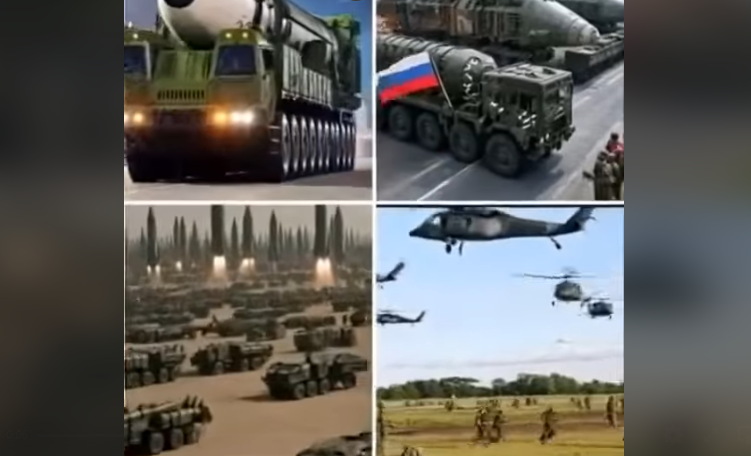
In the heart of Brussels, the air no longer hums with the soft cadence of bureaucratic diplomacy; instead, it carries the sharp, electric charge of a city preparing for a conflict it once deemed a relic of history. For decades, the European Union operated under a grand strategic assumption: that economic integration, shared prosperity, and a firm reliance on the United States’ security umbrella would render major war on the continent impossible. That illusion was shattered on the morning of Russia’s full-scale invasion of Ukraine, an event that did not merely change the map of Eastern Europe but recalibrated the very soul of the European project. Today, Europe finds itself in a desperate, high-stakes race against time to rebuild its defense readiness, overhaul its industrial base, and forge a strategic identity that can withstand a world where trust between traditional allies is eroding and the drums of war are beating louder than they have in eighty years.
The urgency radiating from the EU’s headquarters is the result of a perfect storm of geopolitical pressures. On the eastern flank, the war in Ukraine has evolved into a grueling war of attrition, signaling that the era of short, surgical interventions is over, replaced by the demand for massive industrial output and sustained military mobilization. Simultaneously, the shifting political winds in Washington have sent a chilling message across the Atlantic: the United States is no longer willing or perhaps even able to serve as Europe’s indefinite protector. The American focus is pivoting toward the Pacific, leaving European leaders with a stark realization. They must take responsibility for their own survival or risk becoming a fractured playground for the world’s rising autocracies.
The rhetoric emerging from Europe’s security establishment is no longer shrouded in the typical caution of international relations; it has become blunt, frequent, and terrifying. Last December, EU leaders signaled their commitment to this new reality by agreeing to a landmark €90 billion loan package to support Ukraine, a move intended to serve as a bulwark against further Russian westward expansion. However, supporting a neighbor is only half of the equation. European Commission President Ursula von der Leyen has spearheaded a series of aggressive defense initiatives designed to modernize Europe’s collective deterrence capacity by 2030. The goal is to transform a fragmented collection of national militaries into a cohesive, technologically advanced force capable of independent action.
The motivation for this rapid pivot is fueled by the dark warnings coming from the Kremlin. Vladimir Putin has made it clear that Russia is prepared for a long-term confrontation, stating that there may soon be “no one left to negotiate with” in the West. This belligerence is not being dismissed as mere theater. NATO Secretary General Mark Rutte recently offered a sobering assessment, labeling Europe as “Russia’s next target” and suggesting that an attack on NATO territory could materialize within the next five years. This sentiment was echoed even more dramatically by Germany’s defense minister, Boris Pistorius, who warned that the continent may have already experienced its “last summer of peace.” When the defense minister of Europe’s largest economy speaks in terms of an impending storm, the rest of the world listens.
The challenge facing the European Union is not merely a matter of purchasing more tanks or aircraft; it is a fundamental systemic crisis. For thirty years, Europe enjoyed a “peace dividend,” during which military spending was slashed and defense industries were allowed to atrophy. Now, as Brussels races to rearm, it faces an industrial base that is struggling to meet the sudden surge in demand. Manufacturing artillery shells, advanced missile defense systems, and next-generation fighter jets requires a level of coordination and investment that the EU has not seen since the Cold War. The race against time is as much about the factory floor as it is about the battlefield.
Strategic autonomy has become the new watchword in the corridors of power. This concept, once a controversial French ambition, is now a mainstream necessity. It involves creating a unified European defense market, standardizing equipment across twenty-seven different nations, and investing heavily in cyber defense and space-based intelligence. The fragmentation of European defense—where different countries use different tanks, jets, and ammunition—is now viewed as a critical vulnerability that must be eliminated. By consolidating their procurement and R&D, European leaders hope to create a military-industrial complex that can rival those of other global superpowers.
However, the path to readiness is fraught with internal tension. The European Union is a union of sovereign states, each with its own history, its own relationship with Russia, and its own domestic economic pressures. Maintaining unity while asking citizens to trade social spending for defense budgets is a delicate balancing act. There is a growing fear that if the war in Ukraine drags on or if the economic cost of rearmament becomes too high, the populist movements simmering across the continent could fracture the very unity that the EU needs to stay safe.
Despite these hurdles, the momentum is undeniable. The EU is moving away from its identity as a purely “soft power” entity—a trade bloc with a penchant for regulation—and is evolving into a geopolitical actor that understands the necessity of “hard power.” This transition is a painful one, requiring a departure from the idealistic pacifism that defined the post-Cold War era. It is a return to a more cynical, more realistic understanding of human history: that peace is not a natural state of affairs but a condition that must be actively and robustly defended.
As we look toward 2030, the question of whether Europe is ready for war remains unanswered, but the effort to reach that readiness is undeniable. The continent is shoring up its military foundations, reinforcing its eastern borders, and attempting to speak with a single, powerful voice on the world stage. The race is on to ensure that the “last summer of peace” mentioned by Pistorius does not become a prophetic epitaph for a continent that waited too long to remember how to defend itself.
The story of Brussels today is the story of a civilization waking up to a world that has grown cold and dangerous. It is a city that still values the rule of law and the beauty of diplomacy, but it is also a city that is learning to sharpen its sword. The race against time is not just about survival; it is about preserving a way of life that depends on the strength to say “no” to aggression. Whether the European Union can bridge the gap between its current vulnerabilities and its future requirements will determine the fate of the continent for the century to come. In the race against time, there is no silver medal; there is only the resilience to endure or the failure to exist. As the clock ticks, Europe is making its choice, betting that through unity and a renewed sense of purpose, it can once again become the master of its own destiny.