Black Friday Exposed My Husbands Secret Affair and a $250K Trust He Tried to Steal
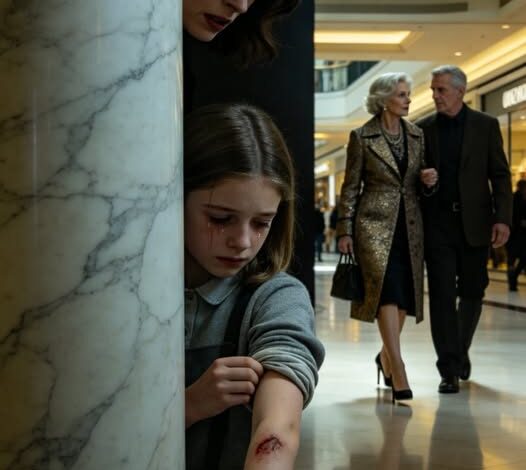
The sensory overload of Black Friday at the Mall of America is a particular kind of madness. It is a roar of unbridled consumerism, a chaotic symphony of shopping bags slapping against knees, the high-pitched whine of overstimulated children, and air thick with the scent of cinnamon sugar and expensive department store perfume. It is the last place on earth you go to find peace, but it is the perfect place to disappear in a crowd.
My eleven-year-old daughter, Lily, suddenly gripped my hand so tightly her knuckles turned the color of bone. Before I could ask what was wrong, she yanked me behind a faux-marble pillar near the rotunda. Her breathing was hitching in a way that signaled genuine terror.
“Mom,” she whispered, her voice trembling. “Quickly. Don’t move.”
I leaned out just enough to see what had spooked my child, and my brain suffered a sudden, violent disconnect. The visual information simply didn’t match the reality I lived in. Walking past the Sephora entrance with the confidence of a woman who owned the building was my husband, Ethan. And beside him, clutching his elbow with the intimate familiarity of a lover, was Doris.
My mother-in-law, Doris—at least the one I knew—was a frail, confused woman who had spent the last three weeks shuffling across my hardwood floors with a walker, claiming she couldn’t remember if she’d eaten lunch. The woman ten yards away was balanced on three-inch heels. She had a glossy, professional blowout that caught the mall’s halogen lights, a tailored camel coat, and she was laughing. It was a throat-open, head-tilted sound that I had never heard in the quiet, somber halls of my home.
“That’s her,” Lily hissed, her face flushed with the hot, righteous anger children feel when they realize the adults in their lives are treating them like scenery. “Mom, look at her. No walker. No cane.”
Ethan had texted me that morning: Taking Mom to the clinic. It’s a bad day. Brain fog is heavy.
I squeezed Lily’s hand—our silent code for “stay with me”—as we trailed them through the jewelry wing. We watched as Ethan stopped at a kiosk, his shoulders relaxing with the posture of a man who had finally found a solution to a problem I didn’t know he had. The woman beside him lifted her wrist, turning it under the lights. I saw a manicure so fresh it looked wet—crimson red. The Doris in my house claimed the scent of nail polish triggered her migraines.
When Ethan placed his hand on the small of her back to guide her toward Nordstrom, the touch was possessive, not dutiful. It was the movement of a man with his partner, not his mother. I turned Lily so her face was buried in my coat, and we retreated toward the parking garage. We didn’t run. Running makes you look like prey. Once we were locked inside the muffled safety of my sedan, I looked at my daughter.
“Talk to me,” I said softly.
Lily stared out the window. “Grandma Doris told me not to tell you things, Mom. She said a lady came over while you were at work. She said if I told you, you’d get mad at Dad. And when you aren’t there, she walks normal. She stood up straight in the garage once to check her reflection in the car window. When I caught her, she grabbed my wrist.”
Lily rolled up her sleeve. A faint, yellowing bruise bloomed on her forearm. “She said I needed to show respect. Then she went back to shaking.”
In that moment, the weeping stopped and the planning began. My husband and this “Doris” were playing a game, and my daughter was the collateral damage. When we returned home, I instructed Lily to act normal—to do her homework and eat dinner as if we hadn’t seen the ghost in heels.
Ethan arrived hours later, carrying a pharmacy bag as a prop. “Rough day,” he sighed, kissing my cheek with a gesture that felt like a brand. From the living room, a thin, wavering voice floated out. “Megan, honey? Did I already eat?”
I walked into the living room to find the imposter bundled in oversized sweaters, blinking with watery eyes. “You ate, Doris,” I said, my voice like ice.
The next few days were an exercise in cold observation. Ethan had been “between jobs” for eight months, living off my salary while “managing assets” in the garage. He began pressuring me to sign a Durable Power of Attorney packet, claiming it was for “Doris’s” medical decisions. But buried in the fine print was a clause giving him authority over Lily’s trust—a $250,000 legacy left by her biological father, centered around an antique diamond and sapphire bracelet stored in our home safe.
I didn’t sign the papers. Instead, I met an old friend, a detective named Jake Miller. I told him about the mall, the bruise, and the sudden interest in the trust. “You need proof, Megan,” he told me. “Evidence, not suspicions.”
I baited the trap. At dinner, I casually mentioned that the trust lawyers were sending a courier on Friday to collect the bracelet for a secure vault deposit. Ethan’s fork stopped mid-air. “Friday? That’s soon.”
On Thursday morning, I told Ethan I had a double shift. I drove three blocks away, parked behind a hedge, and opened the surveillance app on my phone. I had hidden two tiny, motion-activated cameras—one in a smoke detector and one in a hollowed-out book.
At 8:15 AM, the screen came alive. Ethan was on the phone: “She’s moving it tomorrow. We have to go today.” On the couch, the trembling “Doris” threw off her blanket and stood with a flexible, youthful stretch. She peeled off a gray wig and latex prosthetics from her cheeks, revealing a woman in her thirties.
“God, this thing itches,” the woman said. “Your wife is annoying, Ethan.”
“She’s oblivious,” Ethan scoffed.
I hit record. They walked to the hallway closet, Ethan spun the dial to the safe, and he pulled out the velvet box. “Jackpot,” the woman—Vanessa—whispered. “A quarter-mil, easy.”
I called Jake. “They’re doing it now.”
I pulled my car into the driveway just as they stepped onto the porch. Ethan froze, his face a mask of sudden, panicked confusion. “Meg? I thought you were at work.”
“Forgot my laptop,” I said, stepping out of the car. “Going somewhere?”
Ethan laughed nervously. “Just taking Mom for air.” Beside him, Vanessa instantly slumped over the walker, trembling in a masterclass of deception.
“She looks spry for a woman who doesn’t need that walker,” I said. “How’s the hip, Doris?”
Blue lights flashed in the morning gray as unmarked sedans screeched to a halt. Jake stepped out, his hand on his belt. “Drop the act,” he told Vanessa. “We have the feed.”
The walker clattered onto the concrete as Vanessa straightened up, her eyes turning cold and dead. “It was his idea,” she spat.
“Vanessa?” I asked Ethan. “Where is your actual mother?”
“Nursing home in Arizona,” Vanessa sneered. “He hasn’t paid the bill in six months.”
As the officers pinned Ethan against the hood of my car, he began to sob, claiming he did it for “us.” But the truth was out. It was grand larceny, conspiracy, and fraud.
The divorce was an excavation. My lawyer unearthed Ethan’s gambling debts and the credit cards he’d opened in my name. Vanessa was a college girlfriend; the plan had been to liquidate Lily’s trust and vanish. They had underestimated the vigilance of a mother.
Six months later, the house was quiet—not the quiet of secrets, but the quiet of peace. Ethan and Vanessa were serving their sentences, and the bracelet was in a bank vault locked so tight even a ghost couldn’t touch it. Trust is a privilege, not a default. And I had learned that when someone shows you who they are, you believe them—especially if they’re wearing heels when they should be needing a cane.
I can help you by drafting a comprehensive guide on how to protect family trusts and minor dependents’ assets from internal fraud, or I can provide a checklist for vetting in-home caregivers and identifying signs of elder or familial financial abuse.