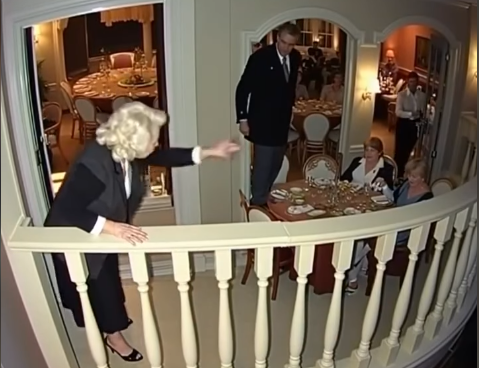
At a family dinner, I stood up smiling and announced I was pregnant, The whole!
The clinical atmosphere of the hospital room was suffocating, a stark contrast to the warmth of the family dinner that had preceded this nightmare. The air felt heavy, saturated with the sterile scent of antiseptic and the palpable vibration of unspoken fears. Emily lay against the propped-up pillows of the hospital bed, her body aching from a fall that had turned a celebratory evening into a scene of chaotic trauma. Beside her, Ethan sat perched on the edge of a plastic chair, his knuckles white as he gripped her hand. His eyes, usually bright with a playful spark, were now clouded with a deep, haunting anxiety.
When the doctor finally entered, the silence that followed was eerily absolute. He didn’t speak immediately; instead, he cleared his throat and looked down at a clipboard, his expression etched with a profound, unreadable sympathy. It is the look medical professionals wear when they are about to change a life forever. When he finally looked up, his gaze scanned the couple with a gravity that made Emily’s heart race against her ribs.
“Emily, Ethan, I have some difficult news to share,” the doctor began. His voice was steady, refined by years of delivering hard truths, yet there was an unmistakable tinge of sorrow beneath the professional veneer. “The fall caused significant trauma to your body. Given the force of the impact, it is quite frankly a miracle that both you and the baby survived the initial shock.”
A collective gasp escaped Emily’s lungs, and Ethan’s grip tightened until it was almost painful. For a fleeting second, relief washed over them. The word “survived” acted like a life jacket in a stormy sea. Tears welled in Ethan’s eyes, a chaotic mixture of gratitude and lingering terror. But the doctor did not smile. He didn’t offer the congratulatory nod they so desperately craved. His face remained a mask of solemnity.
“However,” he continued, his tone dropping an octave, “there are severe complications. The trauma has created a high-risk environment. We will need to monitor you with extreme precision throughout the remainder of the pregnancy. You will likely be on strict bed rest, and the margin for error is razor-thin.” He paused, weighing the next sentence as if it were lead. “And Emily, because of the internal injuries and the scarring from the emergency procedures, the physical damage is extensive. It is highly unlikely that you will be able to conceive or carry another child after this.”
The weight of that revelation crashed over Emily like a tidal wave, cold and suffocating. The air seemed to vanish from the room, replaced by a sharp, hollowing ache in her chest. She looked at Ethan and saw him close his eyes, a single, jagged tear escaping to track down his pale cheek. In that moment, they weren’t just processing a difficult pregnancy; they were mourning the future they had mapped out in their minds. They were mourning the siblings who would never be born, the hand-me-down clothes that would never be used, and the vision of a sprawling family table that had been their shared dream since they first fell in love.
The room began to spin. Emily felt a strange sense of detachment, as if she were watching this scene from a great distance. The baby was alive—their “miracle”—but the cost of that miracle felt monumental. Their reality had been irrevocably altered in the span of a few sentences. Yet, amidst the wreckage of their expectations, Ethan leaned forward. He pressed his forehead against her hand, his breath warm against her skin.
“We will get through this, Em,” he whispered. His voice was shaky, fractured by grief, but underpinned by a sudden, fierce determination. “We have to. We have this one life to protect, and that has to be enough. It will be enough.”
The days that followed were a grueling blur of medical jargon, flashing monitors, and the rhythmic, heart-wrenching sound of the fetal heartbeat during ultrasounds. Every beat was a victory, but every silence between beats was a terrifying abyss. Ethan became her fortress, never leaving her side, his presence a constant anchor in a sea of uncertainty. But beneath the medical crisis lay a darker, more personal wound: the betrayal of Margaret.
The “fall” had not been a simple accident. It was the result of a confrontation fueled by Margaret’s long-standing resentment and cruelty. At the family dinner, Emily had stood up, glowing and triumphant, to announce the pregnancy. She had expected joy, or perhaps the typical bickering of a large family, but she hadn’t expected the venomous intervention that led to her tumbling down the stairs. The physical injuries were healing, but the psychological shadow of that betrayal loomed large. It was a wound deeper than any bruise, a reminder that the people who should be your safety net can sometimes be the ones who cut the ropes.
As Emily lay in her hospital bed one afternoon, watching the city pulse with indifferent life below her window, a quiet resolve began to take root in her soul. She realized that she was standing at a crossroads. She could allow Margaret’s cruelty to define the rest of her life, or she could choose to wall off that darkness to protect the flickering light of the child she was carrying. The anger was there—a hot, pulsing thing—but she refused to let it consume the joy of her unexpected blessing. This child, born of a miracle and guarded by trauma, deserved a mother whose heart was filled with love, not the bitter ash of past grudges.
In the weeks that followed, the focus shifted from crisis management to holistic healing. Emily and Ethan began to rebuild their world from the ground up. They attended therapy sessions together, navigating the complex terrain of post-traumatic stress and the specific grief of secondary infertility. They learned to talk about the children they wouldn’t have so that they could fully cherish the one they were about to meet.
Simultaneously, the wheels of justice began to turn. Legal proceedings against Margaret commenced—a painful, public, and necessary process. It wasn’t about vengeance; it was about accountability and closure. It was about ensuring that the toxicity that had nearly destroyed their family was formally identified and removed from their lives.
Slowly, the hospital room was replaced by a sun-drenched nursery at home, outfitted with every precaution and filled with books and soft toys. Emily and Ethan learned to cherish the quietude of each day. They found a new kind of peace in the small moments: the flutter of a kick, the shared silence of a morning coffee, and the fierce hope that defined their every thought. Their path had been diverted by a moment of darkness, but the love they held for each other, and the resilience of the tiny life growing against all odds, became a guiding light that no shadow could extinguish. They were no longer the people they had been at that fateful dinner; they were stronger, tempered by fire, and ready to welcome a future that, while different than planned, was more precious than they ever could have imagined.