Americas Warning You Ignored!
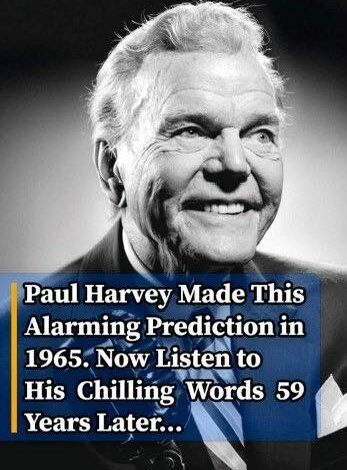
The silhouette of the man remains a blur in the rearview mirror of the national consciousness. You might have forgotten his name, his face, or the specific platform from which he delivered his address, but the resonance of his voice lingers like a persistent tinnitus. He stood before the public years ago—not with the polished charisma of a career politician, but with the frantic, trembling sincerity of a whistleblower who had seen the structural blueprints of a collapsing building. His thesis was simple and devastating: “You won’t notice the line when it’s crossed. You’ll be too busy arguing about who to blame.”
At the time, his warnings were dismissed as high-octane theatrics. To the comfortable and the cynical, his rhetoric felt desperate, perhaps even unhinged. We lived in an era where we believed the guardrails of democracy were immutable, where the “truth” was a shared bedrock rather than a choose-your-own-adventure novel. We watched his performance as one might watch a Greek tragedy—appreciating the drama but convinced that the catastrophe was confined to the stage. Today, however, those “theatrics” read like the meticulously kept minutes from a meeting the public chose to skip.
The Gamification of Outrage
The central pillar of this ignored warning was the transformation of public discourse into a form of blood sport. The man predicted that outrage would eventually cease to be a reaction to injustice and instead become a primary form of entertainment. In 2026, this prediction has reached its zenith. We live in an attention economy where the most profitable commodity is high-voltage indignation. Truth has become a secondary concern, an optional accessory to be discarded if it conflicts with the narrative of the “team” we have chosen to join.
We have crossed the line he spoke of, and as predicted, the crossing was silent. It happened in the increments of thousands of “likes,” the curation of digital echo chambers, and the subtle shift from debate to dehumanization. When truth becomes a matter of allegiance rather than evidence, the shared reality required for a functioning society begins to dissolve. We find ourselves in a landscape where every viral clip is a weapon and every panel show is a choreographed skirmish in a war that has no clear objective other than the total exhaustion of the populace.
The Vocabulary of Collapse
The man’s linguistic foresight is perhaps the most chilling aspect of his legacy. He spoke of a time when the language of crisis would become the vernacular of the everyday. Today, phrases like “unprecedented,” “deeply polarized,” and “democracy at risk” have been stripped of their urgency through overexposure. They are the background noise of our digital lives, used so frequently that they have lost their ability to startle us into action.
This desensitization is exactly what he feared. When the “alarm” sounds twenty-four hours a day, it becomes a lullaby. We have become a society of mutes, quietly unfollowing friends and family members who represent a reality we no longer wish to acknowledge. We have traded the messy, difficult work of communal compromise for the sterile safety of digital silos. We hear his warning in every notification ping, yet we continue to scroll, seeking the hit of dopamine that comes from seeing “our side” score a point against “their side.”
The Mirror and the Mandate
The most piercing part of his prophecy, however, was not about the erosion of institutions or the rise of misinformation. It was about the human reaction to the fallout. He warned that when the consequences of our collective choices finally became undeniable—when the gridlock became total and the social fabric began to tear—we would not look for solutions. Instead, we would beg for a scapegoat.
“You’ll beg for someone to blame—anyone but the person in the mirror,” he had said. This is the stage of the crisis we inhabit in 2026. We look toward the “other” as the source of our collective malaise. We blame the algorithms, the politicians, the media, and the “uneducated” or the “elite.” While these factors certainly play their roles, the man’s warning suggests that the root cause is a personal abdication of responsibility. We have allowed our reality to be outsourced to those who profit from our division.
Reflections from the 2026 Landscape
This narrative of internal responsibility and public warning echoes across the headlines of this very month. Whether we are looking at the heavy emotional toll of the Tommaso Cioni case in Arizona or the profound grief of the Obama family following the loss of Marian Robinson, there is a recurring theme of the “quiet anchor.” People like Marian Robinson represented the opposite of the man’s warning: they were individuals who remained grounded in reality, family, and truth, regardless of the theater performing around them.
Similarly, we see the consequences of “ignored warnings” in the tragic electrocution of a twelve-year-old in a home where small electrical flickers were likely overlooked. It is a physical manifestation of the man’s psychological warning: if you ignore the small signs of failure in the system—whether that system is an electrical circuit or a democratic institution—the eventual collapse will be catastrophic.
Reclaiming the Reality
The man with the trembling voice wasn’t asking us to be perfect; he was asking us to be awake. He was asking us to recognize that a society is only as strong as the individual’s commitment to the truth, even when that truth is inconvenient or “boring.” Reclaiming our reality requires an active rejection of outrage as entertainment. It requires the courage to unmute the dissenting voice and the humility to admit that our “team” might be wrong.
As we navigate the complexities of 2026—a year where forty-year-old planes are being found and the “Epstein files” are finally being laid bare—we are reminded that the truth always exists, waiting to be recovered. The question is whether we have the stomach for it when it arrives. The man’s “theatrics” were actually a map, and we are currently standing at the very destination he tried to steer us away from.
The path back begins with the mirror. It begins with the realization that every time we choose a viral lie over a difficult truth, or a comforting insult over a challenging dialogue, we are crossing that line once again. We have been warned that the greatest threat to a house is not the storm outside, but the rot within the walls. It is time to stop arguing about who started the fire and start looking for the water. The man’s voice may be a blur, but the choice he left us with is sharper than ever.