A farmer and 16 cows discovered lifeless – the heartbreaking reason why will shatter your heart!
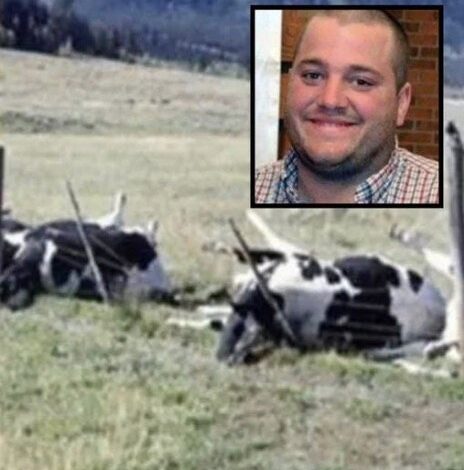
The story of Mike Biadasz is a somber chronicle of how a routine morning in America’s Dairyland transformed into a cautionary tale for the global agricultural community. On what appeared to be a standard summer morning in August 2016, the 29-year-old beef farmer set out to perform a task as familiar to him as the rising sun: preparing the manure pit on his family’s farm in Amherst, Wisconsin. Mike was a fourth-generation farmer, a man whose identity was deeply intertwined with the soil and the livestock he tended. He was known for an unshakeable work ethic and a vibrant, outgoing personality that made him a cornerstone of his local community. Yet, in an instant, a combination of everyday labor and an extraordinarily rare meteorological event claimed his life and the lives of sixteen of his cattle, leaving behind a legacy of grief and a renewed mission for farm safety.
The day began with the optimistic energy that characterized Mike’s approach to life. At approximately 6:00 a.m., he was at the edge of the farm’s manure storage pit, readying the “liquid gold” for hauling—a common term among farmers for the nutrient-rich fertilizer. In a final, poignant moment of modern connectivity, Mike snapped a photo and shared it on Snapchat, playfully acknowledging the hard work ahead. To anyone watching, it was just another day in the life of a dedicated producer. However, as Mike used his machinery to stir the contents of the pit—a necessary step to ensure the manure is of a consistency that can be pumped and spread—he inadvertently triggered a lethal chemical reaction.
Manure pits are known to produce a variety of hazardous gases, most notably methane, ammonia, and the highly toxic hydrogen sulfide. Under normal conditions, these gases dissipate into the atmosphere, posing a minimal risk in open-air environments. But on August 15, 2016, the atmosphere conspired against Mike Biadasz. A rare weather phenomenon known as an air temperature inversion had settled over Portage County. In this scenario, a layer of warm air sits high in the sky, acting as a literal lid over the cooler air near the ground. Combined with the thick morning fog common to Wisconsin summers, this “atmospheric dome” prevented the toxic fumes released from the agitated manure from rising and dispersing. Instead, the gases remained trapped at ground level in a concentrated, invisible, and odorless cloud.
When Mike’s friend and colleague, Steve Burclaw, arrived at the farm at 6:30 a.m. to help with the hauling, the scene appeared deceptively serene. The fog hung low over the fields, a sight so common it failed to raise any alarms. It was only as the workers approached the pit that the horror of the situation became clear. Mike lay motionless at the very edge of the pit, overcome so quickly by the high concentration of hydrogen sulfide that he likely never had the chance to realize he was in danger. Nearby, sixteen head of cattle lay dead, having succumbed to the same silent killer. The tragedy was a “freak accident” in the truest sense of the term—a perfect storm of chemistry and meteorology that turned an open field into a gas chamber.
The news of Mike’s passing sent shockwaves through the tight-knit community of Amherst and the broader agricultural world. His father, Bob Biadasz, was sitting in his kitchen with a cup of coffee when the phone rang, bringing the news that his son, business partner, and the future of the family farm was gone. The subsequent visitation saw an outpouring of support that was unprecedented for the region; more than 1,200 people arrived to pay their respects, a number that exceeded the entire population of the village of Amherst. It was a powerful testament to a young man who, as his father noted, had a rare gift for connecting with anyone, regardless of age or background.
In the depths of their sorrow, the Biadasz family made a courageous decision: they would not let Mike’s death be in vain. They recognized that if a seasoned, fourth-generation farmer like Mike could be caught off guard by these hidden dangers, then thousands of others were at risk. From this realization, the Mike Biadasz Farm Safety and Education Memorial Fund was born. The fund’s mission is to peel back the veil on the “invisible dangers” of farming, specifically focusing on the hazards of manure gas exposure.
The work of the memorial fund has become a vital resource for farmers across the Midwest and beyond. They advocate for the use of gas monitors—small, wearable devices that beep or vibrate when concentrations of hydrogen sulfide or methane reach dangerous levels. These devices, which cost significantly less than the price of a single head of cattle, are literal life-savers that could have altered the outcome of that August morning. Beyond hardware, the fund focuses on education, teaching farmers to recognize the weather conditions—such as low wind, high humidity, and temperature inversions—that increase the risk of gas entrapment. They also push for better ventilation designs in manure storage facilities and promote a “buddy system” during high-risk tasks.
The community’s tribute to Mike remains a vivid memory for those in Portage County. Shortly after his death, a long line of tractors and farm machinery—in the shades of red and blue that define the regional landscape—lined the road to Biadasz Farms. In the center stood Mike’s black pickup truck, a silent sentinel for a life cut short. This display was more than a funeral procession; it was a demonstration of solidarity in a profession that is as dangerous as it is essential. Farming consistently ranks as one of the most hazardous occupations in the United States, and Mike’s story serves as a stark reminder that even routine tasks carry life-altering risks.
Nearly a decade after the accident, the impact of Mike Biadasz continues to be felt through the safety protocols that have been adopted in his name. Farmers who once ignored the “smell of money” now approach manure pits with a newfound caution, often checking weather reports for inversion warnings and clipping monitors to their lapels. The Biadasz family’s journey from personal tragedy to public advocacy has provided a blueprint for how a community can heal by protecting its own. They have turned a narrative of loss into a mission of life, ensuring that when the next generation of farmers sets out on a foggy summer morning, they are equipped with the knowledge and the tools to return home at the end of the day.
Mike Biadasz’s passing was a tragedy of atmospheric proportions, but his legacy is one of grounded, practical change. He is remembered not just for the way he died, but for the way he lived—with passion, laughter, and a deep love for the land. Through the education provided by his memorial fund, he continues to serve the farming community he loved so dearly, acting as a guardian for those who continue the essential work of feeding the world.